
Products & Services
See also: Categories | Featured Products | Technical Articles | More Information-
Supplier: Accuris
Description: Semiconductor devices - Time Dependent Dielectric Breakdown (TDDB) test for gate dielectric films
-
Supplier: Accuris
Description: Procedure for Characterizing Time- Dependent Dielectric Breakdown of Ultra-Thin Gate Dielectrics
-
Description: Provides a test method of Time Dependent Dielectric Breakdown (TDDB) for gate dielectric films on semiconductor devices and a product lifetime estimation method of TDDB failure
-
-
Supplier: Accuris
Description: Semiconductor devices \x96 Time dependent dielectric breakdown (TDDB) test for gate dielectric films
-
Supplier: CSA Group
Description: Provides a test method of Time Dependent Dielectric Breakdown (TDDB) for gate dielectric films on semiconductor devices and a product lifetime estimation method of TDDB failure
-
Supplier: Accuris
Description: STANDARD TEST METHOD FOR DIELECTRIC BREAKDOWN VOLTAGE AND DIELECTRIC STRENGTH OF SOLID ELECTRICAL INSULATING MATERIALS USINGIMPULSE WAVES
-
Supplier: ASTM International
Description: 1.1 This test method covers the determination of the dielectric breakdown voltage and dielectric strength of insulating gases used in transformers, circuit breakers, cables, and similar apparatus as an insulating medium. The test method is applicable only to gases with boiling
-
Supplier: ASTM International
Description: 1.1 This test method covers the verification of a specified dielectric withstand voltage or dielectric breakdown voltage of a membrane switch.
-
Supplier: ASTM International
Description: cellulosic fibers are present in the liquid. It has been found to be especially useful in diagnostic and laboratory investigations of the dielectric breakdown strength of insulating liquid in insulating systems.2 1.3 This test method is used to judge if the VDE electrode
-
Supplier: ASTM International
Description: energy into the sample is less than 20 mJ (milli joule) per breakdown for five consecutive breakdowns. 1.4.2 Procedure B: 1.4.2.1 This procedure is used to determine the breakdown voltage of liquids in which any insoluble breakdown products do not completely settle from
-
Description: IEC 62374-1:2010 describes a test method, test structure and lifetime estimation method of the time-dependent dielectric breakdown (TDDB) test for inter-metal layers applied in semiconductor devices.
-
Supplier: CSA Group
Description: IEC 62374-1:2010 describes a test method, test structure and lifetime estimation method of the time-dependent dielectric breakdown (TDDB) test for inter-metal layers applied in semiconductor devices.
-
Description: Description / Abstract There is no abstract information for this document.
-
Supplier: SAE International
Description: Establish justification for the use of breakdown voltage for product electrical properties instead of calculated dielectric strength.
-
Supplier: ValueTronics International, Inc.
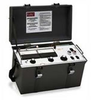
Description: The 15 kV (220015) is a dielectric test set from Megger. Additional Features: Continuously variable test voltage Rugged field construction Compact and portable Air insulated, uses no oil ±2% accuracy Leakage current measurement as low as 0.1 mA Fast charging of high-capacitance samples
-
Supplier: SAE International
Description: of wire dielectric tester is typically designed to trip on current leakage and not necessarily on arc detection. This test method is solely designed to identify gross/large wire insulation damage or degradation. For additional related information on this topic and related test methods, refer
-
Description: IEC 60156:2018 specifies the method for determining the dielectric breakdown voltage of insulating liquids at power frequency. The test procedure is performed in a specified apparatus, where the oil sample is subjected to an increasing AC electrical field until breakdown occurs.
-
Supplier: CSA Group
Description: edition. IEC 60156:2018 specifies the method for determining the dielectric breakdown voltage of insulating liquids at power frequency. The test procedure is performed in a specified apparatus, where the oil sample is subjected to an increasing AC electrical field until
-
Description: origin of soft breakdown (first breakdown) was studied and the results suggested that the soft breakdown may be due to one layer breakdown in the bilayer structure (HfO2/SiO2: 4 nm/4 nm). Low Weibull slope was in part attributed to the lower barrier height of HfO2 at the
-
Supplier: SAE International
Description: of the breakdown strength was minimized, and energy densities similar to room temperature values (9.5 J/cm\u2083) were observed up to 200°C. At 300°C, energy densities as large as 6.5 J/cm\u2083 were measured. These observations suggest that with further reductions in grain size and
-
Supplier: AENOR
Description: Semiconductor devices - Time Dependent Dielectric Breakdown (TDDB) test for gate dielectric films
-
Supplier: AENOR
Description: Semiconductor devices - Time Dependent Dielectric Breakdown (TDDB) test for gate dielectric films (IEC 62374:2007). (Endorsed by AENOR in February of 2008.)
-
Supplier: AENOR
Description: Semiconductor devices -- Part 1: Time-dependent dielectric breakdown (TDDB) test for inter-metal layers
-
Supplier: AENOR
Description: Semiconductor devices -- Part 1: Time-dependent dielectric breakdown (TDDB) test for inter-metal layers (Endorsed by AENOR in March of 2011.)
-
Supplier: Newark, An Avnet Company
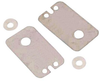
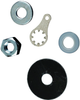
Description: INSULATOR KIT; Insulator Body Material:-; Thermal Conductivity:-; Breakdown Voltage Vbr:-; Thickness:-; Volume Resistivity:-; Thermal Impedance:-; Dielectric Strength:-; Product Range:- RoHS Compliant: Yes
-
Supplier: Newark, An Avnet Company
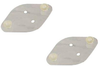
Description: THERMAL INSULATOR; Insulator Body Material:-; Thermal Conductivity:-; Breakdown Voltage Vbr:-; Thickness:-; Volume Resistivity:-; Thermal Impedance:-; Dielectric Strength:-; Product Range:- RoHS Compliant: Yes
-
Supplier: Newark, An Avnet Company
Description: SEMICONDUCTOR INSULATOR; Insulator Body Material:-; Thermal Conductivity:-; Breakdown Voltage Vbr:-; Thickness:-; Volume Resistivity:-; Thermal Impedance:-; Dielectric Strength:-; Product Range:- RoHS Compliant: Yes
-
Supplier: 3X Ceramic Parts Company Limited
Description: Rate % 0 Surface finish μm 0.3-0.7 Heat Conductivity W/(m・k) >170 Flexural Strength Mpa >400 Waviness Length% 2% Dielectric Constant 1MHZ 8.8 Dielectric Loss 1MHZ 10-4 3 Breakdown strength KV/mm 17 Heat Expansion Coefficient 6-10/℃(25-100℃) 4.5
- Density: 3.3299978983468956 g/cc
- Thermal Conductivity: 170 W/m-K
- MOR / Flexural Strength: 58,014.7357428788 psi
- Dielectric Constant (Relative Permittivity): 8.8 #
-
Supplier: Newark, An Avnet Company
Description: SEMICONDUCTOR HARDWARE, INSULATORS; Insulator Body Material:PTFE (Polytetrafluoroethylene); Thermal Conductivity:-; Breakdown Voltage Vbr:-; Thickness:5.5mm; Volume Resistivity:-; Thermal Impedance:-; Dielectric Strength:- RoHS Compliant: Yes
-
Supplier: Allied Electronics, Inc.
Description: Lubricant Prevents Degradation of Electrical Signal Excellent Dielectric Properties Test on Plastics Contains N-Propyl Bromide Dielectric Breakdown 23 kV
-
Supplier: AVX Corporation
Description: Medium Power Film Caps AVX Medium Power film capacitors incorporate a dry segmented and non-segmented metallized polypropylene or polyester dielectric. The segmentation provides controlled self-healing, designed to achieve very high dielectric strength and avoid catastrophic failure.
- Capacitance Range: 5.000000000000001 to 30.000000000000004 microF
- DC Rated Voltage Range (WVDC): 1,000 to 1,700 volts
- Technology: Film Capacitors
- Configuration / Form Factor: Heavy Duty / Electric Power Capacitors, Leaded Capacitor
-
Supplier: Radwell International
Description: SIL-PAD 900S, .009, TO-220, PK10, INSULATOR BODY MATERIAL:-, THERMAL CONDUCTIVITY:1.6W/M.K, BREAKDOWN VOLTAGE VBR:5500VAC, THICKNESS:0.229MM, VOLUME RESISTIVITY:10000MOHM-M, THERMAL IMPEDANCE:-, DIELECTRIC STRENGTH:-, PRODUCT ROHS COMPLIA. FREE 2 YEAR RADWELL WARRANTY
-
Description: Description / Abstract This standard covers operating and dimensional features of single-shot film cutouts used with series roadway lighting equipment and circuits, and function by dielectric breakdown and subsequent partial fusing of components to establish a shunting electrical
-
Supplier: Henkel Corporation - Industrial
Description: LOCTITE EDAG 1020A E&C, Acrylate, Dielectric Coating LOCTITE® EDAG 1020A E&C dielectric coating is formulated to provide electrical insulation on flexible circuitry. It is designed to print multi-layered circuits and conductive crossovers. LOCTITE EDAG 1020A E&C is compatible with
- Substrate: Metal
- Industry: OEM / Industrial
- Form: Transfer Tape
-
Description: Specifies the following tests: - Test 5: Electrical resistance; - Test 13: Breakdown voltage; - Test 14: Continuity of insulation; - Test 19: Dielectric dissipation factor This consolidated version consists of the third edition (1996), its amendment 1 (1997) and its amendment 2 (2004).





Find Suppliers by Category Top
Featured Products Top
-
 . Failures can lead to system breakdowns, costly delays, or safety risks. Dielectric foam materials must retain their shape, resist weathering, and uphold electrical performance. Polyurethane dielectric foam reliably and (read more)
Browse Electrical Insulation and Dielectric Materials Datasheets for General Plastics Manufacturing Co. -
electrical performance. Their advanced self-healing technology enables the capacitor to automatically repair dielectric breakdown, ensuring continuous operation and minimizing the risk of failure. This self-repair capability significantly extends capacitor (read more)
Browse Film Capacitors Datasheets for Shenzhen Weidy Industrial Development Co., Ltd. -
providing electrical insulation.They feature high dielectric breakdown strength,good thermal conductivity,tear resistance,and more.These properties help prevent accidents such as leakage or breakdowns.Additionally,silicone insulator pads are highly temperature-resistant,preventing degradation or aging (read more)
Browse Thermal Compounds and Thermal Interface Materials Datasheets for Dongguan Sheen Electronic Technology Co., Ltd. -
excellent insulation and dielectric stability Self-Healing Design: Automatically recovers from minor dielectric breakdowns, enhancing reliability (read more)
Browse Film Capacitors Datasheets for Shenzhen Weidy Industrial Development Co., Ltd. -
conductivity -Excellent machinability -Good chemical inertness -High-temperature material -High dielectric breakdown strength -Excellent thermal shock resistance -Excellent lubricating properties — low coefficient of friction Packaging of Boron (read more)
Browse Industrial Ceramic Materials Datasheets for Xiamen Innovacera Advanced Materials Co., Ltd. -
• Flame-retardant epoxy coating compliant with UL94 V-0 • Self-healing dielectric technology • Automatic isolation of localized breakdown • Extended service life in (read more)
Browse Capacitors Datasheets for Shenzhen Weidy Industrial Development Co., Ltd. -
An HVAC integrator designing a next-generation rooftop unit faced a common but critical trade-off: the electrical insulation layer between high-voltage busbars and nearby heat-generating components had to provide ≥9 kV breakdown strength, yet also offer low thermal resistance (read more)
Browse Thermal Insulating Tapes Datasheets for Dongguan Sheen Electronic Technology Co., Ltd. -
heat cycling; • High electrical properties: high breakdown voltage, high electric insulation, and low dielectric constant; Application • IGBT power module; • High-power LED package; • High power heat sink, heat dissipation substrate (read more)
Browse Ceramic Sheets and Boards Datasheets for Xiamen Innovacera Advanced Materials Co., Ltd. -
-wave FDTD solver are computed simultaneously. Dielectric Breakdown Prediction: Predict locations at risk of (read more)
Browse Modeling and Simulation Software Datasheets for Remcom (USA) -
allowed Voltage of the inductor before dielectric breakdown will occur. Case Type: Establish the size and dimensions of the case to ensure the inductor will work within the design. Terminals: Take any associated (read more)
Browse Inductors, Coils, and Chokes Datasheets for Triad Magnetics
Conduct Research Top
-
Why does a Capacitor Breakdown
The electric field strength of the dielectric of the capacitor has a certain limit. When the bound charge breaks away from the bondage of atoms or molecules and participates in conduction, the insulation performance is destroyed. This phenomenon is called dielectric breakdown. The condition
-
The Megger Guide to Oil Breakdown Dielectric Testing
Oils that combine a high flashpoint with high dielectric strength have long been used as an insulating medium in. transformers, switchgear and other electrical apparatus. To ensure that the dielectric strength of the oil does not. deteriorate however, proper maintenance is essential, and the basis
-
What is Dielectric Ceramic?
Dielectric ceramic is a kind of ceramic material which resistivity is greater than 108 O m, and can withstand the strong electric field without breakdown. The dielectric material is an insulator, putting more emphasis on its polarization characteristics. According to the characters of its
-
A Roadmap for SiC Power Modules and Diodes
The continual drive for greater efficiency and power density in power conversion systems is leading to the expanded use of silicon carbide (SiC). This wide-bandgap semiconductor has a dielectric breakdown capability 10 times that of silicon with excellent thermal conductivity.
-
Application Note: Dielectric Testing
Dc and ac testing provide an equivalent level of breakdown detection, but the increased accuracy of dc leakage-current detection can reveal marginal insulation systems.
-
MSilica Nanoparticles Treated by Cold Atmospheric-Pressure Plasmas Improve the Dielectric Performance of Organic-Inorganic Nanocomposites
chamber geometries by. imposing a dielectrophoresis (DEP) force on the beads. In cDEP the electrodes are not in. direct contact with the fluid sample but are instead capacitively coupled to the mixing. chamber through thin dielectric barriers, which eliminates many of the problems. encountered
-
Arc Tracking and Silicone Self-Fusing Tape
Many electrical insulation applications are designed with dielectric breakdown strength (DBS), or the voltage potential required to break through an electrically insulating material, as a major factor. While this is a good test to determine how resistive a material is through its volume it does
-
Highly Conductive Insulation for Large, High-Speed Machines
to arc tracking and dielectric breakdown. Next generation, high-speed, multi-megawatt, rotating machines provide an insulating challenge for traditional silicone-impregnated fiberglass and epoxymica stator-coil-insulation systems. A high frequency voltage supply for these rotating machines is required
-
A Microfluidic System for Biological Particle Enrichment Using Contactless Dielectrophoresis
for the voltage and frequency must be. chosen to provide sufficient DEP force on the target particles. without exceeding the dielectric breakdown voltage of. the PDMS barriers (280 V for a 20-mm barrier). Because of. the capacitive properties of the thin PDMS barrier between. the side channels and the main
-
Advantages and Disadvantages of Aluminum Electrolytic Capacitors
Self-healing refers to the ability of the electrolytic capacitor to recover itself and prevent avalanche breakdown when there are some small problems in the medium during operation. 2. Aluminum electrolytic capacitor has explosion-proof tank and positive and negative poles. When the positive
More Information Top
 Indicates content that may require registration and/or purchase.

-
Physics
This phenomenon is denoted as dielectric breakdown (or dielectric discharge).
-
Passive electronic components
Dielectric breakdown .
-
Electronic components
Dielectric breakdown Fledged in manual of the physics, S. Hrsg.