
Products & Services
See also: Categories | Featured Products | Technical Articles | More Information-
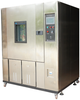
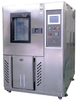
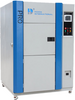
Supplier: Haida International Equipment Co., Ltd.
Description: chamber test methods GB / T2423.3-2006 test method of damp heat chamber GB / T2423.4-2008 alternating heat and humidity test method GB / T2423.22-2002 temperature change test method IEC60068-2-1.1990 low-temperature test chamber
- Temperature Range: -70 to 150 C
- Humidity Range: 20 to 98 % RH
- Width: 2 ± %RH
- Configuration: Floor Mount
-
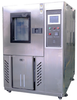
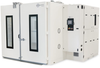
Supplier: Haida International Equipment Co., Ltd.
Description: Our engineers are equipped with the latest control system for temperature humidity test chamber.PLC (Programmable Logic Controller) controller can programmable control temperature and humidity value and cyclic test as you set the different parameter.this
- Temperature Range: -70 to 150 C
- Humidity Range: 20 to 98 % RH
- Temperature Control: Cooling, Heating
- Configuration: Floor Mount
-
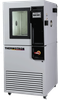
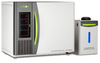
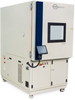
Supplier: Thermotron Industries
Description: A Benchtop Environmental Chamber provides superior performance over a wide range of applications and industries. Thermotron offers benchtop temperature chambers and benchtop humidity chambers that are ideal for compact products. A Benchtop Environmental
- Chamber Capacity: 0.8899999999999999 to 5.5 cubic feet
- Temperature Range: -73 to 180 C
- Temperature Control Accuracy: 1.1 ± °C
- Humidity Range: 20 to 98 % RH
-
-
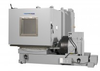
Supplier: Thermotron Industries
Description: Thermotron AGREE Chambers provide flexibility in your test lab. They can be used as a standalone temperature chamber or humidity chamber with thermal change rates from 5°C to 30°C per minute. An AGREE Chamber can also become a vibration chamber when
- Chamber Capacity: 11.999999999999998 to 168 cubic feet
- Temperature Range: -73 to 177 C
- Temperature Control Accuracy: 1 ± °C
- Humidity Range: 20 to 95 % RH
-
Supplier: Haida International Equipment Co., Ltd.
Description: SAE. Application Details: 1. To simulate test environment with different temperature and humidity 2. Cyclic test includes climatic conditions: temperature and humidity test,holding test, cooling-off test, heating-up test, moistening test
- Temperature Range: -70 to 150 C
- Humidity Range: 20 to 98 % RH
- Temperature Control: Cooling, Heating
- Configuration: Floor Mount
-
Supplier: Caron Products and Services, Inc.
Description: Caron's full line of Environmental Test Chambers precisely control temperature and humidity and are the ultimate choice for ultra-reliable stability testing. Our chambers deliver more than accuracy, dependability and performance - they're loaded with earth friendly
-
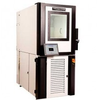
Supplier: Thermotron Industries
Description: The SE-Series Environmental Chamber product line is the most fully-featured climatic chamber available on the market. Choose either temperature-only or temperature-humidity configurations with diverse compressor size options, enhanced air baffle, the patented
- Chamber Capacity: 10.2 to 116 cubic feet
- Temperature Range: -70 to 180 C
- Temperature Control Accuracy: 0.3 ± °C
- Humidity Range: 10 to 98 % RH
-
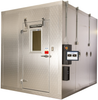
Supplier: Thermotron Industries
Description: Thermotrons Walk-In Chambers serves as test sites for large components, assemblies, and finished products. Thermotron manufactures both Panel Walk-In Chambers and Solid Walk-In Chambers and can be configured as a temperature chamber or a temperature
- Temperature Range: -68 to 85 C
- Humidity Range: 20 to 95 % RH
- Features: Alarm(s), Chart Recorder, Data Logger, Humidity Control, Lights, Programmable, Shelves, Windows
- Temperature Control: Cooling, Heating
-
Description: Stainless Steel Series Environmental Simulated Test chamber Test chamber are applicable for testing the performance indexes of aeronautic & astronautic products, ships, weapon, accdemies, motorcycle, information electronics, instruments & meters, materials,
- Chamber Capacity: 2.825172581585237 to 35.31465726981547 cubic feet
- Temperature Range: -80 to 200 C
- Temperature Control Accuracy: 0.1 to 0.5 ± °C
- Humidity Range: 10 to 98 % RH
-
Supplier: Haida International Equipment Co., Ltd.
Description: improvement's reference. Corresponding standard: 1 GB/T2423.1-1989 low-temperature testing method 2 GB/T2423.2-1989 high-temperature testing method 3 GB/T2423.22-1989 change temperature test 4 GJB150.5-86 temperature impact test 5 GJB360.7-87
- Temperature Range: -50 to 175 C
- Temperature Control: Cooling, Heating
- Configuration: Floor Mount
- Features: Programmable
-
Description: The instrument simulates the integrated environmental stress and its effects experienced by electronic products in the transport, storage and use process in the laboratory.Suitable for products affected by the integrated environment,such as electronic products used in various means of
- Chamber Capacity: 9.04055226107276 to 35.31465726981547 cubic feet
- Temperature Range: -70 to 150 C
- Temperature Control Accuracy: 0.1 to 0.5 ± °C
- Humidity Range: 10 to 98 % RH
-
Description: Walk In Climate Chamber, also called walk in environmental test chambers or walk in temperature humidity chamber, is used to do accelerated temperature and humidity environmental testing, alternating or constant damp heat test, and high
- Chamber Capacity: 2.825172581585237 to 706.2931453963092 cubic feet
- Temperature Range: -70 to 200 C
- Temperature Control Accuracy: 0.1 to 0.5 ± °C
- Humidity Range: 10 to 98 % RH
-
Description: Walk in Temperature Humidity Climatic Stability Test Chamber Application: Walk in Temperature Humidity Climatic Stability Test Chamber is used to test various types of materials for their tolerances of heat, cold, dry, humidity. It is applied for
- Chamber Capacity: 35.31465726981547 to 953.4957462850176 cubic feet
- Temperature Range: 0 to 150 C
- Temperature Control Accuracy: 0.5 ± °C
- Humidity Range: 20 to 98 % RH
-
Supplier: Weiss Technik North America, Inc.
Description: Everyday items, cosmetics, electronic components and medical products must fulfill certain quality standards. The temperature test chambers of the LabEvent series allow you to conduct ideal temperature tests for smaller test specimens in the areas of
- Configuration: Benchtop / Instrument
- Parameters: Temperature
-
Supplier: Weiss Technik North America, Inc.
Description: The Xceed Series Custom Reach-In Temperature Humidity environmental test chamber from Weiss Technik gives unlimited options. Designed, engineered, and built to your specifications the Xceed Series test chamber offers flexible temperature and humidity
- Parameters: Humidity, Temperature
- Configuration: Reach-In
-
Supplier: Weiss Technik North America, Inc.
Description: Xcel technology allows the user a modular, changeable, and expandable test chamber system resulting in reduced test set-up time, and greater flexibility for ever-changing test requirements. LEEF™ (Leading Energy Efficiency Footprint) technology is a high-efficiency
- Temperature Control: Heating
- Parameters: Humidity, Temperature
- Features: Humidity Control, Windows
-
Supplier: Cincinnati Sub-Zero Products
Description: CSZ's Z-Plus Environmental Test Chambers are designed for ease-of-use, reliability and performance. These chambers may be used for basic thermal cycling testing to accelerated cycling with a variety of sizes and performance packages.
- Chamber Capacity: 32 cubic feet
- Temperature Range: -45 to 190 C
- Humidity Range: 5 to 98 % RH
- Width: 3 ± %RH
-
Supplier: Guangdong Atmars Industry Co., Limited
Description: Altitude test chambers combined temperature and altitude/vacuum with optional humidity to test basic components or sub-assemblies designed for use in a variety of industries, such as aviation, aerospace, communication, military, automotive, electronics and other
- Chamber Capacity: 7.94579788570848 cubic feet
- Temperature Range: -20 to 150 C
- Temperature Control Accuracy: 0.5 ± °C
- Humidity Range: 20 to 98 % RH
-
Supplier: Aralab
Description: Environmental test rooms, designed for the development and performance evaluation of air conditioners, gas boilers and heat pumps. Usually installed in sets of two environmental chambers, allowing for precise Indoor and Outdoor climatic simulation. Also possible is the
- Chamber Capacity: 1,387.795401389208 cubic feet
- Temperature Range: -30 to 60 C
- Temperature Control Accuracy: 0.5 ± °C
- Humidity Range: 20 to 90 % RH
-
Supplier: Air Innovations LLC
Description: would like generated, and we will let you know whether we can accommodate your request with our lab and a test engineer. TECHNICAL INFORMATION: The 2880 cubic foot facility tests temperatures between 0°F and 120°F (-17°C and 48°C). Humidity is created by an ionic-bed electric
- Chamber Capacity: 2,880 cubic feet
- Temperature Range: -17 to 48 C
- Humidity Range: 5 to 95 % RH
- Width: 2.5 ± %RH
-
Supplier: Guangdong Atmars Industry Co., Limited
Description: Salt spray (or salt fog) test chamber is a standardized and popular corrosion test equipment, used to check corrosion resistance of materials and surface coatings.
- Chamber Capacity: 42.37758872377856 cubic feet
- Temperature Range: 5 to 50 C
- Temperature Control Accuracy: 5 ± °C
- Parameters: Corrosion (Salt Fog / Immersion), Temperature
-
Supplier: Cincinnati Sub-Zero Products
Description: environmental chambers with icon-based navigation like a smart phone or with windows-based drop down navigation similar to previous CSZ controllers. The new controller is also compatible with previous CSZ EZT controllers so existing LabView applications and software can be used. All
- Number of Inputs: 8 inputs
- Number of Control Outputs: 15 outputs
- Features: Chart Recorder, Datalogger, Temperature Controller
- Temperature: Cooling Control, Heating Control
-
Supplier: Aralab
Description: TESTA walk-in climatic chambers are ideal for testing large components, assemblies, and finished products. Constructed as a single-piece welded unit featuring rock-wool insulation and an interior made of 304 stainless steel. Equipped with a fully opening door that can include heated window
- Chamber Capacity: 0.28251725815852374 to 0.6356638308566784 cubic feet
- Temperature Range: -20 C
- Humidity Range: 10 to 95 % RH
- Configuration: Benchtop / Instrument
-
Description: The ESPEC Criterion benchtop temperature chamber series provides a economical and space-saving solution for a variety of temperature testing requirements. The chamber's 1.5 cu. ft. interior size is 3.5 inches wider than traditional benchtops. The BTZ-133 chamber
- Chamber Capacity: 1.4999999999999998 cubic feet
- Temperature Range: -70 to 180 C
- Temperature Control Accuracy: 0.5 ± °C
- Configuration: Benchtop / Instrument
-
Supplier: BINDER Inc.
Description: Electronically controlled APT.line™ preheating chamber assuring temperature accuracy and reproducible results Temperature range of -40 °C to 180 °C (at an ambient temperature of 25 °C) MCS controller with 25 storable programs of 100 sections each for a maximum of 500
- Temperature Range: -40 to 180 C
- Features: Alarm(s), Chart Recorder, Programmable, Shelves, Windows
- Temperature Control: Cooling, Heating
- Configuration: Floor Mount, Reach-In
-
Supplier: Russells Technical Products
Description: Russells G-8 Elite Series temperature and temperature/humidity chambers represent one of our pre-engineered environmental chambers. This model has a chamber volume in 8 cubic feet or 226 liters. Click for a complete overview highlighting the features and
- Chamber Capacity: 8 cubic feet
- Temperature Range: -68 to 177 C
- Humidity Range: 10 to 95 % RH
- Features: Chart Recorder, Humidity Control, Programmable, Windows
-
Supplier: Weiss Technik North America, Inc.
Description: PCB’s, blister packs or lipstick – tests to stabilize and optimize the quality of products are indispensable in research and laboratories. Our laboratory test chambers were designed for this purpose in particular and allow reproducible temperature and climatic
-
Supplier: BINDER Inc.
Description: Electronically controlled APT.line™ preheating chamber assuring temperature accuracy and reproducible results Temperature range without humidity -40 °C to 180 °C, with humidity 10 °C to 95 °C Humidity range 10% to 98% RH MCS controller with 25 storable programs of 100 sections
- Chamber Capacity: 52.1 cubic feet
- Temperature Range: -40 to 180 C
- Humidity Range: 10 to 98 % RH
- Features: Alarm(s), Chart Recorder, Humidity Control, Lights, Programmable, Shelves, Windows
-
Supplier: MTS Systems Corporation
Description: These chambers have open-coil heating which means your test specimen and grips are heated to the desired temperature very quickly.
- Temperature Range: -128.88888888888889 to 371.1111111111111 C
- Temperature Control: Cooling, Heating
- Features: Lights, Windows
- Configuration: Reach-In
-
Supplier: Accuris
Description: Basic environmental testing procedures for electrotechnology, Part 2NB: Tests - Test Nb - Change of temperature - Change of temperature, one-chamber method
-
Environmental Test Chambers and Rooms - Environmental Stress Screening Chamber, TSV, TSH, TSD SeriesSupplier: Russells Technical Products
Description: expose failures. Environmental stress screening chambers can be used as part of the manufacturing process or they can be used in new product qualification testing.. Russells air-to-air thermal shock chambers meet the demands of today's environmental stress screening with
- Chamber Capacity: 2 to 18 cubic feet
- Temperature Range: -185 to 200 C
- Humidity Range: 20 to 95 % RH
- Features: Chart Recorder, Data Logger, Humidity Control, Lights, Programmable, Shelves, Windows
-
Supplier: ZwickRoell LP
Description: 37 °C Temperature Chamber The 37°C temperature chambers, is an optimal solution for testing material accordingly to the body temperature of humans. You can easily put in new specimen or change the tools, because you have a big front door in the chamber. With
- Parameters: Temperature
-
Description: The ESS5/11 Series provides the unique capability of stress screening products in a small, lab-type chamber. Pre-qualification for ESS, troubleshooting, and small scale ESS programs would all benefit from high air flow, high change rate testing in this compact design. This series can
- Chamber Capacity: 11 cubic feet
- Temperature Range: -20 to 150 C
- Temperature Control: Cooling, Heating
- Configuration: Floor Mount
-
Supplier: Associated Environmental Systems
Description: Associated Environmental Systems supplies Temperature/Humidity Chambers to program controlled conditions of combined temperature and relative humidity. All chamber components offer maximum resistance to the corrosive effects of moisture combined with extreme
- Chamber Capacity: 64 cubic feet
- Temperature Range: -36.99999999999999 to 200 C
- Humidity Range: 20 to 98 % RH
- Width: 3 ± %RH
-
Supplier: Accuris
Description: Basic environmental testing procedures for electronics and telecommunications purposes, Part 2NA: Tests - Test Na - Change of temperature - Rapid change of temperature, two-chamber method











Find Suppliers by Category Top
Featured Products Top
-
 Key Technical Features: • Broad Operating Range: Precise temperature simulation from -70°C to +150°C and relative humidity control from 10% to 98% RH with customizable ramp rates. • Uniform Airflow Design: Aerodynamic chamber layout ensuring high temperature uniformity (read more)
Browse Environmental Test Chambers and Rooms Datasheets for Guangdong Atmars Industry Co., Limited -
People count on your products to be safe and reliable. Cincinnati Sub-Zero (CSZ) environmental chambers can aid reliability testing by subjecting products to environmental extremes like temperature, humidity, altitude, vibration, and more. CSZ has been assisting manufacturing (read more)
Browse Environmental Test Chambers and Rooms Datasheets for Cincinnati Sub-Zero Products -
Cincinnati Sub-Zero environmental test chambers feature temperature only and temperature with humidity models. Z-Plus test chambers offer years of reliable operation for product testing and are available in 8 to 96 cu. ft. of workspace. Ideal for (read more)
Browse Environmental Test Chambers and Rooms Datasheets for Cincinnati Sub-Zero Products -
-
Our Z-Plus environmental chambers are ideal for basic to accelerated stress testing. Rapid temperature transition rates (read more)
Browse Environmental Test Chambers and Rooms Datasheets for Cincinnati Sub-Zero Products -
assemblies for reliablity or R&D Testing. Temperature and Temperature/Humidity models are available with temperature ranges from -30°C to +190°C and -70°C to +190°C and optional humidity from 10% to 95% RH. The MicroClimate® 1.2 cubic foot benchtop test chamber simulates a (read more)
Browse Environmental Test Chambers and Rooms Datasheets for Cincinnati Sub-Zero Products -
Xceed Custom Temperature Humidity environmental test chambers from Weiss Technik gives unlimited options. Designed, engineered, and built to your specifications for flexible temperature and humidity ranges, sizes that meet your exact testing requirement and available options that provide (read more)
Browse Environmental Test Chambers and Rooms Datasheets for Weiss Technik North America, Inc. -
, unique size requirements, and custom testing conditions. Whether the environmental chamber is used for testing microchips and processors for leading computer manufacturers, or temperature, humidity, and altitude rated chambers for leading aerospace and defense contractors, our detail (read more)
Browse Environmental Test Chambers and Rooms Datasheets for Cincinnati Sub-Zero Products -
Our Z-Plus environmental test chambers are ideal for basic temperature cycling to accelerated stress (read more)
Browse Environmental Test Chambers and Rooms Datasheets for Cincinnati Sub-Zero Products -
reliability. Environmental test chambers ensure that the increasing heat outputs of AI data centers do not jeopardize the many components that keep these servers functioning efficiently. Learn how environmental test chambers contribute to AI data center efficiency and reliability. (read more)
Browse Environmental Test Chambers and Rooms Datasheets for Cincinnati Sub-Zero Products
Conduct Research Top
-
Understanding Humidity in Environmental Test Chambers
Humidity is probably one of the most misunderstood topics when it comes to environmental test chambers. This is due to the fact that Relative Humidity percentage is temperature specific. For example, the amount of moisture in the air at 20°C (68°F) and 50% RH is not the same as 10°C (50°F) and 50%
-
Environmental Chambers for Solar Panel Testing
temperature and humidity extremes throughout the life of the product. Listed below is a general overview of common solar panel test specifications that require the use of environmental testing.
-
Mitigating Risks of Battery Testing in Environmental Test Chambers
We will briefly review the various types of batteries along with the qualifications tests that are performed. In product research and development, testing becomes a critical component. Mitigating risks in testing batteries under various temperature conditions is an important aspect
-
Points to Consider When Purchasing and Installing Environmental Chambers
A distinction between test chambers is the temperature range in which the chamber will operate. Most manufacturers have a standard high temperature range of 177°C to 190°C (350°F to 375°F) for reach-in. chambers and welded walk-ins. Temperatures up to 260°C (500°F) and even higher, can be achieved
-
Low Global Warming Potential Refrigerants A New Option for Environmental Test Chambers That Helps Combat Climate Change
Increasing. -4 -3 -2 -1 0 +1 +2 +3 +4. Temperature Difference (degrees Fahrenheit). Figure 5: Global Temperature Increase from 1921 to 202119. 1921. 2021. Low Global Warming Potential Refrigerants. White Paper. 12. A Solution for Environmental Test Chambers. R-449A has been available in place of R-404A
-
Climatic Chamber Validation
Climatic chambers are in widespread use across many industries. They are used to simulate climatic conditions including temperature, humidity, pressure, vibration and light intensity. Conditions are controlled or varied according to user or test specifications. Products and samples are placed
-
Remote Control - Insight Into Remote Conditioning
and use a Remote Conditioner (RC) to condition the Device Under Test (DUT). In this way a single environmental chamber can supply conditioned air to hoods built around various size components or processes. For increased flexibility, RC chambers also provide an internal test that allows an RC to be used
More Information Top
 Indicates content that may require registration and/or purchase.

-
American National Standard for Methods of Measurement of Radio-Noise Emissions from Low-Voltage Electrical and Electronic Equipment in the Range of 9 kHz to 40...
Operating frequency measurements may be made at an ambient room temperature if it is within the range of +15 °C to +25 °C; otherwise, an environmental temperature test chamber set for a temperature of +20 °C shall be used.
-
Research on Unregulated Emissions from an Alcohols-Gasoline Blend Vehicle Using FTIR, HPLC and GC-MS Measuring Methods
The environment simulation system includes SFTP low temperature environmental testing chamber of the German IMTECH company and DAR-3300 air purification system of Horiba Company.
-
Three-dimensional temperature effect modelling of piezoceramic transducers used for Lamb wave based damage detection
Equipment used in the experimental validation tests for: (a) Lamb wave generation and response measurements (waveform generator and oscilloscope controlled by a PC); (b) temperature tests ( environmental chamber ). .
-
The Effect of Oxidation on the Dielectric Properties of an Insulating Oil
… for the measurements of the dielectric loss, dielectric constant, and viscosity are sub- stantially the same as those outlined in [3], with the ex- ception of the temperature control, which was provided by an environmental temperature test chamber with forced-air circulation …
-
The Flashover Voltage of Polymethylmethacrylate in Vacuum under Direct, Alternating, and Surge Voltages of Various Front Durations
… for the measurements of the dielectric loss, dielectric constant, and viscosity are sub- stantially the same as those outlined in [3], with the ex- ception of the temperature control, which was provided by an environmental temperature test chamber with forced-air circulation …
-
http://qspace.library.queensu.ca/jspui/bitstream/1974/704/1/Lanham_Johnnel_K_200709_MSCE.pdf
environmental chamber testing temperature was subtracted from the total power used by .