
-
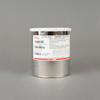
Description: The SHEEN's SE Series two-component Thermal Gel are renowned for their distinctive characteristics, which include: ◆ Good thermal conductivity, available in options ranging from 2.0 to 8.0 W/m·K. ◆ Soft and elastic after curing, maintaining the required thickness and providing shock absorption. ◆
- Use Temperature: -58 to 302 F
- Thermal Conductivity: 5 W/m-K
- Dielectric Constant (Relative Permittivity): 7.5
- Industry: Electronics
-
Description: The SHEEN's SG560 Series Thermal Grease are renowned for their distinctive characteristics, which include: ◆ Good thermal conductivity, available in options ranging from 1.0 to 5.0 W/m·K. ◆ Low thermal impedance, with a minimum of 0.015 ℃*in²/W at 30psi. ◆ Minimum interface thickness can reach as
- Use Temperature: 302 F
- Thermal Conductivity: 4 W/m-K
- Industry: Electronics
- Features: Grease / Paste, Thermal / Heat Conductive
-
Description: CSF series Carbon Fiber Thermal Pads are renowned for their distinctive characteristics, which include: ◆ Exceptional thermal conductivity options ranging from 15 to 45 W/mK. ◆ Available in various thicknesses from 0.3 to 12.0 mm. ◆ Features natural tackiness for easy application and rework. ◆ High
- Use Temperature: 320 F
- Thermal Conductivity: 45 W/m-K
- Tensile Strength (Break): 4.35110518071591 psi
- Elongation: 10 %
-
-
Description: The SHEEN's SG560 Series Thermal Grease are renowned for their distinctive characteristics, which include: ◆ Good thermal conductivity, available in options ranging from 1.0 to 5.0 W/m·K. ◆ Low thermal impedance, with a minimum of 0.015 ℃*in²/W at 30psi. ◆ Minimum interface thickness can reach as
- Use Temperature: 302 F
- Thermal Conductivity: 1 W/m-K
- Industry: Electronics
- Features: Grease / Paste, Thermal / Heat Conductive
-
Supplier: Allied Electronics, Inc.
Description: 150°C. Electric Strength Voltage: 6,000 V, 50 Hz up to 12,000 V on special request. 10 GΩ min. and 500 V. 14 mm min. ≤80 nH. Electric Support is High Alumina Content Ceramic Metallized on the Bottom for Ideal Heat Transfer and Optimum Discharge Encapsulated with a Special Resin Filled
-
Supplier: Newark, An Avnet Company
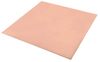
Description: HEAT SINK PAD, 55.9Mm x 55.9Mm x 200UM; Thickness:200µm; Conductive Material:Graphite Sheet; Thermal Conductivity:800W/m.K; Thermal Impedance:-; Volume Resistivity:-; External Length:55.9mm; External Width:55.9mm; Product Range:
-
Supplier: Ellsworth Adhesives
Description: Henkel Loctite STYCAST 2850KT Blue, formerly Emerson and Cuming, is a two component, room temperature curing, epoxy encapsulant that is used for high voltage components and replacing heat sinks. It contains a filler that is gritty. It offers a low coefficient of thermal expansion,
- Thermal Conductivity: 2.29 to 2.78 W/m-K
- Dielectric Strength: 345.44000000000074 to 355.60000000000076 kV/in
- Viscosity: 22,000 to 174,000 cP
- Features: Electrical Power / HV, Encapsulant / Potting Compound
-
Supplier: Epoxy Technology
Description: Thermally Conductive Adhesives (TCAs) are electrically insulating materials that conduct heat as an adhesive or encapsulant. These products are typically oven cured or set at room temperature and are available in a range of viscosities. Our TCAs are well known for resisting hostile
- Use Temperature: 572 F
- Thermal Conductivity: 1 W/m-K
- Coeff. of Thermal Expansion (CTE): 11.11111111111111 to 62.22222222222222 µin/in-F
- Dielectric Constant: 5.19
-
Supplier: Epoxy Technology
Description: Thermally Conductive Adhesives (TCAs) are electrically insulating materials that conduct heat as an adhesive or encapsulant. These products are typically oven cured or set at room temperature and are available in a range of viscosities. Our TCAs are well known for resisting hostile
- Use Temperature: 617 F
- Thermal Conductivity: 1.7 W/m-K
- Coeff. of Thermal Expansion (CTE): 15 to 75.55555555555556 µin/in-F
- Dielectric Constant: 3.73
-
Supplier: Epoxy Technology
Description: Thermally Conductive Adhesives (TCAs) are electrically insulating materials that conduct heat as an adhesive or encapsulant. These products are typically oven cured or set at room temperature and are available in a range of viscosities. Our TCAs are well known for resisting hostile
- Use Temperature: 572 F
- Thermal Conductivity: 0.4 W/m-K
- Coeff. of Thermal Expansion (CTE): 22.22222222222222 to 105.55555555555556 µin/in-F
- Dielectric Constant: 4.97
-
Supplier: Epoxy Technology
Description: Thermally Conductive Adhesives (TCAs) are electrically insulating materials that conduct heat as an adhesive or encapsulant. These products are typically oven cured or set at room temperature and are available in a range of viscosities. Our TCAs are well known for resisting hostile
- Use Temperature: 662 F
- Thermal Conductivity: 0.4 W/m-K
- Coeff. of Thermal Expansion (CTE): 16.666666666666668 to 42.22222222222222 µin/in-F
- Dielectric Constant: 3.39
-
Supplier: Henkel Corporation - Electronics
Description: pad to be applied like an adhesive pad.The heat sink is cooled to room temperature and packaged. 2. Hand-apply to 20°-35°C heat sink. Hi-Flow 300G can be applied to a room temperature heat sink with the assistance of a foam roller. The pad is positioned on
- Industry: Electronics
-
Supplier: Henkel Corporation - Electronics
Description: Loctite 383 Output is a thermally conductive adhesive system designed for bonding heat generating components to heat sinks. The high thermal conductivity provides excellent heat dissipation for thermally sensitive components, while the controlled strength permits field
- Viscosity: 500,000 cP
- Thermal Conductivity: 0.6 W/m-K
- Industry: Electronics
- Cure / Technology: Room Temp. Cure / Vulcanizing
-
Supplier: Hernon Manufacturing, Inc.
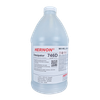
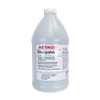
Description: Hernon Dissipator 746D is a thermally conductive adhesive formulated for bonding electrical components to heat sinks or printed circuit boards. Fast room temperature cure combined with excellent heat dissipation for thermally sensitive components and controlled strength for
- Industry: Aerospace, Automotive, Electrical Power / HV, Electronics, Military / Government (MIL-SPEC / GG), OEM / Industrial
- Cure / Technology: Room Temp. Cure / Vulcanizing
- Chemical System: Silicone
- Features: Thermal / Heat Conductive
-
Supplier: Henkel Corporation - Electronics
Description: processor Heat sink to computer processor Heat sink onto drive processor Heat spreader onto power converter PCB Heat spreader onto motor control PCB Bond-Ply 400 Downloads Selection Guide RoHS Certificate Halogen Testing Report SDS 简体中文 SDS Český SDS English
- Industry: Electronics
-
Supplier: Epoxies Etc...
Description: 50-1220 is a one component thermal grease. This heavy filled Heat Sink Compound promotes high thermal conductivity, low bleed, and high temperature stability.
- Thermal Conductivity: 1.1538232 W/m-K
- Electrical Resistivity: 2,000,000,000,000,000 ohm-cm
- Dielectric Strength: 209.99999999999991 kV/in
- Dielectric Constant: 5
-
Supplier: Henkel Corporation - Electronics
Description: where heat needs to be transferred to a frame, chassis, or other type of heat spreader Between heat-generating magnetic components and a heat sink Gap Pad VO Downloads Selection Guide RoHS Certificate Halogen Testing Report SDS English EU Application Note 116
- Industry: Electronics
- Features: Thermally Conductive
-
Supplier: Protavic America, Inc.
Description: Filled epoxy system for high thermal applications such as heat-sink bonding. This material has 2.2 Wm°K thermal performance with supporting laser flash data. Room temperature cure.
- Viscosity: 8,000 cP
- Use Temperature: -55 to 175 F
- Thermal Conductivity: 1.49 to 2.2 W/m-K
- Tensile Strength (Break): 4,200 psi
-
Supplier: Ellsworth Adhesives
Description: Dow DOWSIL™ TC-5150 Blue is a one component, high performance, non-curable, thermally conductive gap filler designed to dissipate heat from electronics to a heat sink providing a reliable cooling solution for a wide variety of substrates. It is reworkable, easy to dispense, has
- Viscosity: 2,360 cP
- Thermal Conductivity: 5 W/m-K
- Dielectric Strength: 261.6200000000006 kV/in
- Industry: Automotive, Electronics, Semiconductors / IC Packaging
-
Supplier: Hernon Manufacturing, Inc.
Description: Hernon Dissipator 745D is a thermally conductive room temperature cure adhesive that is designed for bonding electrical components to heat sink with a controlled gap. Dissipator 745D, through a special shimming property, insulates the component electrically while allowing thermal
- Industry: Aerospace, Automotive, Electrical Power / HV, Electronics, Military / Government (MIL-SPEC / GG), OEM / Industrial
- Cure / Technology: Room Temp. Cure / Vulcanizing
- Features: Thermal / Heat Conductive
-
Supplier: Epoxies Etc...
Description: 50-3120 is a filled, single component, thermally conductive, electrically insulating epoxy system. This material is thixotropic and designed for the placement of SMD's on printed circuit boards or other substrates prior to wave soldering. It may also be used in heat sink applications.
- Use Temperature: 752 F
- Thermal Conductivity: 1.1538232 W/m-K
- Tensile Strength (Break): 7,500 psi
- Features: Die Bonding Adhesive / Compound, Filled, Grease / Paste, Thermal / Heat Conductive
-
Supplier: Hernon Manufacturing, Inc.
Description: Dissipator® 745 is a thermally conductive room temperature cure adhesive that is designed for bonding electrical components to heat sink with a controlled gap. Dissipator® 745, through a special shimming property, insulates the component electrically while allowing thermal
- Industry: Aerospace, Automotive, Electrical Power / HV, Electronics, Military / Government (MIL-SPEC / GG), OEM / Industrial
- Cure / Technology: Room Temp. Cure / Vulcanizing
- Features: Thermal / Heat Conductive
-
Supplier: Chemence Inc.
Description: KSC2040 is a thermally conductive silicone RTV adhesive rubber developed for heat sink applications. KSC2040 is a 1-part silicone that when applied to the substrate enables adhesion to parts and heat transfer of the bonded assembly within minutes. When cured, the elastomer
- Viscosity: 600,000 cP
- Features: Die Bonding Adhesive / Compound, Grease / Paste
- Industry: Electronics
- Substrate Compatibility: Metal, Plastic
-
Supplier: Wacker Chemical Corp.
Description: Pure white, soft consistency, heat sink paste with marked thermal conductivity. Electrically insulating. Application WACKER® SILICONE PASTE P 12 is used especially in semiconductor technology as a heat sink paste. Wherever it is important to have good heat transfer
- Thermal Conductivity: 0.81 W/m-K
- Dielectric Strength: 254.00000000000054 kV/in
- Dielectric Constant (Relative Permittivity): 3.5
- Type: Electrical Insulation / Dielectric
-
Supplier: Chemence Inc.
Description: KSC1202 is a high performance, high viscosity thermally conductive gap filling material. It is formulated to develop a soft, 'form in place' elastomer ideal for coupling hot PC board components to heat sinks. KSC1202 is supplied as a two part, 1:1 mix ratio silicone that when mixed
- Viscosity: 150,000 cP
- Features: Die Bonding Adhesive / Compound, Grease / Paste
- Industry: Electronics
- Substrate Compatibility: Plastic
-
Supplier: MacDermid Alpha Electronics Solutions
Description: Product Overview HTC Heat Transfer Compound is a non-silicone thermal interface material recommended for efficient and reliable thermal coupling of electrical and electronic components, or between any surfaces where thermal conductivity or heat dissipation is important. It is ideal for
- Use Temperature: 266 F
- Thermal Conductivity: 0.9 W/m-K
- Dielectric Strength: 1,066.8000000000022 kV/in
- Viscosity: 202,000 to 205,000 cP
-
Supplier: Shiu Li Technology Co., Ltd
Description: LiPOLY’s S282 is a thermally conductive pad designed for gap filling. The thermal conductivity is 1.7 W/m*K. It uses fiberglass cloth as the reinforcement material with great self-adhesive that can fit closely with non-flat heat sinks to increase the contact area. The low stress damped
- Applied Thickness / Gap Fill: 0.01968505 to 0.1968505 inch
- Use Temperature: -76 to 356 F
- Thermal Conductivity: 1.7 W/m-K
- Dielectric Strength: 381.0000000000008 kV/in
-
Supplier: Hi-Tech Seals, Inc.
Description: acrylics provide specific adhesion for bonding electrical heat sink components with high thermal conductivity. Heat trapped and not dissipated by the components can lead to premature component failure and costly repair and replacement. Thermal conductivity is assured and
- Viscosity: 300,000 to 800,000 cP
- Use Temperature: -65 to 300 F
- Thermal Conductivity: 0.808 W/m-K
- Coeff. of Thermal Expansion (CTE): 0.0003833333333333333 µin/in-F
-
Supplier: Shiu Li Technology Co., Ltd
Description: fiberglass materials increase the strength of its structure making it cut resistant. DCTP140-s is the best choice for high torque screw setting. It functions well with electrical isolative of high power electronic component and the heat sink.
- Applied Thickness / Gap Fill: 0.009842525 to 0.017716545 inch
- Use Temperature: -76 to 356 F
- Thermal Conductivity: 4.5 W/m-K
- Dielectric Strength: 4 to 6 kV/in











Find Suppliers by Category Top
Featured Products Top
-
 flowability before curing and outstanding elasticity and durability after curing. In today’s compact robotic designs, traditional cooling methods—such as air cooling or heat sinks—are no longer sufficient to manage heat inside enclosed structures. Thermal potting adhesives, when applied (read more)
Browse Silicone Adhesives and Sealants Datasheets for Dongguan Sheen Electronic Technology Co., Ltd. -
pattern influence heat generation and dissipation. Additionally, the type of wire insulation materials affects the motor’s capacity to manage heat. High-quality insulation can withstand higher temperatures and humidity, preventing thermal degradation of the windings. In some flat motors, resin or (read more)
Browse DC Motors Datasheets for Portescap
More Information Top
 Indicates content that may require registration and/or purchase.

-
Detection of Joule heating before dielectric breakdown in polyethylene films
Thermographs of conduction current at 23.4'C in polyethylene film with epoxy resin heat sink .
-
Fabrication of high-power AlInGaP-based red light emitting diodes with novel package by electroplating
Thus it is very effective in heat dissipation that the LEDs chip directly contacted the copper heat sink without resin , resulting in higher operation current and luminous intensity.
-
High Thermal Dissipation of Ultra High Power Light-Emitting Diodes by Copper Electroplating
Thus they are very effective in heat dissipation that the RGB LEDs chip directly contacted the copper heat sinks without resins , resulting in higher operation currents and luminous intensities.
-
Ultra High Power Light-Emitting Diodes with Electroplating Technology
injection current for the novel package (a) red (b) green (c) chip directly contacted the copper heat sinks without resins , .
-
Temperature Dependence of Soil Water Potential
6) epoxy resin encapsulating heat sink .
-
Preliminary study of radioactive waste disposal in the vadose zone
… Dalton (1667) for in ri(u measnremcnl of soil water potential show ing Teflon insert (1), copper heat sink (2), chro- mel-Cviiftantan thermocouple (3). copper lead wires (4), acrylic tubing (6), onoiy resin encapsu lating heat sinks (6), and ceramic bulb …
-
Design method for high reliable flip chip BGA package
Because various materials, including silicon dies, solder balls, organic substrates, underfill resins , heat sinks made of metal, etc., are used in these packages, coefficient of thermal expansion (CTE) mismatch among these materials may damage the packages or cause them to fail.
-
III-Nitride Based Light Emitting Diodes and Applications
Although there are lots of issues needed to be addressed in white LEDs, such as chip processing, light extraction efficiency, heat sink structures, resin materials, re- liability, life test, and etc., this chapter focuses on phosphors materials and their applications in white …
-
Laser Drilling of Copper Foils for Electronics Applications
The presence of this resin “overhang” suggests that either the copper is acting as a heat sink preventing the resin in immediate contact with this layer from reaching a high enough temperature to be removed [15], or alternatively, molten/evaporated resin has re …
-
Reliability and degradation mechanism of AlGaN/GaN HEMTs for next generation mobile communication systems
Packaging: Device sawn and attached with epoxy resin to Copper heat sink .