
Products & Services
See also: Categories | Featured Products | Technical Articles | More Information-
Supplier: OSRAM Opto Semiconductors
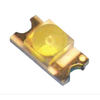
Description: SMT Multi TOPLED with IR Emitter 850nm and visible emitter 570nm
- Peak Wavelength: 570 to 850 nm
- LED Type: Green, Infrared, Multi-Colored
-
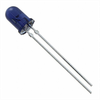
Supplier: IDEA, Inc.
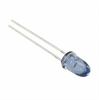
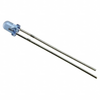
Description: 5 mm, blue lens, chip material GaAlAs
- Peak Wavelength: 940 nm
- Forward Voltage: 1.5 volts
- Forward Current: 20 milliamps
- Optical Power Output: 6.4 milliwatts
-
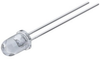
Supplier: IDEA, Inc.
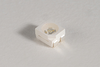
Description: Surface mount, water clear lens
- Peak Wavelength: 940 nm
- Forward Voltage: 1.5 volts
- Forward Current: 20 milliamps
- Optical Power Output: 1 milliwatts
-
-
Supplier: Newark, An Avnet Company
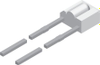
Description: IR EMITTER, SIDE, EMIT; Viewing Angle:13°; Diode Case Style:Side Looking; Forward Current If(AV):20mA; Forward Voltage VF Max:1.2V; Rise Time:-; Fall Time tf:-; Operating Temperature Min:-25°C; Operating Temperature Max:85°C; MSL:- RoHS Compliant: Yes
-
Supplier: Newport MKS
Description: Many sources emit infrared radiation to some degree, but only a few combine convenience and economy with sufficient radiant output and spectral uniformity to be practical in IR instrumentation. The 80030 is a replacement IR emitter for the 80007 silicon carbide light source. The
-
Supplier: Newark, An Avnet Company
Description: IR EMITTING DIODE; Voltage Rating:-; Current Rating:-; Product Range:- RoHS Compliant: Yes
-
Supplier: OSRAM Opto Semiconductors
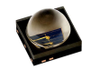
Description: IR OSLON Black, half angle ±45°, typ. 630 mW & 270 mW/sr at 1 A dc
- Peak Wavelength: 860 nm
- Optical Power Output: 630 milliwatts
- LED Type: Infrared
-
Supplier: Newport MKS
Description: source are included and require minimal assembly before use. Three Different IR Emitters Offered Three different IR light sources are available, varying in the type of IR emitter included. An IR emitter should be chosen based on output intensity and
- Lamp / Output Power: 9 watts
-
Supplier: Newport MKS
Description: The 6363IR is a complete infrared (IR) light source kit suitable for applications requiring intense near to far-IR light output without ultraviolet and visible light emission. The 6363 140 W IR emitter provides a high intensity, spectrally uniform output practical for use
- Lamp / Output Power: 140 watts
-
Supplier: Newport MKS
Description: IR emitter included. An IR emitter should be chosen based on output intensity and radiating area. 6575: This 22 W IR Element has a spectral irradiance very similar to a Nernst element. Like the 6363, its shape and mounting position make it easy to align with the
- Lamp / Output Power: 22 watts
-
Supplier: OSRAM Opto Semiconductors
Description: 5mm (T1 ¾) Radial, half angle ±3°, typ. 1100 mW/sr at 100 mA, UL version available
- Peak Wavelength: 860 nm
- LED Type: Infrared
-
Supplier: OSRAM Opto Semiconductors
Description: SMT SIDELED, half angle ±60°, typ. 11 mW/sr at 70 mA Product Features Peak wavelength: 1000 Package: SMT package High power infrared LED
- Peak Wavelength: 1,000 nm
- LED Type: Infrared
-
Supplier: Newark, An Avnet Company
Description: IR DISTRIBUTION KIT, CONTAINS ONE IR DISTRIBUTION BLOCK, ONE IR RECEIVER AND TWO SINGLE IR EMITTERS
-
Supplier: Utmel Electronic Limited
Description: IR EMITTER, 950NM, 22DEG, 5MM,
-
Supplier: Utmel Electronic Limited
Description: IR EMIT.HSPD DIODE DH 940NM
- IF: 100 mA
- Tj: -40 to 85 C
- RoHS Compliant: RoHS Compliant
-
Supplier: Newark, An Avnet Company
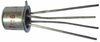
Description: IR EMITTING DIODE; Sensor Output:Thermistor; Sensing Range Max:-; Supply Voltage DC Min:-; Supply Voltage DC Max:-; Output Current:-; Product Range:-; Diode Case Style:TO-5; No. of Pins:4Pins; Operating Temperature Max:100°C RoHS Compliant: Yes
-
Supplier: Marktech Optoelectronics
Description: Infrared Emitters Marktech has recently expanded infrared capabilities to well beyond the 870 and 940 wavelengths, which have been the most popular ranges for designs over recent years. Recent additions to the product line include 1300nm, 1550nm and 1720nm wavelengths. We offer one of the
- Peak Wavelength: 850 nm
- Forward Voltage: 1.4 volts
- Forward Current: 20 milliamps
- Optical Power Output: 11 milliwatts
-
Supplier: Utmel Electronic Limited
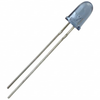
Description: EMITTER IR 940NM 100MA RADIAL
-
Supplier: Light in Motion LLC
Description: Description The QTLP660IR is a GaAs LED Emitter in a SMD package with a dome shaped lens improving the focus of the axis emissions resulting in improved outputs. Available in standard Tape and Reel packaging for automatic insertion. Features 1.8mm Dome lens 30 degree emission angle Clear
- Peak Wavelength: 940 nm
- Forward Voltage: 2.6 volts
- Forward Current: 65 milliamps
- Viewing Angle: 120 degrees
-
Supplier: Marktech Optoelectronics
Description: systems View Products Find something you were looking for? Get a free no-obligation quote today. Request Quote Related Resources UV Emitters Near IR Emitters Visible Emitters Point Source Emitters High Power IR Emitters SWIR Emitters Multi-Chip
- Peak Wavelength: 1,650 nm
- Forward Voltage: 0.8 volts
- Optical Power Output: 1.3 milliwatts
- Viewing Angle: 45 degrees
-
Supplier: ODG (Origin Data Global)
Description: EMITTER IR 940NM 100MA RADIAL
-
Supplier: SunLED Company, LLC
Description: SunLED is one of the world's leading manufacturers of optoelectronic components. Since established in 1989, SunLED has grown and propelled to offer an extensive line of LED Lamps, Surface Mount LEDs, and LED Displays that are RoHS and REACH compliant. Manufacturing with state of the art equipment,
- LED Type: Infrared
-
Supplier: Win Source Electronics
Description: Manufacturer: Everlight Electronics Co Ltd Win Source Part Number: 1186720-IR323 Manufacturer Homepage: www.everlight.com Popularity: Medium Fake Threat In the Open Market: 60 pct. Supply and Demand Status: Balance
-
Supplier: Win Source Electronics
Description: Manufacturer: Everlight Electronics Co Ltd Win Source Part Number: 1186770-IR383 Manufacturer Homepage: www.everlight.com RoHS State: Request Verification Popularity: Medium Fake Threat In the Open Market: 51 pct. Supply and Demand Status: Sufficient
-
Supplier: Win Source Electronics
Description: Manufacturer: Everlight Electronics Co Ltd Win Source Part Number: 850708-IR204/H60 Features: Emitter Package: Bulk Family Name: IR204 Categories: Optoelectronics ECCN: EAR99 Popularity: Medium Fake Threat In the Open Market: 45 pct. Supply and Demand Status: Limited Quantity per package:
-
Supplier: DigiKey
Description: 2300NM IR EMITTER IN A TO-5 FLAT
-
Supplier: Allied Electronics, Inc.
Description: The TSOP48 Series are miniaturized receivers for infrared remote control systems. A PIN diode and a preamplifier are assembled on a lead frame, the epoxy package acts as an IR filter. The demodulated output signal can directly be decoded by a microprocessor. The main benefit of the TSOP48 is
-
Supplier: Allied Electronics, Inc.
Description: The TSOP48 Series are miniaturized receivers for infrared remote control systems. A PIN diode and a preamplifier are assembled on a lead frame, the epoxy package acts as an IR filter. The demodulated output signal can directly be decoded by a microprocessor. The main benefit of the TSOP48 is
-
Supplier: Black Box
Description: Video Extender Infrared Emitter and Receiver
-
Supplier: Win Source Electronics
Description: Win Source Part Number: 1339856-MTSM0074-843-IR Category: Optoelectronics - LED Emitters - Infrared, UV, Visible Type: Infrared (IR) Package: Tape & Reel Orientation: Top View Standard Package: 2,000 Wavelength: 740nm Mounting Type: Surface Mount Package / Case: 1206 (3216
- Features: LED Lamps
-
Supplier: RS Components, Ltd.
Description: HiPow IR Emitting Diode
- Peak Wavelength: 950 nm
- Optical Power Output: 2,100 milliwatts
- LED Type: Infrared
-
Supplier: LCSC Electronics Technology (HK) Limited
Description: 20mA 无色透明透镜 -25°C~+85°C 40° 4.6mm方形灯头 75mW Plugin,P=2.54mm Light Emitting Diodes (LED) ROHS
- Peak Wavelength: 940 nm
- Forward Current: 20 milliamps
- Viewing Angle: 40 degrees
-
Supplier: RS Components, Ltd.
Description: IR EMITTER
- Operating Temperature: -40 to 212 F
- Beam Type: Infrared
- Features: Photoelectric Sensors
-
Supplier: Electro Optical Components, Inc.
Description: Electro Optical Components offers high performance IR sources as well as pyroelectric, thermopile infrared detectors and PBS and PbSe infrared detectors. EOC offers high performance pulsable IR sources. Applications for the IR Sources include infrared spectroscopy, gas detection
- Peak Wavelength: 1,500 to 7,000 nm
- Forward Voltage: 3.2 to 6.3 volts
- Forward Current: 79 to 140.99999999999997 milliamps
- LED Type: Infrared
-
Supplier: Larson Electronics LLC
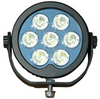
Description: operators with a versatile and powerful LED lighting solution. The LED10W-21-IR infrared LED light emitter from Magnalight produces a light in the infrared 850NM or 940NM while drawing only 21 watts @1.75 amps from a 12 volt electrical system. Seven Edison Edixeon® three watt LEDs are











Find Suppliers by Category Top
Featured Products Top
-
 EOC-20(100/180) SMD High Efficiency Nanostructure IR Sources offer: Nanotechnology achieves higher efficiency. Emitter set-up made of a high-melting metal, the free-standing monolithic radiating element and the nanostructured emitter surface. Lower (read more)
Browse Infrared Emitter Lamps Datasheets for Electro Optical Components, Inc. -
These TO packaged IR emitters are great for many projects where power is an issues. The nanotechnology emitter surface achieves higher efficiency. The emitters are (read more)
Browse Infrared Emitter Lamps Datasheets for Electro Optical Components, Inc. -
radiation density and improved mechanical stability. They are available as short-wave, medium-wave and fast medium-wave infrared emitters. This allows you to choose the optimal wavelength for the material to be heated. Dimensions and filaments are fabricated to meet your requirements. These IR emitters are also available for special geometries, e.g. omega-shaped, bent or as a complete IR system. (read more)
Browse Datasheets for Excelitas Technologies Corp. -
-ion batteries such as those being used in electric vehicles. Field tests at customers showed electrode slurry drying is up to 80% faster with CIR emitters compared to convection oven drying while improving both electrode conductivity and durability to deliver significantly improved battery quality. (read more)
Browse Ovens (industrial) Datasheets for Excelitas Technologies Corp. -
. Patented emitter set-up made of a high-melting metal, the free-standing monolithic radiating element and the nanostructured emitter surface. Lower element temperature of 600°C increases lifetime. The emitters are: More stable Less or no drift (read more)
Browse Gas Sensors Datasheets for Electro Optical Components, Inc. -
different gases Emits directional radiation - More efficient use of the optical power Robust - Reliable, long-term stable measurement SMD housing - Easy assembly, low profile package, Overall height < 2 mm Low power consumption - Use in portable devices (read more)
Browse Gas Sensors Datasheets for Electro Optical Components, Inc. -
The FL500 UVIR Flame Detector delivers high speed flame detection with increased false alarm immunity in a compact design. The FL500 UV/IR Flame Detector monitors for radiation emitted by a flame in both the ultraviolet (UV) and infrared (IR) spectral ranges. By (read more)
Browse Flame Detectors Datasheets for MSA Safety -
Infrared heaters are a popular heating solution in industrial applications for several reasons: There are a variety of heater types that emit a range of wavelengths - short, medium and long. IR heaters can be energized to the desired temperature quickly. IR (read more)
Browse Ceramic Fiber Heaters Datasheets for Tempco Electric Heater Corporation -
Using Solar Detectors to Measure the Sun’s Total Broadband Radiation Understanding and quantifying the sun’s total broadband radiation is essential for advancing solar energy, climate science, and photonics. The sun emits energy (read more)
Browse Noncontact Infrared Temperature Sensors Datasheets for Dexter Research Center, Inc. -
/lens solution that measures the angular distribution and radiant intensity of 850 or 940 nm near-infrared (NIR or near-IR) emitters. The NIR Intensity Lens system utilizes Fourier optics to capture a full distribution of NIR light in a single measurement up to ±70 degrees, giving you extremely (read more)
Browse Automated Test Equipment Datasheets for Radiant Vision Systems
Conduct Research Top
-
Five Things You Should Know About the Operating Life of Infrared Emitters
How long is the operating life of an infrared (IR) emitter? How do you define "Operating Life"? How do you measure it? And what influences the operating life in practice? These are questions we are often asked related to the operating life of industrial IR emitters for all types of heating
-
How Do IR Thermometers Work?
The first thing to understand with IR Thermometers is a bit of how heat works. As an object heats up, its molecules start to vibrate faster, generating heat. IR radiation is emitted whenever an object has a temperature above absolute zero.
-
Non-Dispersive Infrared (NDIR) Gas Detection
Non-Dispersive Infrared (NDIR) technology utilizes a broadband infrared (IR) emitter, which covers all of the wavelengths of interest for a given set of gases to be measured. Optical Band Pass filters allow that portion of IR wavelengths at which a specific gas absorbs IR energy.
-
Selected Critical Applications for Thermography: Convections in Fluids, Selective Emitters and Highly Reflecting Materials
emitters, in that they do not emit IR radiation selectively, and that the emissivities do not exhibit wavelength dependence in the thermal infrared spectral region. If these requirements are fulfilled, it is quite easy to analyze the IR images with high accuracy. However, there is a growing number
-
IR Calibration
All bodies radiate energy to their surroundings proportional to their absolute temperature. Although the emitted radiation of a body includes all wavelengths, the region in which the amount of radiation is significant to industrial temperature measurement extends from 0.3 µm to about 20 µm. From
-
The Ultimate Infrared Handbook for R&D Professionals (.pdf)
Although infrared radiation (IR) is not detectable by the human eye, an IR camera can convert it to a visual image that depicts thermal variations across an object or scene. IR covers a portion of the electromagnetic spectrum from approximately 900 to 14,000 nanometers (0.9-14 µm). IR is emitted
-
Features and Applications of IR Lenses
Discover Avantier's fascinating world of infrared lenses and their diverse applications in medical instrumentation, life sciences, surveillance, and security and defense, enabling the detection and analysis of thermal energy emitted by objects.
-
Technical Questions about the Operation of Light in Motion's IR Hermetic Components
There is no absolute answer to this question. It depends much on the application. In most cases, by pulsing the emitter with a high drive current and using a sensitive photosensor, such as a photodarlington, one can expand the range. The range for detecting an object by reflection can be from 0 mm
More Information Top
 Indicates content that may require registration and/or purchase.

-
Bill of Materials - Microsoft Xbox One
$12.00 - IR Emitter , Laser Diode, w/ Heatsink - (Qty: 3 .
-
PDF - Microsoft Xbox One
$12.00 - IR Emitter , Laser Diode, w/ Heatsink - (Qty: 3 .
-
Bill of Materials - Microsoft Kinect Gaming Controller
IR Emitter Module .
-
A MEMS-based infrared emitter array for combat identification
The silicon-based MEMS (MEMS: microelectromechanical systems) Infrared ( IR ) emitter arrays of 1 2, 2 2 and 3 3 elements are presented.
-
Bill Of Materials - Sonos Playbar
Rear IR Emitter PCB A - China .
-
Mobile PointMe-based spatial haptic interaction with annotated media for learning purposes
2 we illustrate the mobile interac- tion scheme, where we discuss basic IR camera arrange- ments in an indoor learning environment, IR camera components and IR emitter to mobile location approxi- mation algorithms.
-
A silicon micromachined infrared emitter based on SOI waf
IR ) emitter is presented.
-
Bill Of Materials - Samsung SNV-7084RP
IR Emitter PCB - China .