
Products & Services
See also: Categories | Featured Products | Technical Articles | More Information-
Supplier: Networks International Corporation
Description: Type: Bandpass Center Frequency: 500.000-6000.000 (MHz) Mount: SMA NIC introduces its Wideband LNA designed for C Band, Radar and Satcom applications. This amplifier operates in the frequency range of 4 GHz â 5 GHz, providing high gain, low Noise Figure and is built in an
- Filter Type: Bandpass
-
Supplier: Elsys AG
Description: The amplifier EL-LNA-2 is designed as a differential low noise amplifier with two gain stages of x10 and x100 with a full bandwidth of 20 MHz (at G=10) While the EL-LNA-2 is matched to connect to an Elsys highprecision Transient Recorder it is also suitable
- Analog Input Channels: 2 #
- Gain Range: 10 to 100 #
- Maximum Output: 2.5 volts
- Bandwidth: 20,000 kHz
-
Supplier: Richardson RFPD
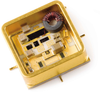
Description: The ERZ-LNA-0600-1200-35-3 is a Low Noise Amplifier providing a gain of 35 dB with a noise figure of 2 dB. The compact size and modularity makes it ideal for a wide range of applications.
- Frequency Range: 6,000 to 12,000 MHz
- Maximum Gain: 35 dB
- Output Power( P1dB): 20 dBm
- Noise Figure: 2 dB
-
-
Supplier: Infineon Technologies AG
Description: BGA416 is a monolithic silicon cascade amplifier with high reverse isolation. A bias network is integrated for simplified biasing. Summary of Features: - GMA = 23 dB at 900MHz - Ultra high reverse isolation, 60 dB at 900 MHz - Low noise figure, F50Ω = 1.2 dB at 900 MHz - On chip
- Frequency Range: 3,000 MHz
- Minimum Gain: 23 dB
- Maximum Gain: 23 dB
- Noise Figure: 1.3 dB
-
Supplier: APITech
Description: API Technologies offers customizable and rugged low noise amplifier solutions for High-Rel, Defense and Space bound LNA applications. API also does not charge any NRE when slight modifications to it’s LNAs are requested to optimize for gain, power, noise, or
-
Supplier: Networks International Corporation
Description: NIC introduces its Wideband LNA designed for C Band, Radar and Satcom applications. This amplifier operates in the frequency range of 4 GHz - 5 GHz, providing high gain, low Noise Figure and is built in an extremely small package size of 1.2 x 0.9 x 0.4 in. Features: 1)
- Amplifier Type: Low Noise Amplifier
-
Supplier: LCSC Electronics Technology (HK) Limited
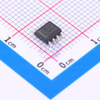
Description: SOIC-8 Low Noise Amplifiers (LNA) - RF ROHS
- Standards and Certifications: RoHS Compliant
- Package Type: SOIC
-
Supplier: Infineon Technologies AG
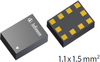
Description: Low noise amplifier MMICs for mobile cellular systems: UMTS, HSPA/+ and LTE Infineon 3G/4G LNA MMICs (Monolithic Microwave Integrated Circuit) are designed to optimize the sensitivity of mobile cellular systems. This allows to extend the area of highest data traffic for
- Frequency Range: 5,150 to 5,925 MHz
- Maximum Gain: 20.5 dB
- Noise Figure: 1.6 dB
- Nominal Operating Current: 0.005 amps
-
Supplier: Broadcom Inc.
Description: Avago Technologies’ MGA-684P8 is an economical, easyto-use GaAs MMIC Low Noise Amplifier (LNA). The LNA has Low Noise and High Linearity achieved through the use of Avago Technologies' proprietary 0.25um GaAs Enhancement-mode pHEMT process.
- Frequency Range: 1,500 to 4,000 MHz
- Minimum Gain: 16.1 dB
- Maximum Gain: 19.1 dB
- Output Power( P1dB): 21.99999999999999 dBm
-
Supplier: Broadcom Inc.
Description: Avago Technologies’ MGA-636P8 is an economical, easyto-use GaAs MMIC Low Noise Amplifier (LNA). The LNA has Low Noise and High Linearity achieved through the use of Avago Technologies' proprietary 0.25um GaAs Enhancement-mode pHEMT process.
- Frequency Range: 450 to 1,500 MHz
- Minimum Gain: 17.5 dB
- Maximum Gain: 20.5 dB
- Output Power( P1dB): 23.8 dBm
-
Supplier: Microchip Technology, Inc.
Description: The MMA043PP4 is a gallium arsenide (GaAs) pseudomorphic high-electron-mobility transistor (pHEMT) low-noise wideband amplifier in a leadless 4 mm × 4 mm surface-mount package that operates between 0.5 GHz and 12 GHz. The MMA043PP4 amplifier provides 16 dB of gain, 2.0 dB
- Features: Other
-
Supplier: Custom MMIC
Description: The CMD160 is a highly efficient GaAs MMIC low noise amplifier ideally suited for EW and communications systems where small size and low power consumption are critical design requirements. The device is optimized for 21 GHz and delivers greater than 26 dB of gain with a
- Frequency Range: 17,000 to 25,000 MHz
- Minimum Gain: 26.5 dB
- Maximum Gain: 26.5 dB
- Output Power( P1dB): 7.999999999999998 dBm
-
Supplier: Infineon Technologies AG
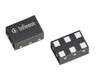
Description: BGA729N6 is a broadband low power low noise amplifier (LNA) MMIC for portable and mobile TV applications which covers a wide frequency range from 70 MHz to 1000 MHz. The LNA provides 16.3 dB gain and 1.1 dB noise figure at a current consumption of 6.0
- Features: Other
- Standards and Certifications: RoHS Compliant
-
Amplifier and Comparator Chips - RF - Low Noise Amplifier LNA ICs - GNSS LNAs - BGA824N6 -- BGA824N6Supplier: Infineon Technologies AG
Description: The BGA824N6 is a front-end low noise amplifier for Global Navigation Satellite Systems (GNSS) from 1550 MHz to 1615 MHz like GPS, GLONASS, Beidou, Galileo and others. The LNA provides 17.0 dB gain and 0.55 dB noise figure at a current consumption of 3.8 mA in the
- Features: Other
- Standards and Certifications: RoHS Compliant
-
Supplier: Broadcom Inc.
Description: Avago Technologies’ MGA-683P8 is an economical, easyto-use GaAs MMIC Low Noise Amplifier (LNA). The LNA has Low Noise and High Linearity achieved through the use of Avago Technologies' proprietary 0.25um GaAs Enhancement-mode pHEMT process.
- Frequency Range: 450 to 2,000 MHz
- Minimum Gain: 16.3 dB
- Maximum Gain: 19.3 dB
- Output Power( P1dB): 21.499999999999986 dBm
-
Supplier: Broadcom Inc.
Description: Avago Technologies’ MGA-633P8 is an economical, easyto-use GaAs MMIC Low Noise Amplifier (LNA). The LNA has Low Noise and High Linearity achieved through the use of Avago Technologies' proprietary 0.25um GaAs Enhancement-mode pHEMT process.
- Frequency Range: 1,500 to 2,300 MHz
- Minimum Gain: 16.5 dB
- Maximum Gain: 19.5 dB
- Output Power( P1dB): 21.99999999999999 dBm
-
Supplier: Skyworks Solutions, Inc.
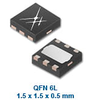
Description: The SKY65404-31 is an ultra Low-Noise Amplifier (LNA) intended for 5 GHz wireless receiver applications. Its industry-leading Noise Figure (NF), together with high linearity, makes it ideal as a firststage LNA in 802.11a Wireless Local Area Network (WLAN)
- Frequency Range: 4,900 to 5,900 MHz
- Minimum Gain: 13 dB
- Maximum Gain: 13 dB
- Noise Figure: 1.2 dB
-
Supplier: Qorvo
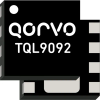
Description: Qorvo's TQL9092 is a flat-gain, high-linearity, ultra-low noise amplifier in a small 2 x 2 mm surface-mount package. The LNA provides a gain flatness of 2 dB (peak-to-peak) over a wide bandwidth from 1.5 to 3.6 GHz. At 2.6 GHz, the amplifier typically provides 22.6
- Frequency Range: 600 to 4,200 MHz
- Minimum Gain: 22.6 dB
- Maximum Gain: 22.6 dB
- Output Power( P1dB): 19 dBm
-
Supplier: Skyworks Solutions, Inc.
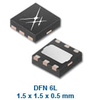
Description: The SKY65405-21 is an ultra Low-Noise Amplifier (LNA) intended for 2.4 GHz wireless receiver applications. Its industry-leading Noise Figure (NF), together with high linearity, makes it ideal as a first-stage LNA in 802.11b,g Wireless Local Area Network
- Frequency Range: 2,400 to 2,500 MHz
- Minimum Gain: 15 dB
- Maximum Gain: 15 dB
- Noise Figure: 1.1 dB
-
Supplier: Skyworks Solutions, Inc.
Description: The SKY65971-11 is an ultra Low-Noise Amplifier (LNA) intended for 2 GHz, 256 Quadrature Amplitude Modulation (QAM) wireless receiver applications. Its industry-leading Noise Figure (NF), together with high linearity, make it ideal as a first-stage LNA in
- Frequency Range: 2,400 to 2,500 MHz
- Minimum Gain: 14.5 dB
- Maximum Gain: 14.5 dB
- Noise Figure: 1.3 dB
-
Supplier: Qorvo
Description: The Noise Figure is typically 2dB at mid-band. The TGA2567-SM is available in a low-cost, surface mount 24 lead 4x4 AIN QFN package base with an Air cavity LCD lid. The TGA2567-SM is ideally suited to support both commercial and defense related applications. Lead-free and RoHS
- Frequency Range: 2,000 to 20,000 MHz
- Minimum Gain: 17 dB
- Maximum Gain: 17 dB
- Output Power( P1dB): 19 dBm
-
Supplier: Skyworks Solutions, Inc.
Description: Please note: SKY65803-696LF is being discontinued and is not recommended for new designs. The SKY65803-696LF is a silicon-on-insulator (SOI) low-noise amplifier (LNA) with bypass function. The device provides excellent return loss, low-noise and
- Frequency Range: 617 to 960 MHz
- Minimum Gain: 14 dB
- Maximum Gain: 14 dB
- Noise Figure: 0.9 dB
-
Supplier: Qorvo
Description: The QPL9095 is a high-linearity, ultra-low noise gain block amplifier with a bypass mode functionality integrated in the product. At 900MHz, the amplifier typically provides 22 dB gain, +34 dBm OIP3, and 0.6 dB noise figure while drawing 50 mA current from a +4.2 V
- Frequency Range: 600 to 1,000 MHz
- Minimum Gain: 22 dB
- Maximum Gain: 22 dB
- Output Power( P1dB): 20 dBm
-
Supplier: Custom MMIC
Description: leading LNAs, Power Amplifiers, Distributed Amplifiers, Driver Amplifiers, Low Phase Noise Amplifiers, Phase Shifters, Switches, and Mixers can be evaluated and prototyped quickly with this method.
- Development Tool: Break Out Board
- Features: Other
- Supported System: RF
-
Supplier: Qorvo
Description: The Qorvo QPM6000 is an integrated limiter/LNA providing robust, high RF performance covering 8-14GHz frequency range. The QPM6000 provides 23 dB small signal gain with 18 dBm P1dB power and a low noise figure of 1.6 dB across application frequency band. In addition, the
- Operating Frequency: 8,000 to 14,000 MHz
- Features: Other, RoHS
- Package Type: Surface Mount Technology (SMT)
-
Supplier: MACOM
Description: MACOM’s line of hybrid amplifiers cover a frequency range of 10 kHz to 6 GHz. Each amplifier is designed to be unconditionally stable and have excellent cascadability. Our amplifiers are designed using thin film technology and are integrated amplifiers that include
- Frequency Range: 2 to 6,000 MHz
- Minimum Gain: 7.5 dB
- Maximum Gain: 38.5 dB
- Noise Figure: 1.1 to 5.5 dB
-
Supplier: Mini-Circuits
Description: The PMA2-252LNA+ is an E-PHEMT amplifier that operates from 1500 to 2500 MHz. The amplifier has a low noise figure of 0.8 dB typical while providing 17.6 dB of gain, +30 dBm OIP3, and +17.8 dBm P1dB with 18 dB typical return loss from a +4 V supply drawing 57 mA. Gain is
- Operating Temperature: -40 to 85 C
- Nominal Impedance: 50 Ohms
- Amplifier Type: Low Noise Amplifier, Power Amplifier
- MMIC Tech.: MMIC Technology Required
-
Supplier: Newark, An Avnet Company
Description: EVAL BOARD, AM/FM LOW-NOISE AMPLIFIER; Kit Application Type:RF / IF; Silicon Manufacturer:Maxim Integrated Products; Silicon Core Number:MAX2180A; Application Sub Type:Low Noise Amplifier (LNA); Kit Contents:Eval Board MAX2180A; RoHS Compliant: Yes
-
Supplier: Fairview Microwave Inc.
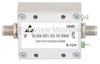
Description: RF low noise amplifier SLNA-001-25-10-SMA from Fairview Microwave is just one amp of a large selection of in-stock radio frequency LNA amplifiers specifically stocked to be highly available for rapid shipment. Fairview RF low noise amplifier
- Frequency Range: 50 to 1,000 MHz
- Maximum Gain: 19 dB
- Output Power( P1dB): 20 dBm
- Maximum Operating Voltage: 12 volts
-
Supplier: Fairview Microwave Inc.
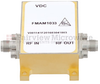
Description: RF low noise amplifier FMAM1033 from Fairview Microwave is just one amp of a large selection of in-stock radio frequency LNA amplifiers specifically stocked to be highly available for rapid shipment. Fairview RF low noise amplifier (LNA)
- Frequency Range: 7,000 to 11,000 MHz
- Maximum Gain: 9 dB
- Output Power( P1dB): 21.99999999999999 dBm
- Amplifier Type: Low Noise Amplifier
-
Supplier: Fairview Microwave Inc.
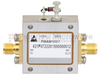
Description: RF low noise amplifier FMAM1027 from Fairview Microwave is just one amp of a large selection of in-stock radio frequency LNA amplifiers specifically stocked to be highly available for rapid shipment. Fairview RF low noise amplifier (LNA)
- Frequency Range: 8,000 to 12,000 MHz
- Maximum Gain: 18 dB
- Output Power( P1dB): 13.000000000000002 dBm
- Maximum Operating Voltage: 13 volts
-
Supplier: Fairview Microwave Inc.
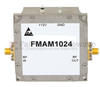
Description: RF low noise amplifier FMAM1024 from Fairview Microwave is just one amp of a large selection of in-stock radio frequency LNA amplifiers specifically stocked to be highly available for rapid shipment. Fairview RF low noise amplifier (LNA)
- Frequency Range: 1,200 to 1,400 MHz
- Maximum Gain: 35 dB
- Output Power( P1dB): 15.000000000000002 dBm
- Maximum Operating Voltage: 13.2 volts
-
Supplier: DigiKey
Description: SMT LNA, 1.5 - 2.5 GHZ, 50
- Frequency Range: 1,500 to 2,500 MHz
- Minimum Gain: 15.7 dB
- Maximum Gain: 15.7 dB
- Output Power( P1dB): 18.5 dBm
-
Supplier: Networks International Corporation
Description: NIC's BPF + LNA assemblies are designed for a variety of applications and integrates a cavity filter and low noise amplifier into a single compact module for performance improvement, space saving and cost reduction. This BPF/LNA Assembly is typically used in L & S
- Amplifier Type: Low Noise Amplifier
-
Supplier: Mini-Circuits
Description: Mini-Circuits ZX60-53LNB-S+ is a low-noise amplifier offering industry-leading performance over its full frequency range from 500 MHz to 5 GHz. It contains internal switching, allowing the user control of the amplifier to handle both high and low signal levels by
- Nominal Impedance: 50 Ohms
- Package Type: Connectorized
- Amplifier Type: Low Noise Amplifier, Power Amplifier
- Connectors: SMA






Find Suppliers by Category Top
Featured Products Top
-
 low noise amplifiers (LNAs). These LNAs feature ultra low-noise figure, exceptional linearity, and operate over a wide range of frequencies. To reduce PCB board (read more)
Browse RF Amplifiers Datasheets for Skyworks Solutions, Inc. -
The SKY67180-306LF is a two-stage, low-noise amplifier (LNA) with active bias and high-linearity performance. The front end of the device provides an ultra-low noise figure (NF) while the output stage provides high gain, linearity, and efficiency. With excellent (read more)
Browse RF Amplifiers Datasheets for Skyworks Solutions, Inc. -
The SKY67183-396LF is a wide-band low-noise amplifier with superior gain flatness and exceptional linearity. The compact 2 x 2 mm, 8-pin Dual Flat No Lead packaged LNA is designed for FDD and TDD 4G LTE and 5G NR infrastructure systems operating from 400 to 6000 MHz. The internal active bias (read more)
Browse RF Amplifiers Datasheets for Richardson RFPD -
noise amplifier designed to meet the challenging requirements of cellular LTE and 5G NR infrastructure applications. This LNA features ultra low-noise figure, high gain, and operates over a wide range of frequencies. To reduce PCB board space, this device is housed in an ultra-compact 2 x 2 mm plastic (read more)
Browse Amplifier and Comparator Chips Datasheets for Skyworks Solutions, Inc. -
AMM-9854PSM - Marki Microwave’s new AMM-9852PSM offers industry-leading LNA performance from DC to 30 GHz in a compact 3mm QFN offering exceptionally flat response across its entire operating bandwidth. Capable of providing 14dB gain and +25dBm OIP3 with a low 2.5 dB typical noise figure, the AMM-9854PSM is an ideal linear signal amplifier for applications requiring low power consumption and small form-factors. (read more)
Browse RF Amplifiers Datasheets for Marki Microwave LLC -
AMM-9852PSM - Marki Microwave’s new AMM-9852PSM offers industry-leading LNA performance from DC to 20 GHz in a compact 3mm QFN offering exceptionally flat response across its entire operating bandwidth. Capable of providing 17dB gain and +33dBm OIP3 with a low 1.8 dB typical noise figure, the AMM-9852PSM is an ideal linear signal amplifier for applications requiring low power consumption and small form-factors. (read more)
Browse RF Amplifiers Datasheets for Marki Microwave LLC -
AMM-9858PSM - Marki Microwave’s new AMM-9858PSM offers industry-leading LNA performance from 2 to 20 GHz in a compact 3mm QFN offering exceptionally flat response across its entire operating bandwidth. Capable of providing 17dB gain and +30dBm OIP3 with a low 1.9 dB typical noise figure, the AMM-9858PSM is an ideal linear signal amplifier for applications requiring low power consumption and small form-factors. (read more)
Browse RF Amplifiers Datasheets for Marki Microwave LLC -
AMM-9860PSM - Marki Microwave’s new AMM-9860PSM offers industry-leading LNA performance from 3 to 30 GHz in a compact 3mm QFN offering exceptionally flat response across its entire operating bandwidth. Capable of providing 13.5dB gain and +28dBm OIP3 with a low 2.7 dB typical noise figure, the AMM-9860PSM is an ideal linear signal amplifier for applications requiring low power consumption and small form-factors. (read more)
Browse RF Amplifiers Datasheets for Marki Microwave LLC -
Description: The CHA2595-QDG is a wideband monolithic Low Noise Amplifier with state-of-the-art wideband, low noise, adjustable gain performance. It is designed for a wide range of applications, from military to commercial communication and test instrumentation systems (read more)
Browse RF Amplifiers Datasheets for Richardson RFPD -
Industry-Leading Performance Amplifier phase noise is a significant contributor to transceiver phase noise performance and many designers are increasingly looking for phase noise specifications before choosing an amplifier for their systems. Mini-Circuits' engineering team has a (read more)
Browse RF Amplifiers Datasheets for Mini-Circuits
Conduct Research Top
-
AN3010: An Examination of Recovery Time of an Integrated Limiter/LNA
or nuclear electromagnetic pulse. Especially, low noise amplifiers (LNAs) in the front-end of microwave systems need high power protection because these amplifiers can sustain only low input power levels in the range of 10-20 dBm continuous wave (CW). To protect these circuits and maintain low
-
M540: GaAs MMIC Low Noise Amplifiers (SOIC-8 Platform)
Early in 1994, M/A-COM began offering a family of plastic packaged GaAs MMIC low noise amplifiers (LNAs) featuring single positive supply voltage, low noise figure, high dynamic range, and low power consumption for the high volume commercial wireless communications market. These MMIC LNAs use M
-
5 Key MMIC LNA Choices That Can Make or Break a Receiver Design
Low Noise Amplifier (LNA) MMICs are a critical component in virtually all radar, wireless communication and instrumentation systems. There are a wide range of options and tradeoffs an engineer must. consider when picking an LNA MMIC for a particular. system design.
-
Understanding the Phenomenon of High-Power Pulse Recovery in GaN LNAs
The Gallium Nitride (GaN) high electron mobility. transistor (HEMT) is well known for its use in microwave and millimeter wave power amplifiers due to its high breakdown voltage and ability to handle high RF power. Recently, GaN technology has also been used to create low noise amplifiers (LNAs
-
Looking Into Noise-Figure Measurement Uncertainty
Microwave modeling software has enabled extremely low noise-figure (NF) amplifiers to become commonplace. There was a time when low-noise amplifiers (LNAs) below 0.7 dB were found only on specialized, expensive systems such as MRI machines or highly sensitive scientific radiometers. However, within
-
Accurate System Level Design with Low Noise Amplifier's BlackBox Models
Following LNAs importance in the communication system. chain, it is very important to simulate their performance well. at a system level design. A system level design may comprise. of many discrete as well as integrated drop-in components. which requires careful monitoring of individual components
-
Schottky Mixer Feature High Dynamic Range
of the mixer. The signal for the RF port of the mixer is typically derived from a low noise amplifier (LNA) which ultimately comes from an antenna. The resulting intermediate frequency (IF) produced from mixing the two signals is then processed or possibly down converted again.
-
Electropages.com: Compact Wi-Fi 6 FEM Minimizes Layout Area in IEEE 80211ax Systems
Qorvo QPF4532 5GHz Wi-Fi 6 Front End Module (FEM), available now from Mouser, is optimised for IEEE 802.11ax systems. The FEM features a 5150MHz to 5850MHz frequency range, up to 31dB transmit gain, and a low 2dB noise figure. This highly integrated device combines a 5GHz power amplifier, regulator
More Information Top
 Indicates content that may require registration and/or purchase.

-
RF Circuit Design
LNA ( LOW NOISE AMPLIFIER .
-
Space Antenna Handbook Complete Document
LNA Low Noise Amplifier .
-
Parametric Analog Signal Amplification Applied to Nanoscale CMOS Technologies
See Low noise amplifiers ( LNA ) Low noise amplifiers (LNA) 1 dB compression point, IIP2 and IIP3, 154 DC biasing, 154 gain distribution, 151 narrowband, 152 total distortion, overall receiver, 153 wideband, 155 .
-
Advanced Millimeter-wave Technologies: Antennas Packaging and Circuits Complete Document
LNA Low Noise Amplifier .
-
Radio Frequency Integrated Circuits and Technologies
Let us begin with LNAs ( Low Noise Amplifiers ), which are im- portant components in receivers as, e.g. illustrated in Fig. 2.2.
-
Fundamentals of Telecommunications 2nd Edition
If we said that the LNA ( low noise amplifier ) had an insertion gain of 30 dB, we would expect the output to have a power 30 dB greater than the input.
-
http://trs-new.jpl.nasa.gov/dspace/bitstream/2014/22637/1/97-1148.pdf
… movement) created by each RF (Radio Frequency) system element, by man-made noise, and by the background noise of free space, makes it difficult to distinguish between the signal and noise components of the signal arriving at the LNA ( Low Noise Amplifier ).
-
Book of abstracts
This paper demonstrates a novel LNA ( Low Noise Amplifier ) design that utilizes active inter-stage and I/O matching to dra- matically reduce size and increase performance over traditional inductor/capacitor matching.