
Products & Services
See also: Categories | Featured Products | Technical Articles | More Information-
Supplier: HORIBA Instruments, Inc.
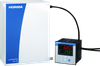
Description: Redevelops HORIBA's founding pH measurement technology using new ultra-small capillary electrode. HORIBA's UP-100 affords ultra-low sample consumption of just 500 uL/measurement, enabling continuous pH monitoring for a variety of critical manufacturing processes that include
- pH Range: 0 to 14 pH
- Electrical Output: Analog Current Output
- Display Type: Digital Display
- User Controls: Digital Front Panel
-
Supplier: Fortrans Inc.
Description: Model 5000M pH Monitor and Data Logger System The Fortrans, Inc.® Model 5000M pH monitor and data logger system is a top-quality industrial process water pH monitoring system with built-in data logging capabilities. This pH monitor ensures that
- Number of Inputs: 2 inputs
- Number of Control Outputs: 1 outputs
- Features: Datalogger, PLC Controller, Rate Indication / Control
- Interface: Digital Front Panel
-
Supplier: Myron L Company
Description: BENEFITS Affordable Ease of Operation Low Maintenance Ensures Product Quality The advanced “isolated” circuitry of the 720 Series II pH/ORP Monitor/ controllers guarantees accurate and reliable measurements — completely eliminating ground-loop and noise issues. The unique sensor preamp
- pH Range: 0 to 14 pH
- Operating Temperature: 32 to 140 F
- Electrical Output: Analog Voltage Output
- Display Type: Digital Display
-
-
Supplier: Myron L Company
Description: BENEFITS Affordable Ease of Operation Low Maintenance Ensures Product Quality The advanced “isolated” circuitry of the 720 Series II pH/ORP Monitor/ controllers guarantees accurate and reliable measurements — completely eliminating ground-loop and noise issues. The unique sensor preamp
- pH Range: 0 to 14 pH
- Operating Temperature: 32 to 140 F
- Display Type: Analog Meter
- Electrical Output: Analog Voltage Output
-
Supplier: Myron L Company
Description: BENEFITS Affordable Ease of Operation Low Maintenance Ensures Product Quality The advanced “isolated” circuitry of the 720 Series II pH/ORP Monitor/ controllers guarantees accurate and reliable measurements — completely eliminating ground-loop and noise issues. The unique sensor preamp
- pH Range: 0 to 14 pH
- Operating Temperature: 32 to 140 F
- Electrical Output: Analog Voltage Output
- Display Type: Digital Display
-
Supplier: Myron L Company
Description: BENEFITS Affordable Ease of Operation Low Maintenance Ensures Product Quality The advanced “isolated” circuitry of the 720 Series II pH/ORP Monitor/ controllers guarantees accurate and reliable measurements — completely eliminating ground-loop and noise issues. The unique sensor preamp
- pH Range: 0 to 14 pH
- Operating Temperature: 32 to 140 F
- Display Type: Analog Meter
- Electrical Output: Analog Voltage Output
-
Supplier: SWAN Analytical USA, INC.
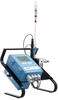
Description: The portable AMI INSPECTOR is a complete monitoring system mounted on a small panel with supporting stand and a rechargeable battery for stand-alone operation, designed as an inspection equipment for quality assurance of online, pH process monitors. Features Measurement range: 1 to 12
- pH Range: 1 to 12 pH
- Accuracy: 0.01 ±pH
- Control Relays: 2
- Process Media Temperature: -22 to 266 F
-
Supplier: Newark, An Avnet Company
Description: 3 PH VOLT MONITOR 48 PCS / P
-
Supplier: Newark, An Avnet Company
Description: 3PH VOLT. MONITOR 190-480VAC
-
Supplier: Newark, An Avnet Company
Description: 3-PH POWER MONITOR/340-480V/ / BOX
-
Supplier: Newark, An Avnet Company
Description: 3 PH VOLTAGE MONITOR 208-240VA / BOX
-
Supplier: PHOENIX CONTACT USA
Description: Monitoring relay for monitoring phase sequence, phase failure and asymmetry, 342 ... 457 V AC, supply from measurement supply, 2 PDTs
- Operating Temperature: 77 to 104 F
-
Supplier: PHOENIX CONTACT USA
Description: Monitoring relay for monitoring the phase sequence and asymmetry of 3-phase voltages at 208 ... 480 V AC/120 ... 277 V AC, configurable asymmetry, 1 PDT, with screw connection
- Operating Temperature: 77 to 131 F
-
Supplier: PHOENIX CONTACT USA
Description: Monitoring relay for monitoring phase sequence, phase failure, and asymmetry for 208 V AC ... 690 V AC from 3-phase voltages, 2 PDTs, with screw connection
- Operating Temperature: 77 to 131 F
-
Supplier: PHOENIX CONTACT USA
Description: Monitoring relay for monitoring the phase sequence and asymmetry of 3-phase voltages at 208 ... 480 V AC/120 ... 277 V AC, configurable asymmetry, 1 PDT, with push-in connection
- Operating Temperature: 77 to 131 F
-
Supplier: Serfilco, Ltd.
Description: Performance: Analog
- Controller Type: pH / ORP Controller
-
Supplier: DOD Technologies Inc.
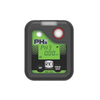
Description: The 04 Series single gas monitor is designed to operate for many years with field replaceable sensors and filters. The 04 Series can be operated continuously for up to 9,000 hours on (2) AAA size alkaline batteries (depending on model). The 04 Series has 3 preset alarms that are user
- Display: Digital
- Features: Intrinsically Safe
- Instrument Type: Monitor
- Mounting Type: Portable
-
Supplier: DoubleSight Displays
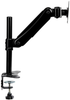
Description: DoubleSight's Flex LCD Monitor Arm 20 Series is the perfect mounting solution for LCD Monitors measuring up to 30" and weighing between 6 and 20 lbs. The Flex Series offers a variety of Arm Options. The DS-20PH Flex Monitor Arm's Articulating Arm provides Tilt, Pivot and Swivel
-
Supplier: Fortrans Inc.
Description: add the following pH Control System Accessories: Custom System Flow and Treatment Capacity Electronic Flow Meter Data Logger Modular Discharge Option pH Monitors and Reports Chemical Pumps and Injectors And More Over 600 of these CO₂ pH neutralization and control systems
- Market: Industrial, Other
-
Supplier: Quarktwin Technology Ltd.
Description: Phase Loss, Phase Sequence 200 ~ 500VAC
- Operating Temperature: -4 to 140 F
-
Supplier: Accuris
Description: Ships and marine technology - Marine environment protection - Continuous on-board pH monitoring method
-
Supplier: PCE Instruments / PCE Americas Inc.
Description: PCE-PH20 easy-to-use pH meter for pH determination / External pH electrode / Recalibratable / Waterproof (IP 67) The pH meter was developed to directly determine the pH in aqueous media or water based solutions. The waterproof pH tester PCE-PH20 is used for
- pH Range: 0 to 14 pH
- Operating Temperature: 32 to 140 F
- Features and Functionality: Battery Powered
- Water Quality Parameters: pH
-
Supplier: Accuris
Description: Ships and marine technology \x97 Marine environment protection \x97 Continuous on-board pH monitoring method
-
Supplier: DigiKey
Description: Phase Loss, Phase Sequence 200 ~ 480VAC
-
Supplier: Accuris
Description: Ships and marine technology \x96 Marine environment protection \x96 Continuous on-board pH monitoring method
-
Supplier: Piezo-Metrics
Description: The pH and temperature data loggers monitors the environment through the use of external pH and RTD temperature probes. Easy to install, battery-operated, stand alone data logging.
-
Supplier: ODG (Origin Data Global)
Description: MIFAREA PLUS EV1
-
Supplier: Quarktwin Technology Ltd.
Description: IC
- Device Type: Receiver
- Features: RoHS Compliant
-
Supplier: RS Components, Ltd.
Description: Omron K8DS-PH1 Monitoring Relay
-
Supplier: Accuris
Description: AASHTO Practitioner's Handbook - Tracking Compliance with Environmental Commitments/Use of Environmental Monitors
-
Supplier: PCE Instruments / PCE Americas Inc.
Description: product (refers to chemical substances, hair dyes, strong hair and body sprays), the values may be lower and higher. The use of a pH meter with a special glass electrode is one of the well-known methods of pH measurement in cosmetics. The pH meter ensures that you get reliable
- pH Range: 0 to 14 pH
- Operating Temperature: 32 to 140 F
- Features and Functionality: Battery Powered
-
Description: Description / Abstract There is no abstract information for this document.
-
Supplier: Acme Chip Technology Co., Limited
Description: MIFARE PLUS EV2
- Features: Other
-
Supplier: OMEGA Engineering, Inc.
Description: program to set up pH or ORP calibration. The PHCN-961/962 is a basic pH or ORP controller, it includes a NEMA 4X (IP65) enclosure, digital display, two separate set points for high and low alarms, adjust dead bands, three 1 amp SSR. Accepts one pH or ORP electrode input through
- Number of Control Outputs: 3 outputs
- Type: DC Voltage Input
- Interface: Digital Front Panel
- Control: Limit / Set Point Control
-
Supplier: Hach
Description: may occur in a distribution system that pose risks to public health and infrastructure. It is a reliable, easy to maintain, panel ideal for establishing your Distribution System's water quality baseline. The panel interfaces with the Hach Event Monitor for simplified event detection. The
- Features and Functionality: Built-in or Self-calibration
- Features: Conductivity / Dissolved Solids, Measures ORP / Redox, Oil in Water, Suspended Solids, Turbidity, pH
- Display Type: Digital Display
- User Controls: Digital Front Panel










Find Suppliers by Category Top
Featured Products Top
-
 relay, a push-to-test button for easy set point checks, bright green and red LED's to indicate above or below set point readings. Its broad array of pH / ORP sensors with a proprietary sensor located preamplifier allows efficient, inexpensive operation for all applications and installations (read more)
Browse pH Instruments Datasheets for Myron L Company -
continuously monitored, and calibration and cleaning is done automatically. This results in less maintenance, longer lifetime of the pH electrode, and more reliable measurements. Potential hazards and safety concerns regarding critical pipeline sample points are removed as the (read more)
Browse pH Instruments Datasheets for Metrohm USA, Inc. -
based on values published in the International Critical Tables and traceable to the National Institute of Standards and Technology. The conductivity Standard Solutions and pH Buffers listed below are used for factory calibration. Regular use of these solutions is recommended to ensure specified (read more)
Browse Analytical and Chemical Standards Datasheets for Myron L Company -
optimize product yield and quality. The sensors can be used independently or together with Hamilton’s online pH and dissolved oxygen sensors to monitor the complete set of parameters that are critical to bioprocessing. All sensor data can be viewed and analyzed on the Arc View controller for (read more)
Browse Dissolved Oxygen Sensors Datasheets for Hamilton Company -
900 Series Monitor/Controllers include everything you need to simplify water quality management in industrial, municipal, and commercial operations in one compact (1 (read more)
Browse Laboratory Controllers Datasheets for Myron L Company -
AG6/PH FEATURES Checks soil pH and salinity Checks water pH and salinity Checks correct fertilizer concentration Checks boiler water conductivity Automatic temperature compensation means no thermometers or adjustments (read more)
Browse Water Quality Testing Instruments Datasheets for Myron L Company -
New Myron L® Company 900 Series system implementation for pH, Conductivity/TDS, and Temperature control ensures quality, increases production, and reduces chemical usage and overall costs in 5-Stage Pre-treatment Process prior to powder coat. Problem: A large manufacturer of (read more)
Browse Water Quality Testing Instruments Datasheets for Myron L Company -
-volume applications. Applications: Medical and biomedical sensors, such as blood glucose monitors, oxygen sensors, and pH sensors Industrial sensors, such as temperature sensors, pressure sensors, and flow sensors Aerospace sensors, such as (read more)
Browse Zirconium Oxide and Zirconia Ceramics Datasheets for 3X Ceramic Parts Company Limited -
datalogger enables real-time monitoring of critical soil metrics, including moisture, pH, and nutrient levels. The datalogger is used in a smart farming application to provide seamless connectivity for sensors monitoring soil moisture, pH, nutrient levels and other variables. This seamless multi (read more)
Browse Antennas Datasheets for Ignion -
dialysate by the measurement device. Comprehensive Water Quality Analysis for Hemodialysis The D-6 also measures parameters critical in water quality monitoring and control at every stage of hemodialysis water treatment. Test Conductivity, Resistivity, TDS, pH, ORP, Free (read more)
Browse Conductivity Electrodes Datasheets for Myron L Company
Conduct Research Top
-
Aggressive pH Monitoring for Aggressive Chemical Processes
By Paul Thomas, Managing Editor Instrumentation for pH monitoring in the process industries leaves something to be desired, says Rob Pastushak, senior technical supervisor of pharmaceutical manufacturing for Raylo Chemicals (Edmonton, Canada), a member of Degussa s Exclusive Synthesis and Catalyst
-
pH Control for Pigment Production
at the required levels to control ferric ion conversion. Ferric ion conversion is detrimental to the process of pigment production; therefore, pH must be closely monitored.
-
Inferred pH in Steam Plant Water Chemistry Monitoring
Inferred pH means pH calculated from straight and cation conductivity. The calculation can be applied to condensate, feedwater, and boiler water. Although not widely used in the United States, inferred pH is popular in Europe. Some plant chemists find inferred pH useful because it eliminates
-
pH Measurement in Corn Wet Milling
year in the U.S. alone. Each 56 pound bushel of corn requires at least 40 gallons of water, so large volumes of water must be treated, used, and then (perhaps) treated again before disposal. Tight monitoring and control of all this water captures the maximum from every bushel - this is where pH
-
Cyanide Destruction Monitoring with pH and ORP
Mining and electroplating processes generate waste materials containing alkaline, rare earth metals, and other heavy metals such as iron, nickel, zinc, cadmium, copper, silver, and gold. The wastes often contain cyanide, a deadly poison. Federal and State regulatory agencies require that cyanide
-
pH and ORP Monitoring for the Indigo Dye Process
Indigo dye is used for dyeing cotton and other cellulosic fibers such as rayon. In its pure form, indigo dye is not soluble in water, so the dye bath contains additives to solubilize it.
-
Smart Wireless Improves Lixiviation Performance Monitoring at Barrick Zaldivar
copper compounds from ore is lixiviation (or leach pads). Sulphuric acid is a critical and expensive component in the process. Barrick wanted a cost-effective way to improve throughput with better control of the sulphuric acid's distribution by monitoring pressure and pH along the leach pad
-
Monitoring Bioreactors With In-Situ NIR
By Robert Mattes and Denise Root, FOSS NIRSystems, Inc. The environment in the reactor due to pH and temperature is kept very stable, but there may be a step change at initial inoculation or infection. The pre-inoculation period usually has very little reference data for modeling, so in order
More Information Top
 Indicates content that may require registration and/or purchase.

-
Surgical Management of Benign Esophageal Disorders
For instance, the understanding of the pathophysiology of gastroesophageal reflux disease (GERD) was greatly aided by the work of Larry Johnson and Tom DeMeester [3] who performed studies of pH monitoring on patients with and without reflux symptoms, establishing the excess of …
-
Gastroesophageal Reflux Disease
Interestingly, among patients with typical symptoms of gastroesophageal reflux, prolonged esophageal pH monitoring was found to be normal in 27%.
-
Manual of Diagnostic and Therapeutic Techniques for Disorders of Deglutition
These include biopsies of the laryngopharynx and esophagus, esophageal, neopharyngeal, and nasopharyngeal stricture balloon dilation, secondary tracheo-esophageal puncture [33–35], the delivery of flexible lasers, and insertion of wireless pH monitoring devices [36].
-
Gastroesophageal Reflux and the Lung
In fact, based upon pH monitoring studies, up to 50 reflux episodes a day (below pH 4) are considered normal.
-
https://www.gelifesciences.com/gehcls_images/GELS/Related Content/Files/1378214288776/litdoc29054925_20130903235459.pdf
Calibration of pH monitor .
-
Diagnosis and Treatment of Gastroesophageal Reflux Disease
In a selected population of over 300 patients referred for 24-h ambulatory pH monitoring , typi- cal symptoms had 78% sensitivity and 60% specificity for GERD [17].
-
Gastroesophageal Reflux Disease
The second part addresses specific areas of medical and endoscopic management as well as general dia- gnostics and presurgical evaluation: the role of endoscopy, esophageal manometry and pH monitoring or radiology.
-
Pediatric Neurogastroenterology
The incidence of GER varies from 41% based on symptoms only [17] to 68% measured by pH mon- itor , 72% by barium swallow, and 65% by scin- tiscan [41].