
Products & Services
See also: Categories | Featured Products | Technical Articles | More Information-
Supplier: Techsil Limited
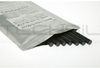
Description: tecbond® 7718 is a black, low viscosity polyamide hotmelt adhesive with excellent heat resistance. This material is perfectly suited to be used when potting and encapsulating electrical components. It offers a very fast setting time, with no mixing , no waste and no mess! 7718 offers a
-
Supplier: Accuris
Description: Adhesive - Web - Polyamide
-
Supplier: Accuris
Description: Adhesive, Hot Melt, Polyamide, Headling/Wire Harness
-
-
Supplier: Accuris
Description: Adhesive, Hot Melt, Polyamide, Supported Vinyl to Hardboard
-
Standards and Technical Documents - ADHESIVE, EPOXY RESIN WITH POLYAMIDE CURING AGENT -- MIL-A-81236Supplier: Accuris
Description: ADHESIVE, EPOXY RESIN WITH POLYAMIDE CURING AGENT
-
Supplier: Ellsworth Adhesives
Description: Bostik Thermelt 195 Amber is a one component, pure copolymer polyamide hot melt resin. Includes a fast setting time, short open time, good flexibility, and good wetting properties at the application temperature. Designed for molding electronic components, cables, and connectors. Non-reactive
- Viscosity: 4,000 to 5,000 cP
- Tensile Strength (Break): 1,740.442072286364 psi
- Elongation: 580 %
- Dielectric Strength: 482.6000000000001 kV/in
-
Supplier: Henkel Corporation - Industrial
Description: High melting thermoplastic hotmelt adhesive based on polyamide. It exhibits good chemical resistance and adhesion to a wide variety of substrates. TECHNOMELT® PA 9069 is a high melting thermoplastic hotmelt adhesive based on polyamide. It exhibits good chemical resistance
- Viscosity: 50 cP
- Use Temperature: 410 to 449 F
- Chemical System: Polyamide
- Cure / Technology: Single Component System
-
Supplier: Ellsworth Adhesives
Description: Henkel Loctite Technomelt PA 7804 polyamide hot melt, formerly known as Hysol 7804, is a elastomeric, tough, high performance adhesive that is recommended for demanding applications where substrates may be exposed to extreme temperatures.
- Viscosity: 7,000 cP
- Tensile Strength (Break): 340 psi
- Elongation: 900 %
- Dielectric Strength: 600 kV/in
-
Supplier: Mitsui Chemicals America, Inc.
Description: ADMER™ Adhesive Resin is a modified polyolefin with functional groups, designed to bond to a variety of polyolefins, ionomers, polyamides, ethylene vinyl alcohol (EVOH), polyesters (PET), polycarbonates, polystyrenes and metals such as steel and aluminum. Essentially, ADMER™ functions
-
Supplier: Techsil Limited
Description: tecbond® 7784 is a multipurpose hotmelt adhesive which offers both high and low temperature resistance. 7784 is a tough flexible polyamide based hot melt which exhibits excellent adhesion to many difficult to bond substrates. This grade is very versatile and suitable for product
- Cure / Technology: Thermoplastic / Hot Melt
-
Supplier: Henkel Corporation - Industrial
Description: Macromelt TPX 16-206B is a polyamide hot melt adhesive. It has good adhesion to ABS and flexible vinyls and a relatively long open time. This product has many automotive trim applications.
- Cure / Technology: Thermoplastic / Hot Melt
-
Supplier: Techsil Limited
Description: tecbond® 7784 is a multipurpose hotmelt adhesive which offers both high and low temperature resistance. 7784 is a tough flexible polyamide based hot melt which exhibits excellent adhesion to many difficult to bond substrates. This grade is very versatile and suitable for product
- Cure / Technology: Thermoplastic / Hot Melt
-
Supplier: Takachi Electronics Enclosure Co., Ltd.
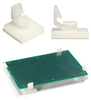
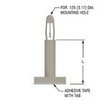
Description: Standoff for securing PCB by simply snapping it in. Adhesive standoff can be freely and easily affixed on. Once removed, it cannot be adhered on again. Material:PA66 Finish:Natural
- Mounting: Adhesive Mount
- Type & Shape: Male / Female Standoff, Standoff
- Material: Nylon (Polyamide), Plastic / Polymer
-
Supplier: Takachi Electronics Enclosure Co., Ltd.
Description: Double-sided adhesive tape allows the standoff to be mounted quickly and easily; allows PCB mounting in non-boss enclosures. Excellent strength for securing screws due to the internal steel nut. Convenient for installing PCBs into enclosures without the need for customization. Please ensure
- Outside Diameter / Width: 0.5511814 to 0.9842525 inch
- Body Length / Working Height: 0.1968505 to 0.787402 inch
- Mounting: Adhesive Mount
- Type & Shape: Female Standoff, Standoff
-
Supplier: Takachi Electronics Enclosure Co., Ltd.
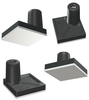
Description: Securing of a 1.6mm thick PCB made easy by simply snapping it in. Adhesive standoff can be freely and easily affixed on. *Once removed, it cannot be adhered on again. Pack of 4 pcs.
- Mounting: Adhesive Mount, Slot Mount / Edge Grip
- Material: Nylon (Polyamide), Plastic / Polymer
- Type & Shape: Standoff
-
Supplier: Ellsworth Adhesives
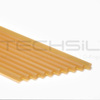
Description: Power Adhesives Tecbond 7718 Hot Melt Adhesive Amber is a polyamide adhesive. It is used in potting and encapsulation in the electronics industry and knot filling/wood repair in the woodworking industry. 0.5 in x 12 in Stick, 11 lb Case.
- Viscosity: 1,000 cP
- Dielectric Strength: 762.0000000000016 kV/in
- Industry: Electronics
- Cure / Technology: Single Component System, Thermoplastic / Hot Melt
-
Supplier: Allied Electronics, Inc.
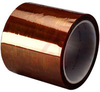
Description: Polyimide Film Tape, 36 Yard Length, 2.7 mil Thickness Silicone adhesive High adhesive to film bond The tape consisting of a Kapton® polyimide film and silicone adhesive designed for high temperature applications.
-
Supplier: Ellsworth Adhesives
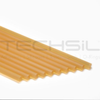
Description: Power Adhesives Tecbond 7784 is a medium viscosity, polyamide hot melt that is used for a variety of applications requiring both high and low heat resistance. It has very high tack and a medium open time. Amber, 0.5 in x 12 in Stick, 10 Pack.
- Cure / Technology: Single Component System, Thermoplastic / Hot Melt
- Substrate Compatibility: Wood / Wood Product
-
Supplier: Zippertubing Co. (The)
Description: Z-Block Tape is a Polyamide hot-melt adhesive designed to “water block†electrical wire and cables that utilize a secondary heat shrinkable outer jacket. The adhesive is compatible with high performance, heat shrink tubing materials such as Polyolefin, Viton and
- Thickness: 0.012 inches
- Temperature Resistance: -55 to 135 C
- Adhesive: Hot Melt / Heat Activated
- Features: Specialty / Other
-
Supplier: Keystone Electronics Corp.
Description: Part Number: 9081 Length: .250 [6.4] Material: Nylon 6/6-V-0 Style: Lock-in with Adhesive Base
- Body Length / Working Height: 0.25 inch
- Mounting: Adhesive Mount
- Material: Nylon (Polyamide), Plastic / Polymer
- Type & Shape: PCB Support (No Hole / Solid Post)
-
Supplier: Newark, An Avnet Company
Description: ADHESIVE-BACKED CORD CLIP; Cable Clamp / Clip Type:Adhesive Backed Cable Clamp; Internal Diameter:9.7mm; Cable Clamp / Clip Material:Nylon 6.6 (Polyamide 6.6); Cable Clamp / Clip Colour:Natural; External Length:25.4mm; Height:9.6mm RoHS Compliant: Yes
-
Supplier: Newark, An Avnet Company
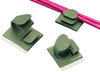
Description: ADHESIVE-BACKED LATCHING WIRE CLIP; Cable Clamp / Clip Type:Adhesive Backed Cable Clamp; Internal Diameter:9.5mm; Cable Clamp / Clip Material:Nylon 6.6 (Polyamide 6.6); Cable Clamp / Clip Colour:Black; External Length:25.4mm RoHS Compliant: Yes
-
Supplier: Keystone Electronics Corp.
Description: Part Number: 9072 Length: .375 [9.5] Material: Nylon 6/6-V-0 Style: Mini Lock-in with Adhesive Base
- Body Length / Working Height: 0.375 inch
- Mounting: Adhesive Mount
- Material: Nylon (Polyamide), Plastic / Polymer
- Type & Shape: PCB Support (No Hole / Solid Post)
-
Supplier: Newark, An Avnet Company
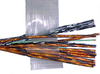
Description: CABLE CLAMP, ADHESIVE, PA66, NATURAL; Cable Clamp / Clip Type:Adhesive Backed Flat Cable Clamp; Internal Diameter:-; Cable Clamp / Clip Material:Nylon 6.6 (Polyamide 6.6); Cable Clamp / Clip Colour:Natural; External Length:77.2mm RoHS Compliant: Yes
-
Supplier: Essentra Components
Description: Adhesive Base Supports come with a double sided adhesive tape with a release tab for quick installation and the non-locking types are ideal for a quick release
- Material: Nylon (Polyamide), Plastic / Polymer
- Type & Shape: PCB Support (No Hole / Solid Post)
- Features: Specialty / Other
-
Supplier: Essentra Components
Description: Adhesive Base Supports come with a double sided adhesive tape with a release tab for quick installation. It locks onto the board but is releasable with a pinch.
- Material: Nylon (Polyamide), Plastic / Polymer
- Type & Shape: PCB Support (No Hole / Solid Post)
- Features: Specialty / Other
-
Supplier: Essentra Components
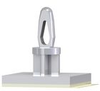
Description: Adhesive Base Supports come with a double sided adhesive tape with a release tab for quick installation and the snap-locking types are ideal for quick installation with a low profile option for space saving capabilities
- Material: Nylon (Polyamide), Plastic / Polymer
- Type & Shape: PCB Support (No Hole / Solid Post)
- Features: Specialty / Other
-
Supplier: Newark, An Avnet Company
Description: THERMALLY CONDUCTIVE FOIL, ADHESIVE; INSULATOR BODY MATERIAL:NYLON (POLYAMIDE), (POLYIMIDE FILM MT); THERMAL CONDUCTIVITY:0.37W/M.K; BREAKDOWN VOLTAGE VBR:-; THICKNESS:0.127MM; VOLUME RESISTIVITY:-; THERMAL IMPEDANCE:-; DIELECTRIC ROHS COMPLIANT: YES
-
Supplier: ASTM International
Description: 1.1 These test methods cover procedures for testing pressure-sensitive adhesive-coated tapes to be used as electrical insulation and are classified as follows: 1.1.1 Class 1 -Non-elastomeric backings made from materials such as: Paper, flat or creped, Fabric, uncoated or coated, Cellulose
-
Supplier: Henkel Corporation - Electronics
Description: (Known as MACROMELT 6211 ) Macromelt® 6211™ is a polyamide hot melt adhesive that exhibits excellent low temperature flexibility. This product is suitable for bonding plastics, metal, flexible vinyl, and ABS. It is an excellent adhesive for telecommunication and power cables. It
- Industry: Electronics
- Cure / Technology: Thermoplastic / Hot Melt
-
Supplier: DigiKey
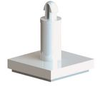
Description: Board Support Snap Lock / Adhesive Nylon
- Mounting: Adhesive Mount
- Material: Nylon (Polyamide)
- Type & Shape: PCB Support (No Hole / Solid Post)
-
Supplier: RS Components, Ltd.
Description: Amber polyamide hotmelt glue
-
Supplier: Dymax
Description: Dymax Multi-Cure® 6-621-GEL adhesive cures upon exposure to light and is designed for rapid assembling of parts made of metal, glass, ceramic, phenolic, filled polyamide, and other materials. Dymax 6-621-GEL adhesive is specially formulated to cure with heat in applications
- Viscosity: 25,000 cP
- Tensile Strength (Break): 4,061.031502001516 psi
- Substrate Compatibility: Ceramic / Glass
- Features: Other
-
Supplier: Dymax
Description: Dymax Multi-Cure® 6-621-T adhesive forms hard, clear bonds to phenolic plastics, metal, glass, ceramic, polyamide (filled/unfilled), and other substrates. The material cures “on-demand” in seconds with UV/Visible light, heat, or pre-applied activator. 6-621-T structural adhesive
- Viscosity: 3,500 cP
- Tensile Strength (Break): 4,000 psi
- Substrate Compatibility: Ceramic / Glass
- Features: Other
-
Supplier: Dymax
Description: Dymax Multi-Cure® 6-621-GEL-F structural adhesive cures with UV/Visible light, heat, or pre-applied activator for fast assembly of components made of metal, glass, ceramic, phenolic, filled polyamide, and other substrate materials. The product is also formulated to cure with heat in
- Viscosity: 25,000 cP
- Tensile Strength (Break): 3,727.446771479963 psi
- Substrate Compatibility: Ceramic / Glass
- Features: Other

















Find Suppliers by Category Top
Featured Products Top
-
 In search of high-performance adhesive and dispensing solutions? Ellsworth Adhesives has exceptional offerings including filter assembly applications for gasketing, die cut materials, and adhesives. We offer EVAs, polyamides, polyesters, polyolefins/APAOs, polyurethanes, pressure sensitive (read more)
Browse Polyurethane Adhesives and Sealants Datasheets for Ellsworth Adhesives -
ADMERTM Adhesive Resin is a modified polyolefin with functional groups, designed to bond to a variety of polyolefins, ionomers, polyamides, ethylene vinyl alcohol (EVOH), polyesters (PET), polycarbonates, polystyrenes and metals such as steel and aluminum. The material functions as a (read more)
Browse Specialty Polymers and Resins Datasheets for Mitsui Chemicals America, Inc. -
Eliminate the weighing and mixing of adhesives and resins. Ellsworth Adhesives works with KitPackers, a custom resin packager that offers pre-mixed and frozen (PMF (read more)
Browse Industrial Adhesives Datasheets for Ellsworth Adhesives -
epoxies, silicones, polyurethanes, polysulfides, UV cures and other specialty adhesive systems. We are true specialists in our field and are recognized by many as the preeminent adhesive formulation company in the world. Through research and development, we have been able to create innovative (read more)
Browse Industrial Adhesives Datasheets for Master Bond, Inc. -
Master Bond EP54TC is a thermally conductive, electrically insulating two part epoxy that combines good physical properties and the ability to transfer heat rapidly and effectively.
(read more)
Browse Industrial Adhesives Datasheets for Master Bond, Inc. -
Parker LORD® 7542A-B Urethane Adhesive is a two-component adhesive system that is used for bonding primed metals, SMC, FRP, and plastics. It is environmentally friendly, non-flammable, and resistant to weathering, chemicals, sunlight, and humidity. 1:1 mix ratio by volume. (read more)
Browse Industrial Adhesives Datasheets for Ellsworth Adhesives -
Toughened NASA Low Outgassing Epoxy Derived from Sustainable Ingredients Master Bond Supreme 70CN is a two part epoxy adhesive formulated using a natural, renewable and sustainable ingredient. This moderate viscosity unfilled epoxy is black in color and (read more)
Browse Industrial Adhesives Datasheets for Master Bond, Inc. -
EP42HT-2LTE Master Bond EP42HT-2LTE is an innovative, two component epoxy system with an ultra low coefficient of thermal expansion. It can be used as an adhesive, sealant, coating and, in some cases, as a casting system. EP42HT-2LTE (read more)
Browse Industrial Adhesives Datasheets for Master Bond, Inc. -
Cryogenically serviceable Supreme 12AOHT-LO combines superior thermal conductivity with reliable electrical insulation properties in an easy to use, no mix system.
(read more)
Browse Industrial Adhesives Datasheets for Master Bond, Inc. -
Ellsworth Adhesives strives to improve our Customer-centric value proposition by offering an integrated supply chain solution that quantifiably reduces procurement costs. We will accomplish this by intimately understanding our Customers’ unique supply chain opportunities, by removing waste (read more)
Browse Industrial Adhesives Datasheets for Ellsworth Adhesives
Conduct Research Top
-
What is the Difference between Epoxy and Adhesive?
Epoxy is a term used to describe a class of resins characterized by their excellent adhesion, versatility, and durability. Epoxy resins are formed by the reaction of a polyamine with a polyamide. The resultant polymer 's three-dimensional network gives it superior mechanical and chemical properties
-
What is the Difference Between Glue and Adhesive?
of glue used in school glue sticks. Other types of glue include white glue, made from a resin called polyvinyl chloride, and hot glue, made from a resin called polyamide. Hot glue is used for projects that require a strong bond, such as woodworking.
More Information Top
 Indicates content that may require registration and/or purchase.

-
Handbook of Adhesive Chemical and Compounding Ingredients
Uses: Chain modifier/branching agent in polyamides ( adhesives , films, inks, plastics); flexibilizer in adhesives, wet str. paper applics.; in cat- ionic emulsifiers; in cationic collectors for ore flocculation; chelating agents; corrosion/scale inhibitor; epoxy curing agent; flocculating agent; PU extender or catalyst .
-
Handbook of PLASTIC AND RUBBER ADDITIVES Volume 1 and 2
Uses: Chain modifier/branching agent in polyamides ( adhesives , films, inks, plastics); flexibilizer in adhesives, wet str. paper applics.; in cationic emulsifiers; in cationic collectors for ore flocculation; chelating agents; corrosion/scale inhibitor; epoxy curing agent; flocculating agent; PU extender or catalyst .
-
Handbook of Textile Processing Chemicals
Chem. Descrip.: Thermoplastic polyamide adhesive resin CAS 25038-54-4 .
-
Handbook of Corrosion Inhibitors
Uses: Chain modifier/branching agent in polyamides ( adhesives , films, inks, plastics); flexibilizer in adhesives, wet str. paper applics.; in cationic emulsi- fiers; in cationic collectors for ore flocculation; chelating agents; corrosion/ scale inhibitor; epoxy curing agent; flocculating agent; PU extender or cat- alyst .
-
Adhesives
Pretreating tin-free steel for cans with an aqueous solution of an unsaturated carboxylic acid polymer (e-g., an aconitic acid-itaconic acid copolymer) improves the bond strength when the steel is bonded tith, e.g., a polyamide adhesive .
-
Polyamide Resins (Non-nylon types)
In 2012, polyamide adhesives accounted for approximately 8% of the total hot-melt market and about 35% of the specialty (high- performance) hot-melt market, which includes polyester-, polyurethane- and ionomer-based adhesives.
-
Handbook of Adhesion Technology
Polyamide adhesives have been reviewed by Rossitto (1990).
-
Polyamides other than Nylons, Part II
"Preparing Hot-Melt ( Polyamide ) Adhesives by Anionic Polymerization," Netherlands 71,01465 (Aug. 8, 1972) (Abstract .
-
Electrical embedding-new polyamides
GORDONisinternationaltechnicalserv- ices manager for polyamide adhesive resins for the DevelopmentandTechnicalServicesLabora- tory,Union CampCorp., Savannah, Georgia.
-
Polymer Technology
Polyamide adhesives have also been used as side-seam cements in tin cans, as pressure-sensitive adhesives, shoe cements, and bookbinding adhe- sives.