
Products & Services
See also: Categories | Featured Products | Technical Articles | More Information-
Safety Monitoring Systems - SIL3/PLe Safety Controller for Functional Safety of Incremental EncodersSupplier: Hymark/Kentucky Gauge
Description: that require the SIL3 Safety Integrity Level and the PLe Performance Level. Thus, it is ideal to retrofit existing industrial plants. SIL and PLe are two different methods that allow for evaluation of a safety function: they are defined by the EN 62061 (SIL) and ISO
-
Supplier: elobau U.S., Inc.
Description: PLe according to EN ISO 13849-1 Four safety outputs (two separate safety circuits each with two safety outputs) Separate control outputs for further processing Emergency stop function with short-circuit detection Suitable for 2-hand control Connection via codable, screwless
- Maximum Current: 3 amps
- Maximum AC Switching Voltage: 250 volts
- Maximum DC Switching Voltage: 30 volts
- Maximum AC Switching Power: 750 VA
-
Supplier: Accuris
Description: Safety Integrity Level (SIL) Verification of Safety Instrumented Functions
-
-
Supplier: Knick Interface LLC
Description: 61140 – protection of the maintenance staff and subsequent devices against excessively high voltages up to 300 V AC/DC Functional safety up to SIL 2 (up to SIL 3 in case of redundant configuration) with TÜV certificate Systematically developed according to EN 61508 High accuracy
- Operating Temperature: 32 to 149 F
- Outputs: Current Loop (e.g., 4-20 mA), Voltage
- Form Factor: DIN Rail
- Features: Other
-
Supplier: Knick Interface LLC
Description: High-voltage transducer with certification for SIL 2 / SIL 3 Measurement up to 3900 V DC and 4500 V ACpeak Reinforced insulation: up to 4800 V AC / DC Type test voltage: 20 kV AC Suitable for applications with functional safety up to SIL 2 / SIL 3 Space-saving,
- Voltage: 3,000 volts
- Electrical Output: Analog Current
- Power Requirements: DC Powered
- Mounting: DIN Rail, Panel Mount
-
Supplier: Knick Interface LLC
Description: 300 V AC/DC Functional safety up to SIL 2 (up to SIL 3 in the case of redundant configuration) with TÜV certificate – systematically devel-oped according to EN 61508 High accuracy with innovative switching concept Reduced inventory – one transmitter covers all conceivable tasks
- Operating Temperature: 32 to 149 F
- Outputs: Current Loop (e.g., 4-20 mA), Voltage
- Features: DC Voltage, Other
- Form Factor: DIN Rail
-
Supplier: Knick Interface LLC
Description: according to EN 61140 - protection of the maintenance staff and subsequent devices against excessively high voltages up to 300 V AC/DC Functional safety up to SIL 2 (up to SIL 3 in case of redundant configuration) with TÜV certificate Systematically developed according to EN
- Operating Temperature: 32 to 149 F
- Outputs: Current Loop (e.g., 4-20 mA), Voltage
- Form Factor: DIN Rail
- Features: Other
-
Supplier: elobau U.S., Inc.
Description: A maximum of 32 sensors may be used with an interconnection system. We recommend the use of elobau interface units 363 098.
- Maximum Current: 3 amps
- Maximum AC Switching Voltage: 250 volts
- Maximum DC Switching Voltage: 30 volts
- Maximum AC Switching Power: 750 VA
-
Supplier: Accuris
Description: Safety Instrumented Functions (SIF) - Safety Integrity Level (SIL) Evaluation Techniques Part 4: Determining the SIL of a SIF via Markov Analysis
-
Supplier: Accuris
Description: Safety Instrumented Functions (SIF) - Safety Integrity Level (SIL) Evaluation Techniques Part 2: Determining the SIL of a SIF via Simplified Equations
-
Supplier: Accuris
Description: Safety Instrumented Functions (SIF) - Safety Integrity Level (SIL) Evaluation Techniques Part 3: Determining the SIL of a SIF via Fault Tree Analysis
-
Electromechanical Relays - Safety Inter, Mag. Sil 2/cat 4, M12 Conn Telemecanique Sensors -- 29Y1891Supplier: Newark, An Avnet Company
Description: SAFETY INTER, MAG. SIL 2/CAT 4, M12 CONN
-
Description: Guidelines for Hazard Evaluation Procedures and Guidelines for Initiating Events and Independent Protection Layers in Layer of Protection Analysis, for guidance on assigning the SIL. Prior to proceeding with use of ISA-TR84.00.02-2022, the hazards and risk analysis and the allocation of
-
Supplier: Newark, An Avnet Company
Description: Safety inter, mag. SIL 2/Cat 3, 2m cable RoHS Compliant: Yes
-
Supplier: Sensata Technologies
Description: Usable up to SIL3 and Cat.4 / PLe according IEC 61508 / EN ISO 13849 Suitable for safe motor feedback according to IEC 61800-5-2 Especially designed for heavy-duty (steel, paper, wood, mills, cranes…). Compact and robust conception. Excellent resistance to shocks/vibrations Aluminium (DSM9H) or
- Maximum Mechanical Shaft Speed: 6,000 rpm
- Rotor Inertia: 0.0033276 oz-in-sec²
- Operating Temperature: -4 to 185 F
- Vibration Rating: 200 g
-
Supplier: Sensata Technologies
Description: Usable up to SIL3 and Cat.4 / PLe according to IEC 61508 / EN ISO 13849a Suitable for safe motor feedback according to IEC 61800-5-2 Robustness and excellent resistance to shock and vibration High protection level: IP65 High temperature performance –20°C to +85°C Power supply 5Vdc or 11/30Vdc
- Maximum Mechanical Shaft Speed: 4,000 rpm
- Rotor Inertia: 0.0013452 oz-in-sec²
- Operating Temperature: -4 to 185 F
- Vibration Rating: 20.38735983690112 g
-
Supplier: Automation24, Inc.
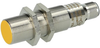
Description: The flush-mountable inductive safety sensor GG712S - GIGA4005-2PS / SIL2 / US from ifm efector reliably detects, among other things, component defects, short circuits or cross-circuits in mobile and rough applications. The sensor works with a supply voltage of 19.2 ... 30 V DC and has two
-
Supplier: Automation24, Inc.
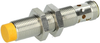
Description: The non-flush mountable inductive safety sensor GF854S - GIFK4004-2PO / SIL2 / US from ifm efector reliably detects, among other things, component defects, short circuits or cross-circuits in mobile and rough applications. The sensor works with a supply voltage of 8 ... 32 V DC and has two
-
Supplier: Automation24, Inc.
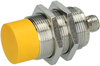
Description: The non-flush-mountable inductive safety sensor GI854S - GIIK4015-2PO / SIL2 / US from ifm, reliably detects, component defects, short circuits or cross-circuits in mobile and rough applications. The sensor works with a supply voltage of 8 ... 32 V DC and has two PNP-switching OSSD outputs.
-
Supplier: Sensata Technologies
Description: Usable up to SIL3 and Cat.4 / PLe according to IEC 61508 / EN ISO 13849 Suitable for safe motor feedback according to IEC 61800-5-2 Especially designed for heavy-duty applications (steel, paper, wood, mills, cranes…) Compact and robust design. Excellent resistance to shock and vibration Stainless
- Maximum Mechanical Shaft Speed: 3,000 rpm
- Rotor Inertia: 0.016992 oz-in-sec²
- Operating Temperature: -4 to 185 F
- Vibration Rating: 200 g
-
Supplier: Automation24, Inc.
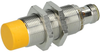
Description: The non-flush-mountable inductive safety sensor GG854S - GIGK4008-2PO / SIL2 / US from ifm efector reliably detects, among other things, component defects, short circuits or cross-circuits in mobile and rough applications. The sensor works with a supply voltage of 8 ... 32 V DC and has two
-
Supplier: Sensata Technologies
Description: Usable up to SIL3 and Cat.4 / PLe according to IEC 61508 / EN ISO 13849a Suitable for safe motor feedback according to IEC 61800-5-2 Robustness and excellent resistance to shock and vibration High protection level: IP65 High temperature performance –20°C to +85°C Power supply 5Vdc or 11/30Vdc
- Maximum Mechanical Shaft Speed: 6,000 rpm
- Rotor Inertia: 0.00039648 oz-in-sec²
- Operating Temperature: -4 to 185 F
- Vibration Rating: 20.38735983690112 g
-
Supplier: Process Sensing Technologies USA
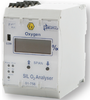
Description: The SIL O2 Process Oxygen Analyzer is designed to be highly reliable for the measurement of oxygen in safety critical applications within the chemical, pharmaceutical and additive manufacturing industries. The SIL O2 (Safety Integrity Level 2) oxygen analyser is highly
- Operating Humidity: 0 %
- Measurement Type: %Volume
- Instrument Type: Analyzer
- Display: Digital
-
Supplier: Ultra Energy
Description: CMS Interlock SIL is a safety related gamma monitor intended to be installed where interlock control is required to restrict access to high dose areas.
- Type of Monitoring: Area Monitoring
- Display Options: Digital
- Detector Output: Dose Rate
- Detector Style: Fixed Installation
-
Supplier: Pfannenberg
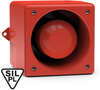
Description: Our DS 5-SIL and DS 10-SIL (IP 66, IP 67) DS Series Sounder reach a 105/110 dB (A) nominal sound output with 31 alarm tones and 4 stages. This Signaling Device operates in any climate thanks to its cast aluminium housing which withstands impacts and vibrations. Color: Available in Red
- Sound Level: 105 to 110 dB
- Operating Voltage: 19 to 253 volts
- Supply Voltage: AC Voltage, DC / Battery
-
Supplier: Newark, An Avnet Company
Description: SAFETY DIG 16I 24VDC SINK,SIL3/CAT.2/PLD
-
Supplier: SAE International
Description: development of a failsafe chassis control system. We discuss the generic failsafe system architectures based on one-core and multi-core \u03bcCs in the framework of Markov's safety model, and associated safety metrics like DC, SFF, and PFH. The safety aspects require that, a
-
Supplier: Newark, An Avnet Company
Description: DIGITAL INPUT - SWITCH ISOLATOR FOR SAFETY APPLICATIONS, TUV CERT, RELAY OUTPUT, SINGLE CH, SIL 3 (IEC61508), 24VDC
-
Supplier: Sensore Electronic GmbH
Description: Reliable, long-life oxygen measurement for demanding industrial and safety-critical applications The Microx ProSafe SIL2 oxygen transmitter combines advanced zirconia sensor technology with SIL2-certified safety performance, offering highly accurate oxygen monitoring across an
-
Supplier: Radwell International
Description: BANNER ENGINEERING Safety Systems SI-LS42DSG
-
Supplier: Gelest, Inc.
Description: Additional Properties Hydrolytic Sensitivity 2: reacts with aqueous acid Safety Packaging Under Nitrogen
-
Supplier: Gelest, Inc.
Description: Additional Properties Hydrolytic Sensitivity 7: reacts slowly with moisture/water Safety Packaging Under Nitrogen
- Features: Alkali Metals (Li, Na, K, etc.), Metalloids (B, Si, Ge, etc.), Non-Metals (C, N, O, P, S)
-
Supplier: Pfannenberg
Description: permits remote notification or system lockout in the event of malfunction. Color: Available with Red or Amber lens. Product Overview Designed to be implemented in Safety Instrumented Systems (SIS) up to SIL 2 / Performance Level PL d Up to 200 cd light intensity (clear lens) Surface
- Flash Rate: 60 flashes per minute
- Supply Voltage: AC Voltage, DC / Battery
- Color: Amber, Blue, Clear, Green, Red
- Visual Indicators: Flashing Light
-
Supplier: Radwell International
Description: SAFETY SWITCH INPUT MODULE, INTRINSIC SAFETY ISOLATOR, FAIL-SAFE SWITCH / PROXIMITY DETECTOR INTERFACE, 1 CHANNEL, SIL3, LINE FAULT DETECTION, 20-35 VDC SUPPLY, DIN RAIL MOUNT. FREE 2 YEAR RADWELL WARRANTY











Find Suppliers by Category Top
Featured Products Top
-
 to 32 switches in series M12 plug-in installation Redundant cascading OSSD outputs help prevent fault masking IO-Link, NFC, and PLC diagnostic options Cat 4 / PLe / SIL CL3 safety ratings (read more)
Browse Safety Sensor Switches Datasheets for Altech Corp. -
-resistant guard monitoring, electromagnetic and solenoid locking switches provide controlled access to hazardous areas, and multifunction gate box solutions combine guard locking with integrated operator controls. These models offer high safety ratings of Category 4, PLe per ISO13849-1, SIL 3 per (read more)
Browse Safety Sensor Switches Datasheets for Automationdirect.com -
selection of Schmersal safety controllers for improved safety levels, as required. In addition to the ECOLAB certification, the BNS40S is CE and cULus approved, and can be used in safety circuits requiring up to PLe per ISO 13849-1 and SIL 3 per EN61508. (read more)
Browse Noncontact Safety Interlock Switches Datasheets for Schmersal Inc. -
Schmersal safety installation systems are aids for configuring complex machine systems with quick and simple wiring of safety switchgear in series, significantly reducing the wiring involved. A particular benefit of this installation system is that different electronic safety switchgear systems (read more)
Browse Safety Monitoring Systems Datasheets for Schmersal Inc. -
modules while maintaining PLe to ISO 13849 and SIL3 to IEC 61508. System options include an integrated universal communications interface for safe and auxiliary data exchange over various network protocols, such as EthernetIP, EtherCAT, ProfiNet, ProfiBus, Profisafe/Net, and Safety Over Ether (read more)
Browse Safety Monitoring Systems Datasheets for Schmersal Inc. -
The RSS36 is designed for application in safety circuits monitoring the position of hinged, sliding or removable guards using a specifically coded, passive RFID tag in the actuator. Radio-frequency identification (RFID) is a technology that uses radio waves to provide a wireless data (read more)
Browse Noncontact Safety Interlock Switches Datasheets for Schmersal Inc. -
microprocessor, only one switch is required to meet PLe per ISO 13849-1 and SIL3 per IEC 62061. The RSS260 can be connected in series with other electronic sensors and locking switches, up to 31 devices, without loss of signal or safety level when monitored with a number of standard Schmersal safety controllers. (read more)
Browse Noncontact Safety Interlock Switches Datasheets for Schmersal Inc. -
-1/3 Type 3; IEC61508 SIL2; ISO13849-1 PLd Category 3; UL508; UL1998; UL61496-1 Type 3; CSA C22.2 No. 14. And its housing profile: only 3.15" x 3.15" x 3.75" (80 x 80 x 90 mm) As one of the smallest scanners on the market, the UAM safety laser scanner provides a reliable solution (read more)
Browse Safety Laser Scanners Datasheets for Schmersal Inc. -
terminal or cage clamp versions have 4 conduit openings, to allow for mounting flexibility. The RSS16 sensors meet stringent North American and European Standards, are cULus and CE approved, and can be used in the highest level of machine safety circuits, PLe to ISO13849-1 and SIL 3 to IEC61508. (read more)
Browse Safety Sensor Switches Datasheets for Schmersal Inc. -
placing padlocks through the key of the actuator, preventing the guard to close. The AZM300 series are cULus and CE approved to meet stringent North American and European Standards, and can be used in the highest level of machine safety circuits, PLe to ISO13849-1 and SIL 3 to IEC61508. (read more)
Browse Mechanical Safety Interlock Switches Datasheets for Schmersal Inc.
Conduct Research Top
-
Machine Functional Safety - PL and SIL Ratings
This paper reviews the concept of Functional Safety as it relates to machinery. The design steps for a safe machine are outlined and the methodology for determining appropriate PL/SIL safety ratings discussed. The most common motion control Safety Functions are presented. The paper concludes
-
SIL 101 (Safety Integrity Levels): How Safe Do I Need To Be?
The global importance of SIL (Safety Integrity Levels) has grown substantially in the. oil/gas, petrochemical and other process industries over the last 10 years. However, for. many end users, systems integrators, and product vendors, SIL is still a somewhat. ambiguous concept that often
-
Safety Integrity Level
All organisational and technical risk reduction measures act as a counterweight to the risk potential. The values SIL 1 to SIL 4 (SIL = Safety Integrity Level) are derived from the risk analysis. The greater the risk, the more reliable risk reduction measures must be implemented and, consequently
-
News Machine Safety
of safety standard. In future, elobau sensors and control units will have a SIL (Safety Integrity Level) category according to the IEC 61508 and a Performance Level (PL) according to the ISO 13849-1 in addition to the existing categories of the EN 954-1. For manufacturers this means that, independent
-
What does SIL stand for in safety?
Nowadays safety systems saturate the industrial substructure, spreading protective influence all the way to an industry's end result. Modern safety structures minimize risk with effective enhancements that commonly increase dependability, proficiency and viability.
-
Selecting Instrumentation For Functional Safety (SIL) Applications
Over the past couple of decades, the process industries have seen many changes when it comes to the design and implementation of emergency shutdown/safety systems. The introduction of several international and regional standards requires a more rigorous approach to the overall safety lifecycle
-
Functional Safety and SIL - What it Means to Plants
The adoption of functional safety standards continues to grow rapidly worldwide. This trend is especially evident in process industries. Risk factors such as injury to personnel, production down time, environmental damage, litigation costs and tarnished corporate image have become more visible
-
ACHIEVING SAFETY INTEGRITY LEVEL (SIL) 3 CERTIFICATION
In today's fast-paced industry, there are machines, systems and automation, that if a failure occurs, infrastructure, the environment, and lives could be put in danger. Sometimes the consequence of a failure can be truly catastrophic, resulting in significant damage and lost lives. While risk of
-
Safety Instrumented Systems Verification: Practical Probabilistic Calculations
Safety Instrumented Systems Verification: Practical Probabilistic Calculations. Providing numerous examples, data tables, failure rate data and other important metrics needed, this book clearly explains how to do probabilistic calculations to accomplish SIL verification for safety systems.
-
What are Safety Integrity Levels and What do They Mean for Your Process?
Safety Integrity Level (SIL) ratings are becoming more common. Many people are familiar with hazardous area approvals such as ATEX, IECEx and CSA; however, a SIL rating is slightly different.
-
Industry Solutions For The Most Common Solenoid Valve Challenges
the solenoid valve, thus, allowing the orifice - from which water flows - to open and activate a sprinkler system. This helps keep the fire under control and prevent spreading to other parts of the building. Meeting SIL Standards. Solenoid valves must be of good quality and meet Safety Integrity Level (SIL
-
Emergency Isolation for Pneumatic Actuated Control Valves
includes the memory-shape alloy FireChek (R) thermal shutoff with Versa's SIL Capable High Flow valve. The FireChek assembly provides a supplementary level of fire safety, while maintaining the original functionality of the specific valve in the process control system.
More Information Top
 Indicates content that may require registration and/or purchase.

-
ISA SAF INTGRTY LVL SELCT - Safety Integrity Level Selection - Systematic Methods Including Layer of Protection Analysis
SIL Safety Integrity Level .
-
ISA TR84.00.04 PART 1 - Guidelines for the Implementation of ANSI/ISA-84.00.01-2004
SIL Safety Integrity Level .
-
ISA TR84.00.04 PART 1 - Guidelines for the Implementation of ANSI/ISA-84.00.01-2004
SIL Safety Integrity Level .
-
AORE (Aspect-Oriented Requirements Engineering) Methodology for Automotive Software Product Lines
We adopt SIL ( Safety Integrity Level) of ISO/IEC61508 for safety measure [10].