
Products & Services
See also: Categories | Featured Products | Technical Articles | More Information-
Supplier: Linde North America, Inc.
Description: Constant monitoring through various analytical procedures ensures that the pure gases you receive meet the minimum purity levels specified by Linde, and of course your exact specifications. In addition to our standard catalogue products, many gases of higher purity are available on special order.
- Concentration: 99.997 %
- Product Form: Gas
- Supply Options: Gas Cylinder
- Composition: Pure Gas
-
Supplier: Linde North America, Inc.
Description: The heavier deuterium within the lattice provides a “mass barrier” to the Hot Electron Effect induced damage, thus increasing device life time. Deuterated Silane is a pyrophoric, toxic gas, with a TLV of 0.5 ppm. Deuterated Silane is also used in a variety of research applications to
- Concentration: 99.99 %
- Product Form: Gas
- Supply Options: Gas Cylinder
- Composition: Pure Gas
-
-
-
Supplier: Accuris
Description: Safe Storage and Handling of Silane and Silane Mixtures
-
Supplier: Accuris
Description: Storage and Handling of Silane and Silane Mixtures
-
Supplier: Linde North America, Inc.
Description: If cylinders are not sufficient to meet your requirements for critical electronic special gases, we have the answer. We can deliver bulk gases by road tanker or ISO container to store in tanks at your site. You can rely on us for complete security of supply as we have access to silane and
- Application / Function: Electronic and Semiconductor
- Composition: Pure Gas
- Supply Options: Safe Delivery System
- Industrial Gases: Silane and Silicon Compounds
-
Supplier: TCI America
Description: Trichloro(methyl)silane / Methyltrichlorosilane Silane coupling agents are organosilicone compounds having two functional groups with different reactivity. One of the two functional groups reacts with organic materials and the other reacts with inorganic materials.
-
Supplier: TCI America
Description: Trimethoxy(propyl)silane / Propyltrimethoxysilane Silane coupling agents are organosilicone compounds having two functional groups with different reactivity. One of the two functional groups reacts with organic materials and the other reacts with inorganic materials.
-
Supplier: Pfaltz & Bauer, Inc.
Description: Methyltris(dimethylsiloxy)silane
-
Supplier: TCI America
Description: Trimethoxy(methyl)silane / Silane coupling agents are organosilicone compounds having two functional groups with different reactivity. One of the two functional groups reacts with organic materials and the other reacts with inorganic materials.
-
Supplier: TCI America
Description: Trichloro(propyl)silane / Propyltrichlorosilane Silane coupling agents are organosilicone compounds having two functional groups with different reactivity. One of the two functional groups reacts with organic materials and the other reacts with inorganic materials.
-
Supplier: Pfaltz & Bauer, Inc.
Description: Silicon Tetrahydride (Silane)
-
Supplier: Medical Isotopes, Inc.
Description: Chlorotrimethyl-d 9 -silane
-
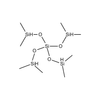
Supplier: Gelest, Inc.
Description: Tetrakis(dimethylsiloxy)silane; M'4Q; 3,3-Bis(dimethylsiloxy)-1,1,5,5-tetramethyltrisiloxane Viscosity: 1.1 cSt Crosslinker for vinyl functional silicones High molecular weight silane reducing agent Extensive review of silicon based reducing agents: Larson, G.; Fry, J. L. "Ionic and
- Flash Point: 152.6 F
- Purity: 97 %
- Features: Metalloids (B, Si, Ge, etc.), Non-Metals (C, N, O, P, S)
-
Supplier: Gelest, Inc.
Description: Safety Packaging Under Nitrogen
- Purity: 97 %
- Features: Metalloids (B, Si, Ge, etc.), Non-Metals (C, N, O, P, S)
-
Supplier: Pfaltz & Bauer, Inc.
Description: Tetrakis(dimethylsiloxy)silane 97%
-
Supplier: Gelest, Inc.
Description: Additional Properties Hydrolytic Sensitivity 4: no reaction with water under neutral conditions Safety Packaging Under Nitrogen
- Boiling Point: 161.6 F
- Purity: 97 %
-
Supplier: Medical Isotopes, Inc.
Description: Dichlorodimethyl-d 6 -silane
-
Supplier: Gelest, Inc.
Description: Additional Properties Hydrolytic Sensitivity 1: no significant reaction with aqueous systems Surface Tension (mN/m) 27.2 Safety Hazard Info oral rat, LDLo: >34,500 mg/kg Packaging Under Nitrogen
- Viscosity: 20 cP
- Index of Refraction: 1.4368
- Chemical System: Silicone
-
Supplier: Medical Isotopes, Inc.
Description: Tetraethoxy-d 20 -silane
-
Supplier: Fosroc Limited
Description: Nitocote SN511 has a 95% active content of monomeric alkyl (isobutyl) trialkoxy silane which penetrates deeply into porous substrates and then reacts to produce a bonded hydrophobic lining to the pores. This treatment markedly reduces absorption of water and water-borne salts, but still
- Features: Coating
- Location / Orientation: Floor
- Type: Sealer / Surface Sealant
-
Supplier: Accuris
Description: Standard Test Methods for SilaneS Used in Rubber Formulations (bis-(triethoxysilylpropyl)sulfanes): Sulfur Content
-
Supplier: Fosroc Limited
Description: Nitocote SN502 is a single component penetrating silanesiloxane system which penetrates into porous substrates and then reacts to produce a bonded hydrophobic lining to the pores. Although allowing passage of water vapour from the substrate it significantly reduces the absorption of water and water
- Features: Coating
- Location / Orientation: Floor
-
Supplier: SynQuest Laboratories, Inc.
Description: Molecular Weight: 240.25 TSCA: Not listed on TSCA inventory; for R&D use only
- Boiling Point: 338 to 341.6 F
- Flash Point: 129.2 F
-
Supplier: Linde North America, Inc.
Description: The Linde group is the world’s largest producer of high purity isotopic electronic gases such as deuterium (2H2), deuterated silane (Si2H4), deuterated ammonia (N2H3), and 11-Boron Trifluoride (11BF3). For information regarding these products, please contact the Electronics Customer Service
- Application / Function: Electronic and Semiconductor
- Product Form: Gas
- Supply Options: Gas Cylinder, Other
- Industrial Gases: Silane and Silicon Compounds
-
Supplier: SynQuest Laboratories, Inc.
Description: Molecular Weight: 288.24 TSCA: Not listed on TSCA inventory; for R&D use only
-
Supplier: Wacker Chemical Corp.
Description: GENIOSIL® XT 50 is a silicone-modified polyetherbasedsilane-terminated polymer suitable as a binderin moisture curing formulations. It is a clear liquid witha slight but characteristic odor and differs toconventional silylated polymers due to its highreactivity. This is a direct consequence of the
- Features: Building / Construction, Concrete / Masonry, Encapsulating / Potting
- Cure / Technology: Reactive / Moisture Cured, Single Component System, Two Component System
- Chemical System: Silicone
-
Supplier: RKI Instruments, Inc.
Description: No Description Provided
- Operating Temperature: 32 to 104 F
- Operating Humidity: 35 to 90 %
- Electrical Outputs: Analog Current
- Features: Audible or Visual Alarms, Sampling Pump
-
Supplier: Medical Isotopes, Inc.
Description: Tri-iso-propyl-d 21 -silane
-
Supplier: Chemical Strategies, Inc.
Description: Chemical Strategies offers over 3,000 products by Chempax. If you are unable to locate a chemical you need, our sales department can custom source any needed materials for you directly.
- Features: Primer
-
Supplier: Accuris
Description: ADHESION PROMOTOR, SILANE
-
Supplier: Sensidyne, LP
Description: Minimum Indicated Concentration .............. 0.4 ppm Repeatability .............................................. ± 2% of reading Accuracy * ................................................. ± 2% of full scale Zero Drift ................................................... < 5% change per year
- Operating Temperature: -4 to 122 F
- Operating Humidity: 5 to 95 %
- Gas Types: Combustible Gas, Silane (SiH4)
- Features: Intrinsically Safe
-
Supplier: Scientific Polymer Products, Inc.
Description: Vinyl-tris-(2-methoxyethoxy) silane Catalog # : M-248 CAS : 1067-53-4 Physical Form : Liquid Mw : 280.39 Density (g/cc) : 1.040 (25C) Refractive Index : 1.427 Viscosity : 1-2cs (25C) bp (C) : 285 Fp (F) : 198 Freezing Point (C) : < -70 TSCA : TSCA listed Column : None
- Density: 1.0400000000000003 g/cc
- Molecular Weight: 280.39 Da
- Chemical Structure: Monomer
- Material Type: Vinyl / Ethenyls
-
Description: 3M™ Scotch-Weld™ Metal Primer EC-3901 is a primer for 3M™ Scotch-Weld™ film and liquid adhesives in those applications where it is desired to obtain improved metal and glass adhesion. 3M™ Scotch-Weld™ Metal Primer EC-3901 improves resistance to environmental exposure with epoxy and urethane
- Dispensing Method: Brush / Roll-on, Sprayable
- Features: Coating, Corrosion Inhibiting / Rust Preventive, Other, Protective, Specialty / Other
- Form: Liquid
- Substrate: Metal














Find Suppliers by Category Top
Featured Products Top
-
 drain pipe CDA driver, 1/4″ SWG Pneumatic air source OD 150MM, silane 810m/hr; others 204m3/hr Cabinet ventilation Automatic switching, automatic purging, explosion-proof and anti-leaving cabinet, explosion-proof self (read more)
Browse Pressure Controllers Datasheets for Shenzhen Jewellok Technology Co., Ltd. -
1/2” MVCJ VENT drain pipe CDA driver, 1/4″ SWG Pneumatic air source OD 150MM, silane 810m³/hr; others 204m³/hr Cabinet ventilation OD 150MM, silane 810m³/hr; others (read more)
Browse Gas Cabinets and Distribution Systems Datasheets for Shenzhen Jewellok Technology Co., Ltd. -
Pneumatic air source OD 150MM, silane 810m³/hr; others 204m³/hr Cabinet ventilation OD 150MM, silane 810m³/hr; others 204m³/hr Standard equipment Automatic switching, automatic purging, explosion-proof and (read more)
Browse Gas Cabinets and Distribution Systems Datasheets for Shenzhen Jewellok Technology Co., Ltd. -
uptime AF600 is your solution when you need thermal pads without silicone oil or a silane-free thermal pad for cloud server environments. Contact our technical team for samples, datasheets, die-cut options, and integration support. (read more)
Browse Thermal Compounds and Thermal Interface Materials Datasheets for Dongguan Sheen Electronic Technology Co., Ltd. -
Roadside and highway information displays must deliver crisp, readable images 24/7. Yet a hidden materials problem can quietly undermine that performance: tiny silane/siloxane molecules from silicone-based thermal interface materials evaporate or migrate, condense on optical surfaces, and (read more)
Browse Thermal Compounds and Thermal Interface Materials Datasheets for Dongguan Sheen Electronic Technology Co., Ltd. -
scrubber tail gas treatment cabinets. Gas Cabinets in BSGS Gas cabinets are engineered enclosures designed to store and deliver high-purity specialty gases, such as silane, ammonia, or hydrogen chloride, used in sensitive processes. They feature robust safety (read more)
Browse Gas Cabinets and Distribution Systems Datasheets for Shenzhen Jewellok Technology Co., Ltd.
Conduct Research Top
-
Dipodal Silanes
Multilayer printed circuit boards use dipodal silanes to maintain the integrity of the bond between metal and resins by reducing interfacial water adsorption.
-
Applying a Silane Coupling Agent
Applying a Silane Coupling Agent
-
What is a Silane Coupling Agent?
Silane coupling agents can form a durable bond between organic and inorganic materials
-
Selection Chart: Silane Coupling Agents
Selection Chart: Silane Coupling Agents
-
Particle Dispersion Utilizing Silanes with Embedded Polarity
The incorporation of polar functionality into hydrocarbon-substituted silanes can have dramatic effects on the dispersion of particles. Depending on the media, the appropriate mixed polarity surface treatment can improve dispersion, reduce viscosity, and/or increase loading.
-
How Does a Silane Coupling Agent Work?
Most of the widely used organosilanes have one organic substituent and three hydrolyzable substituents. In the vast majority of surface treatment applications, the alkoxy groups of the trialkoxysilanes are hydrolyzed to form silanol-containing species. Reaction of these silanes involves four steps.
-
Hydrophobic Silane Surface Treatments
Automotive side windows are treated with fluoroalkylsilanes to provide self-cleaning properties. Water beads remove soil as they are blown over the glass substrate during acceleration.
-
What to Consider When Selecting a Silane Coupling Agent
Substrates vary widely, containing different concentrations and types of hydroxyl groups on the surface. An increased number of accessible hydroxyl groups on the surface is likely to lead to a better surface modification.
More Information Top
 Indicates content that may require registration and/or purchase.

-
https://uwspace.uwaterloo.ca/bitstream/handle/10012/7201/Lumertz_Vedoy_Diogenes.pdf?sequence=1
In addition, it is showed here that silane modification is an efficient method to increase the temperature …
-
http://dr.library.brocku.ca/bitstream/handle/10464/3971/Brock_Gutsulyak_Dmitry_V._2011.pdf?sequence=1
Half-Sandwich Silane Complexes of Ruthenium and Iron; .
-
Functional Fillers for Plastics
Silane Coupling Agents 63 .
-
http://dr.library.brocku.ca/bitstream/handle/10464/3361/Brock_Khalimon_Andrey_2011.pdf?sequence=1
Mechanism of Carbonyl Hydrosilylation and Silane Alcoholysis" 1.
-
Handbook of PLASTIC AND RUBBER ADDITIVES Volume 1 and 2
Chem. Descrip.: N-(2-Aminoethyl)-3-aminopropylmethyldimethoxy silane CAS 3069-29-2; EINECS/ELINCS 221-336-6 .
-
Silicone Surface Science
… fea- tured strongly in the last decade, and McCarthy et al. review their silane /siloxane studies of …
-
Handbook of Lubricants
Chem. Descrip.: N-(2-Aminoethyl)-3-aminopropylmethyldimethoxy silane See N-(2-Aminoethyl)-3-aminopropyl methyldimethoxy silane .
-
Self-healing properties of new surface treatments (EFC 58)
Electrochemical study of cold rolled steel substrates pre-treated with silane films modified with CeO2 and TiO2 …