
Products & Services
See also: Categories | Featured Products | Technical Articles | More Information-
Supplier: XJCSENSOR Technology Co., Ltd.
Description: Easy installation, Small size, small installation space. Precise, the detection signal is not affected by the coils' position on the roller. Accurate measurement can be performed under low tension. Built-in 10 times anti-overload protection structure. Small temperature drift with good
- Accuracy: 0.1 ±% Full Scale
- Operating Temperature: -4 to 176 F
- Output: Analog voltage signal
- Features: Temperature Compensated
-
Supplier: XJCSENSOR Technology Co., Ltd.
Description: Built-in self-aligning bearing (two ends are not in the same surface) which can compensate for bearing expansion and misalignment. Self-aligning bearing is easy to install. Built-in new mechanical 10 times anti-overload protection. Minor temperature drift, good non-linearity and repeatability.
- Accuracy: 0.15 ±% Full Scale
- Operating Temperature: -4 to 176 F
- Output: Analog voltage signal
- Features: Temperature Compensated
-
Supplier: XJCSENSOR Technology Co., Ltd.
Description: Easy to install, high measurement accuracy. Low tension conditions can also be accurately measurement. Built-in new mechanical 10 times anti-overload protection. Minor temperature drift, good non-linearity and repeatability. Small size, little space required for installation.
- Accuracy: 0.1 ±% Full Scale
- Operating Temperature: -4 to 176 F
- Output: Analog voltage signal
- Features: Temperature Compensated
-
-
Supplier: XJCSENSOR Technology Co., Ltd.
Description: Compact structure, easy to install. Can be installed inside or outside machine frame directly. Minor temperature drift, good non-linearity and repeatability. Roller's weight has no effect on the result when the measurement direction is horizontal. Built-in new mechanical 10 times anti-overload
- Accuracy: 0.15 ±% Full Scale
- Operating Temperature: -4 to 176 F
- Output: Analog voltage signal
- Features: Temperature Compensated
-
Supplier: Dover Flexo Electronics, Inc.
Description: Tension Roller and sometimes the Tension Measurement Roller. Any way you call it, it is the easiest way for printers and manufacturers to measure web tension on a press or converting machinery. No assembly required! Just specify your desired shaft length, load rating, and roll
- Force / Load Rating: 12 to 400 lbs
- Operating Temperature: -10 to 200 F
- Output: Analog Voltage
- Device: Sensor / Transducer
-
Supplier: Montalvo Corporation
Description: tension measurement. Features: Extremely easy to install Simply replaces an existing idler roller Custom manufactured for an EXACT fit 1550X Sensitivity Sense tension in 1/1550th increments of load rating
- Operating Temperature: -4 to 185 F
- Application: "Live" Shaft Applications
- Output: Analog voltage signal
- Computer Interface: Computer Interface
-
Supplier: Dover Flexo Electronics, Inc.
Description: Strong, compact low transducers that convert filament or web tension into a D.C. voltage proportional to tension. Typically used in filament winding, fiber processing and materials' applications that require tension control at very low levels. Dual cantilevered beam for
- Force / Load Rating: 0.110229276895944 to 4.40917107583774 lbs
- Operating Temperature: -10 to 200 F
- Output: Analog Voltage
- Device: Sensor / Transducer
-
Supplier: Dover Flexo Electronics, Inc.
Description: materials have been seeking the capability to measure and control process tension on two or more parallel web sections as they are being wound onto individual roll cores on the same machine. The Segmented Tension Roll can also be used for inspection of the tension profile on
- Tension Range: 12 to 400 lbs
- Roll Diameter Range: 3 to 4 inch
- Diameter/Width to be Measured: 3 to 4 inch
- Application: "Dead" Shaft Applications, "Live" Shaft Applications
-
Supplier: Dover Flexo Electronics, Inc.
Description: tension runs outside acceptable limits, the direct on-roll tension display is convenient and easy-to-read. The Narrow Web tension transducer is covered by DFE's Tension-Free 5-YEAR PRODUCT WARRANTY. Tension Transducer Capabilities Measures actual web tension
- Force / Load Rating: 12 to 100 lbs
- Operating Temperature: -10 to 200 F
- Output: Analog Voltage
- Package: Cantilever
-
Supplier: RDP Electrosense
Description: Our SLC-RM load cell or force sensor is a device which converts load or force into an electrical signal. A tension load cell measures the tension force applied between the top and bottom mounting threads. Care should be taken to ensure that the model SLC-RM load sensor is
- Operating Temperature: -65.2 to 249.8 F
- Output: Analog Voltage
- Device: Sensor Element / Chip
- Force Measured: Tension
-
Supplier: PCE Instruments / PCE Americas Inc.
Description: The belt tension meter is an optical measuring instrument for determining the belt tension force. This belt tension meter consists of a display unit and a sensor on a gooseneck cable. The belt tension meter measures the tension of the belt in a stationary
- Accuracy: 1 ±% Full Scale
- Operating Temperature: -4 to 203 F
- Local Interface: Digital Front Panel
- Display: Digital Readouts
-
Supplier: Andantex USA, Inc.
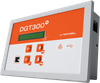
Description: With MEROBEL’s new DGT300+, Web Tension Control has never been so easy to manage. The DGT300+ is a digital controller dedicated to web tension and torque control. Overview The newest Digital Controller from MEROBEL combines, in a smart and low profile front face enclosure, the most
- Control Signal: Analog Voltage, Pulse / Frequency
- Type: DC Voltage Input
- Control: PID Control
- Features: Tension Indication / Control
-
Supplier: Cole-Parmer
Description: • The unique Plug & Test
technology stores the sensor's calibration on the sensor, not the indicator, for an interchangeable system • A threaded hole on each side expands versatility • Rugged aluminum housing • Measures tensile and compressive forces • Weight: 0.4 lb (0.2 kg) • - Force / Load Rating: 100 lbs
- Force Measured: Compression, Tension
- Device: Sensor / Transducer
-
Supplier: Cole-Parmer
Description: • The unique Plug & Test
technology stores the sensor's calibration on the sensor, not the indicator, for an interchangeable system • A threaded hole on each side expands versatility • Rugged aluminum housing • Measures tensile and compressive forces • Weight: 0.4 lb (0.2 kg) • - Force / Load Rating: 20 lbs
- Force Measured: Compression, Tension
- Device: Sensor / Transducer
-
Supplier: Cole-Parmer
Description: • The unique Plug & Test
technology stores the sensor's calibration on the sensor, not the indicator, for an interchangeable system • A threaded hole on each side expands versatility • Rugged aluminum housing • Measures tensile and compressive forces • Weight: 0.4 lb (0.2 kg) • - Force / Load Rating: 50 lbs
- Force Measured: Compression, Tension
- Device: Sensor / Transducer
-
Supplier: Cole-Parmer
Description: • The unique Plug & Test
technology stores the sensor's calibration on the sensor, not the indicator, for an interchangeable system • A threaded hole on each side expands versatility • Rugged aluminum housing • Measures tensile and compressive forces • Weight: 0.4 lb (0.2 kg) • - Force / Load Rating: 5 lbs
- Force Measured: Compression, Tension
- Device: Sensor / Transducer
-
Supplier: tecsis LP
Description: This heavy duty in-line load cell covers ranges to 40,000 lbs. Commonly used in land based and offshore oil and gas applications to monitor wireline and slickline tension during well intervention, logging, and tool retrieval, or for mast and hook weight.
- Force / Load Rating: 40,000 lbs
- Accuracy: 0.5 ±% Full Scale
- Operating Temperature: -65 to 250 F
- Output: Analog Voltage
-
Supplier: Newark, An Avnet Company
Description: CABLE SWITCH TENSION DEVICE XY2C
-
Supplier: RDP Electrosense
Description: Our RLT load cell or force sensor is a device which converts load or force into an electrical signal. Care should be taken to ensure that the model RLT load sensor is not exposed to load or force in excess of its capability. The range of model RLT tension load cell selected
- Force / Load Rating: 110.25 lbs
- Operating Temperature: -4 to 140 F
- Output: Analog Voltage
- Device: Sensor Element / Chip
-
Supplier: Andantex USA, Inc.
Description: Specifically designed for multi-spindles tension control applications, DG-Block is the new benchmark in closed loop digital controller for any industries using equipment managing a large number of wires, cables, fibers or even narrow webs. Designed with the most advanced technologies, DGblock
- Control Signal: Analog Voltage
- Type: DC Voltage Input
- Control: PID Control
- Features: Tension Indication / Control
-
Supplier: RDP Electrosense
Description: Our SLC-RF load cell or force sensor is a device which converts load or force into an electrical signal. A tension load cell measures the tension force applied between the top and bottom mounting threads. Care should be taken to ensure that the model SLC-RF load sensor is
- Operating Temperature: -65.2 to 249.8 F
- Output: Analog Voltage
- Device: Sensor Element / Chip
- Force Measured: Tension
-
Supplier: FUTEK Advanced Sensor Technology, Inc.
Description: LRF400 , 10 lb , Tension & Compression , Standard , Material - 2024-T4 , #10-32-Thread , Overload Protection , 4 Pin Lemo Receptacle, EGG.0B.304.CLL
- Force / Load Rating: 10 lbs
- Accuracy: 0.05 ±% Full Scale
- Operating Temperature: -60 to 200 F
- Output: Analog Voltage
-
Supplier: Baumer Ltd.
Description: Load cells can be used in static and high dynamic applications and can be loaded by compression or tension/compression. Load cells stand for high-precision and low noise signal processing. • Characteristic curve deviation 0,3% • Nominal force 0,5...10 kN • Output signal 2 mV/V • Protection
- Force / Load Rating: 0 to 2,248 lbs
- Accuracy: 0.3 ±% Full Scale
- Operating Temperature: -4 to 158 F
- Package: Canister
-
Supplier: Belt Technologies, Inc.
Description: Belt Technologies has developed the TruTension™ Pulley, a proprietary and state-of-the-art product unique to the belt conveyor market that precisely measures belt tension on conveyor systems. Standard pulleys do not have any tension indicators. The TruTension™ Pulley, however,
-
Supplier: RS Components, Ltd.
Description: Telemecanique Sensors XY2CZ704
-
Supplier: tecsis LP
Description: Model F7301 tension link load cells from tecsis LP is manufactured to meet the most demanding application requirements, using either high tensile stainless steel or fine grain steel with high quality surface coating. Thin film technology is ideal for both dynamic or static measurement up to
- Force / Load Rating: 10,000 to 300,000 lbs
- Operating Temperature: -40 to 176 F
- Output: Analog Current, Analog Voltage
- Package: Link
-
Supplier: PCB Piezotronics, Inc.
Description: Fastener Torque-Tension Load Cell, Clamp Load Capacity 1,800 kN (404,658 lbf), Thread Torque Capacity 8,000 Nm (5,901 lb-ft), 10-pin PT Connector For more information on RS Technologies Fastener Testing products and applications, please visit:
- Force / Load Rating: 405,000 lbs
- Operating Temperature: 0 to 200 F
- Technology: Strain Gauge
- Force Measured: Tension
-
Supplier: NOSHOK, Inc.
Description: to interface with most electrical systems 316 stainless steel construction on many versions provides corrosion-resistance and durability - ideal for harsh environments Sputtered thin film sensor for maximum repeatability and stability
- Force / Load Rating: 0 to 112,400 lbs
- Accuracy: 0.2 ±% Full Scale
- Output: Analog Current, Analog Voltage
- Package: Bolt, Rod End - Male
-
Supplier: tecsis LP
Description: The design of this load cell is optimal for in-line tension or compression force measurement. Covering ranges from 2,000 to 200,000 lbs and with female/female thread combinations, the Model XLRF is used for a variety of critical in-line force applications including wire line tension
- Force / Load Rating: 2,000 to 200,000 lbs
- Operating Temperature: -65 to 250 F
- Output: Analog Voltage
- Force Measured: Compression, Tension
-
Supplier: OMEGA Engineering, Inc.
Description: Small and capable of highly accurate readings, the LCFL subminiature load cells are suitable for precision industrial applications. They are all stainless steel, measure either tension or compression loads, and have male thread studs for load attachment. The exclusive internal design provides
- Force / Load Rating: 5 lbs
- Accuracy: 0.5 ±% Full Scale
- Operating Temperature: -65 to 250 F
- Output: Analog Voltage
-
Supplier: M.A.E. Apparecchiature Elettroniche srl
Description: Load cell 100.000 KG tension and compression combined effect, SIT certificate, compression cell (available upon request).
- Force / Load Rating: 220.5 lbs
- Force Measured: Compression, Tension
- Package: Pancake
- Device: Sensor / Transducer
-
Supplier: tecsis LP
Description: The Model 350t tension link is an in-line load cell with a capacity of 350 metric tons, designed for use in cranes or other lifting devices. The 350t provides real time static or dynamic measurement of load to detect uneven loading or overload situations. Fully welded and constructed of
- Force / Load Rating: 700,000 lbs
- Accuracy: 0.5 ±% Full Scale
- Operating Temperature: -4 to 176 F
- Output: Analog Current
-
Supplier: Gefran
Description: The TH series force transducers are ideal for systems that measure tension or compression force in industrial applications, where accuracy and reliability are important, even in harsh environments. The disposition of the (8) strain gauges of the measurement bridges uses the deformation
- Force / Load Rating: 22.05 to 220.5 lbs
- Accuracy: 0.2 ±% Full Scale
- Operating Temperature: 14 to 122 F
- Output: Analog Voltage
-
Supplier: Gefran
Description: TC series load cells are strain gauge transducers used to measure loads in static and dynamic applications, in tension and compression, with high accuracy (industrial weighing, laboratory testing, automation, etc). The TC series is machined from a single block of metal, so the primary sensing
- Force / Load Rating: 220.5 to 44,100 lbs
- Accuracy: 0.2 ±% Full Scale
- Operating Temperature: 14 to 122 F
- Output: Analog Voltage
-
Supplier: Transducer Techniques, LLC
Description: Tension Base (1K - 5K) TB1-SWP1020 Tension Base (5K - 20K) TB2-SWP-50K Tension Base (50K)
- Force / Load Rating: 1,000 to 50,000 lbs
- Operating Temperature: -65 to 200 F
- Output: Analog Voltage
- Force Measured: Compression, Tension















Featured Products Top
-
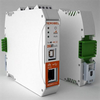
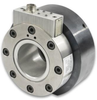
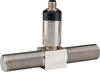
 Our Through-Hole Tension Sensor for Automation delivers precise tension measurement for wires, cables, fibers, and other continuous materials. Engineered for (read more)
Browse Tension Meters Datasheets for XJCSENSOR Technology Co., Ltd. -
Universal sensors for tension and compression applications up to 10,000 lbF (50 kN). Threaded rods on each end allow for a variety of mounting configurations. Compatible with Mark-10 (read more)
Browse Torque Sensors Datasheets for Mark-10 Corporation -
F Tension / Compression Test Frames are engineered for force testing applications up to 1,500 lbF (6.7 kN). Select from a broad range of force sensor capacities and an expansive array of grips and fixtures. From food packaging to electronics, from (read more)
Browse Force and Torque Instruments Datasheets for Mark-10 Corporation -
. The load cell is connected to the Tension Dynamometer via an approx. 3 m long sensor cable and, thanks to the compact cell dimensions, it can be used for a wide range of applications. The internal memory of 32 GB can hold 30 million measuring points. This allows measurement protocols to be (read more)
Browse Dynamometers Datasheets for PCE Instruments / PCE Americas Inc. -
Despite the range of wireSENSOR models available, application-specific modifications to the sensor are often required to suit a specific application. Modifications are often made to the length and design of the measuring wire, the tensioning force of the spring package or different output types (read more)
Browse String Potentiometers Datasheets for Micro-Epsilon Group -
How robust is an LVDT All RDP transducers are housed in a robust stainless steel housing which provides both mechanical protection for the LVDT sensor as well as shielding the internal coils and (read more)
Browse LVDT and RVDT Signal Conditioners Datasheets for RDP Electrosense -
The belt tension meter is an optically measuring maintenance tool for determining the belt tension force. This belt tension meter consists of a display device and a sensor head attached on a semi-flexible gooseneck. The advantage of the gooseneck is that the sensor head can be flexibly (read more)
Browse Force and Torque Instruments Datasheets for PCE Instruments / PCE Americas Inc. -
customer in identifying the optimal solution for their application. Force Sensor Manufacturer As a force sensor manufacturer, Strainsert has pioneered the design and manufacturing of custom and standard (read more)
Browse Force and Load Sensors Datasheets for Strainsert -
Force Sensor Manufacturer As a force sensor manufacturer, Strainsert has pioneered the design and manufacturing of custom and standard load pins, flat load cells, load bolts, studs and tension links due to our patented internal gaging process and an unsurpassed (read more)
Browse Force and Load Sensors Datasheets for Strainsert -
per specific customer requirements including mating hardware geometries, environment considerations, required measurement capacities, and factors of safety. The custom designed pins typically result in a custom drop-in sensor pin replacing the non-instrumented pin with minimal, if any (read more)
Browse Force and Load Sensors Datasheets for Strainsert
Conduct Research Top
-
Slitter-Rewinders Benefit from Segmented Tension Roll Transducers (.pdf)
slit and rewound) add a dimension of variability in the winding process that can make fine tension control on the individual strands critical. DFE was the sole tension equipment manufacturer years ago to release a multiplesegment. tension transducer roll with ten individual tension sensor modules
-
Torque Sensor Application - Assembly Line / Automation
Sensors / transducers are essential in many automated assembly, packaging and labeling processes. Below, a reaction torque sensor is setup with a servo motor in an automated conveyor belt assembly line to control the tension in the winding tape while providing feedback regarding alignment, out
-
Application of electronic coiling and electronic let-off in water jet looms
includes: 1.Driver and motor. 2.Tension sensor: 300KG / 500KG / 750KG. 3.Matching loom encoder. 4.Related wire harness.
-
Introduction to Strain Gages
Strain Gages (gauges): What is a Strain gage? A Strain gage (sometimes refered to as a Strain Gauge) is a sensor whose resistance varies with applied force; It converts force, pressure, tension, weight, etc., into a change in electrical resistance which can then be measured. A Strain gage
-
Paper and Plastic Film Converting
and tensioned on the primary roll. In addition, sensors are used to facilitate the automatic changeover between finished and bare rolls. In this application, our flexible sensors allow customers to simplify the mechanical design and the electronic control of the changeover mechanism.
-
Clutches and Brakes
infinitely by varying the input current, the magnetic particle clutches and brakes are ideal in an open loop system. To close the loop in the tensioning system, combine the magnetic particle clutch or brake with a Warner (R) sensor and control, resulting in more precise control of tension.
-
What is a Wireless Load Cell and How does it Work?
The wireless LoadSense load measurement sensor is a strain gauge stainless steel tension type sensor currently available in 1 Ton to 25 Ton ranges, having an overload capability of more than 150%. It has the capability of wirelessly transmitting its data to one of our compatible displays or data
-
Load Cell Application - Viscosity / Liquid Separation
into the liquid. Once the probe is in the liquid, a certain amount of tension is required to pull the probe back out. The thicker the liquid, the higher the viscosity is and the harder it is to pull the probe out. The load cell measures this tension and transfers the data to a display. Both MIT and NASA
More Information Top
 Indicates content that may require registration and/or purchase.

-
Sensor technique
A connected correction member radiziert the sensor signal of the differential pressure sensor .
-
Sensors for the process and factory automation
Temperature sensors pressure sensor flow sensors Binary position sensors position sensors Flüssigkeits-Chemosensoren filling level sensors speed sensors gas-Chemosensoren .
-
Spark-ignition-engine-management
206 use in the motor vehicle 207 temperature sensors 209 motor rotary paying sensors 214 hot film-air flow meters 217 Piezoelectric knocking sensors 218 MicroMechanical pressure sensors 221 high pressure sensors 222 λ- probes 223 two punks t-λ- probes 226 …
-
Manual combustion engine
Pressure sensors .
-
Sensors for the process and factory automation
Pressure sensors .
-
Sensors in the motor vehicle
Pressure sensors ................................................................................................................................................
-
Automotive electronics
119 4.7 pressure sensors .........................................................................................................
-
Electronics in automotive engineering
The control of the pressure requires a suitable pressure sensor in the Rail.