
Masters and Setting Gages Information
Last revised: February 14, 2025
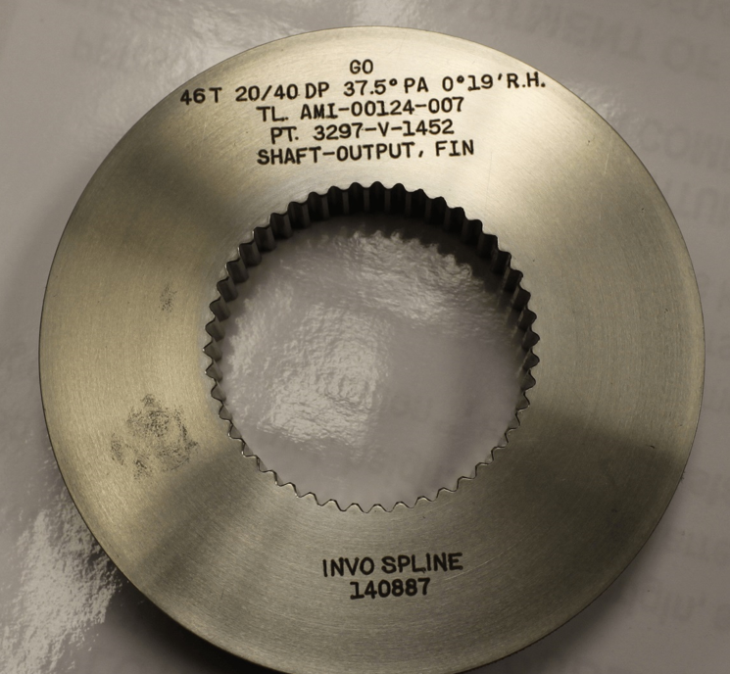
While similar to other gages in that they help to set and determine gauging standards, masters gages and setting gages are not used with other specific devices, instruments, and sensors. Instead, masters gages and setting gages provide dimensional standards for calibrating other gages.
Types of Masters and Setting Gages
Masters gages and setting gages are designed for a variety of tolerance grades in both metric and English dimensions. Masters gages and setting gages that fit into this category:
- gage blocks
- end measuring rods
- setting plugs
- setting discs
- setting rings
- thread standards
Features
Gage blocks provide fixed length, thickness, or angle standards and are manufactured to specific flatness, parallelism, and dimensional standards. End measuring rods, or micrometer standards, are fixed-length setting gages or standards used for checking or calibrating micrometers or other length/thickness gages. End measuring rods consist of long, ground bars manufactured to precise tolerances, and with a central insulating handle. Precision gage balls are precisely manufactured and spherically shaped for gaging spherical cavities, tapered holes, or machine tool set up.
Specifications
Setting rings, setting pins, setting discs, and other setting gages are used to calibrate production functional gages for go/no-go assessment compared to specified tolerance. Setting plugs are used for assessment of hole and slot dimensions or locations compared to specified tolerances. Similarly, setting ring gages are used for assessment of the attributes of pins, shafts, or threaded studs. Setting discs, also known as annular plugs, are large plug gages (over ~8" in diameter) that use an annular disc design where the internal section is cut down to reduce weight and improve handling. Setting discs have a similar design and are used to set or check micrometer or other OD gages.
Other types of masters gages and setting gages include master gage blocks, master or setting discs, and setting rings. Setting rings are types of master gages used to calibrate or set micrometers, comparators, or other gaging systems. Working gages are used in the shop for dimensional inspection and periodically checked against a master gage.
Masters and Setting Gages FAQs
What are the key differences between the various types of masters and setting gages used in precision engineering?
Purpose and Functionality
Master Gages: These are primarily used as setting gages for setting up comparator type measuring instruments or as reference standards for calibrating measuring tools that require periodic readjustment. They represent the dimension to be gaged either in its basic size or the median size of the designed tolerance zone.
Limit Gages: These are made to contain the reverse replica of the dimension to be checked and are intended for inspection purposes. They are used to determine the acceptable size of a part by its limit dimensions.
Types of Master Gages
Master Gage Blocks: These are used as dimensional reference standards and are essential for maintaining traceability to national standards. They are used to calibrate high-quality secondary standards.
Setting Rings: These are types of master gages used to calibrate or set micrometers, comparators, or other gaging systems.
Application and Use
Short-range Comparators: Require a separate master for each value measured, which can be more resource-intensive.
Direct Reading Units: Require only an upper and a lower limit master to set a range to measure within, which can be more efficient.
Material and Quality
It is recommended that master gages, such as gage blocks and ring gages, be of the highest grade possible and preferably have a history to them. Steel blocks and rings are commonly used unless the majority of the measured parts are of a different material.
What is the calibration process for master gages?
The calibration process for master gages is crucial in ensuring precision and accuracy in measurement systems. Here are some key aspects of the calibration process:
Purpose of Calibration
Calibration of master gages, such as gage blocks and ring gages, is essential to maintain traceability to national standards and ensure the accuracy of measurements in precision engineering.
Calibration Standards
Master gages are calibrated against high-quality secondary standards that are close replicas of primary standards. This creates a reliable link between the basic standard and the instruments used for measuring industrial products.
Calibration Methods
The two-gage block method is recommended for mastering instruments. This method uses two master gage blocks to establish a scale factor, which is crucial for accurate measurements. The scale factor is held in memory until overwritten.
Calibration Grades
Gage blocks are available in several tolerance grades, with Grade 0.5 (AAA) providing the highest degree of accuracy for precision or master calibration gaging operations. Other grades like Grade 1 and Grade 2 also offer high accuracy for precision gage checking or setting operations.
Calibration Procedure
A gage calibration procedure typically includes step-by-step instructions for calibrating, measuring, and testing devices to measurement traceable standards. This ensures that the deviation from the true value supplied by a measuring instrument is determined accurately.
Environmental Considerations
Calibration often requires a controlled environment to ensure accuracy, particularly for high-precision operations. This includes maintaining specific temperature conditions in metrology or standards laboratories.
Uncertainty Analysis
Calibration involves analyzing the uncertainty of measurements. For example, the LabMaster has an instrument uncertainty that depends on the size of the part being measured. This uncertainty is a critical factor in ensuring the reliability of the calibration process.
What is the two-gage block method for calibration?
The two-gage block method is a recommended technique for calibrating instruments, particularly in precision engineering, due to its speed and accuracy. Here are some key aspects of this method:
Purpose and Advantages
The two-gage block method is used to establish a scale factor for mastering an instrument. This method is favored for its speed and accuracy in providing traceability to known standards.
Methodology
This method involves using two master gage blocks, typically of different sizes (e.g., 0.1 inch and 4.0 inches), to set a scale factor. The scale factor is crucial for accurate measurements and is held in memory until it is overwritten.
Uncertainty and Accuracy
The total uncertainty in this method is mainly dependent on the uncertainty of the master gage blocks used, as well as the master used for setting the datum. The method is designed to minimize uncertainty and provide reliable calibration results.
Technology and Process
The scale factor is established through a patented technology that involves counting fringe patterns, similar to a typical laser system. Unlike other methods, this approach does not require entering environmental data such as temperature, pressure, and humidity. Instead, it uses a second master gage block to establish the scale factor over a long measuring range.
Application
This method is particularly useful in environments where fast, accurate, and cost-effective calibration is required. It is a practical solution for maintaining traceability to national standards without the need for extensive environmental controls.
What is the role of environmental conditions in the calibration process?
The role of environmental conditions in the calibration process is crucial for ensuring the accuracy and reliability of measurements. Here are some key aspects:
Controlled Environment
Calibration often requires a controlled environment to ensure precision, particularly for high-precision operations. This includes maintaining specific temperature conditions in metrology or standards laboratories.
Impact on Measurement Accuracy
Environmental factors such as temperature, pressure, and humidity can affect the accuracy of measurements. For instance, changes in temperature can cause expansion or contraction of materials, leading to measurement errors.
Calibration Methods
Some calibration methods, like the two-gage block method, are designed to minimize the impact of environmental conditions by not requiring the entry of environmental data such as temperature, pressure, and humidity. Instead, they use a second master gage block to establish the scale factor over a long measuring range.
Uncertainty Analysis
Calibration involves analyzing the uncertainty of measurements, which can be influenced by environmental conditions. Ensuring a stable environment helps in reducing the uncertainty and improving the reliability of the calibration process.
What is the role of environmental conditions in the calibration process?
The role of environmental conditions in the calibration process is crucial for ensuring the accuracy and reliability of measurements. Here are some key aspects:
Controlled Environment
Calibration often requires a controlled environment to ensure precision, particularly for high-precision operations. This includes maintaining specific temperature conditions in metrology or standards laboratories.
Impact on Measurement Accuracy
Environmental factors such as temperature, pressure, and humidity can affect the accuracy of measurements. For instance, changes in temperature can cause expansion or contraction of materials, leading to measurement errors.
Calibration Methods
Some calibration methods, like the two-gage block method, are designed to minimize the impact of environmental conditions by not requiring the entry of environmental data such as temperature, pressure, and humidity. Instead, they use a second master gage block to establish the scale factor over a long measuring range.
Uncertainty Analysis
Calibration involves analyzing the uncertainty of measurements, which can be influenced by environmental conditions. Ensuring a stable environment helps in reducing the uncertainty and improving the reliability of the calibration process.
What are some methods to control environmental conditions during calibration?
Controlling environmental conditions during the calibration process is essential to ensure the accuracy and reliability of measurements. Here are some methods and considerations:
Temperature Control
Calibration often requires a controlled environment, particularly in temperature-controlled metrology or standards laboratories, to ensure precision. Maintaining specific temperature conditions helps prevent expansion or contraction of materials, which can lead to measurement errors.
Humidity and Pressure Control
Although specific methods for controlling humidity and pressure are not detailed in the documents, these factors are generally important in maintaining a stable environment. Calibration methods like the two-gage block method are designed to minimize the impact of environmental conditions by not requiring the entry of environmental data such as temperature, pressure, and humidity.
Use of Controlled Laboratories
Performing calibration in metrology or standards laboratories where environmental conditions are strictly controlled can significantly reduce measurement uncertainty and improve the reliability of the calibration process.
Minimizing Environmental Impact
Some calibration methods, such as the two-gage block method, are designed to minimize the impact of environmental conditions by using a second master gage block to establish the scale factor over a long measuring range, thus providing a fast, accurate, and cost-effective method of maintaining traceability to known standards.
Masters and Setting Gages Media Gallery
References
GlobalSpec—Handbook of Dimensional Measurement, Fourth Edition
GlobalSpec—Metrology investments increase manufacturing accuracy anefficiency, reduce costs
GlobalSpec—Handbook of Dimensional Measurement, Fourth Edition
Image credit:
Dwight Burdette / CC BY-SA 3.0