
Semiconductor Power Modules Information
Last revised: February 12, 2025
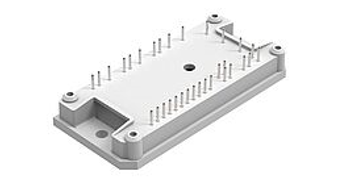
Semiconductor power modules are electronic devices that manage power sources for various electronic subsystems. Applications for semiconductor power modules include aerospace, automotive, motor control and power generation. They are also known as power modules. They are often made up of diodes, rectifiers and Insulated gate bipolar transistors (IGBTs).
Operation
The primary function of a semiconductor power modules is to provide electric power conversion. These devices rely on semiconductor devices to complete power conversion. Semiconductor power modules provide high power density that requires greater electrical insulation, which is obtained by the package design.
Types
There are multiples types of semiconductor power modules.
- Insulated gate bipolar transistors (IGBTs) are bipolar transistors with an insulated gate. They combine the advantages of the bipolar transistor (high voltage and current) with the advantages of the MOSFET (low power consumption and high switching).
- Intelligent power modules (IPM) contain power switches and gate drivers in one module. These devices contain additional control circuitry providing greater performance with implemented circuits.
- Rectifiers receive an alternating current (AC) with an average value of zero volts and supply a direct current (DC), single polarity signal with a net value greater than zero volts, a process otherwise known as rectification. The essential component in a rectifier is the diode.
- Silicon carbide modules provide great efficiency and have a greater power density over traditional power modules. They can be used in high power applications due to the reduced cooling needs.
- Silicon/silicon carbide modules are hybrid modules used for DC-AC applications.
- Thyristors are a class of four-layer (PNPN) semiconductor devices that act as switches, rectifiers or voltage regulators. When triggered, thyristors turn on and become low-resistance current paths and remain so, even after the trigger is removed, until the current is reduced to a certain level or until thyristors are triggered off, depending on the type of device.
Configurations
Semiconductor power modules are commonly made of semiconductor devices such as diodes, rectifiers and IGBTs. Semiconductor power modules are generally rectangular in shape and are available in various package designs. The most prominent configurations of a semiconductor power modules are full bridge, half bridge, H-bridge, six-pack, power factor correction (PFC) and three-phase.
Specifications
The following specifications determine the functionality of semiconductor power modules.
- Input voltage: The input voltage range of the power module.
- Input current: The input current range of the power module.
- Output voltage: The output voltage range of the power module.
- Output current: The output current range of the power module.
- Output power: The output power range of the power module.
Semiconductor Power Modules FAQs
What are the key factors to consider when selecting a semiconductor power module for a specific application?
When selecting a semiconductor power module for a specific application, several key factors should be considered to ensure optimal performance and reliability. Here are some important considerations:
Electrical Specifications
Input and Output Voltage: Ensure the module can handle the required input and output voltage ranges for your application.
Input and Output Current: Verify that the module supports the necessary current levels.
Output Power: The module should be capable of delivering the required power output.
Thermal Management
Cooling Requirements: Consider the heat dissipation capabilities of the module. Efficient cooling is crucial to prevent overheating and ensure reliability.
Material Selection: The choice of packaging materials can affect thermal performance and should be optimized for heat dissipation.
Mechanical and Environmental Considerations
Size and Configuration: The physical size and configuration (e.g., full bridge, half bridge) should fit the design constraints of your application.
Environmental Protection: Ensure the module is protected against harsh environmental conditions, such as high voltage isolation and mechanical protection.
Reliability and Standards
Compliance with Standards: Check for compliance with relevant technical standards (e.g., UL) to ensure safety and reliability.
Failure Modes: Be aware of typical failure modes, such as thermal expansion mismatches, and choose modules that minimize these risks.
Application-Specific Requirements
Efficiency Needs: For applications like solar energy or electric vehicles, efficiency is a critical factor.
Junction Temperature: Consider the junction temperature under operating conditions, as it affects the module's performance and lifespan.
How do different cooling materials affect the performance of power modules?
The performance of power modules is significantly influenced by the choice of cooling materials, as these materials play a crucial role in managing heat dissipation and ensuring the reliability of the module. Here are some insights:
Thermal Properties
Cooling materials with high thermal conductivity are essential for efficient heat dissipation. This helps in maintaining the junction temperature within safe limits, which is critical for the performance and longevity of the power module.
Material Selection
The selection of packaging materials, including those used for cooling, affects the overall electrical, thermal, and mechanical performance of the power module. Different materials have varying thermal, electrical, and mechanical properties, which need to be optimized to achieve comprehensive performance requirements.
Impact on Reliability
Proper cooling materials help in minimizing thermal expansion mismatches between different components of the power module. This reduces the risk of mechanical failures such as lift-off or cracks in solder joints, which can occur due to rapid power cycling or temperature changes.
Efficiency Considerations
Efficient cooling materials contribute to the overall efficiency of the power module by reducing the thermal resistance and ensuring that the module operates within its optimal temperature range. This is particularly important in applications where efficiency is a critical factor, such as in solar energy or electric vehicles.
What are the typical failure modes in power modules?
Typical failure modes in power modules are often related to the mechanical and thermal stresses experienced by the components within the module. According to the information available, here are some common failure modes:
Thermal Expansion Mismatches
The interconnects within a power module, such as those in a conventional IGBT module, can be sources of mechanical failures. This is due to thermal expansion mismatches between the materials and components in the assembly.
Wire Bond Lift-Off
Rapid power cycling can lead to the lift-off of wire bonds. This occurs when the thermal expansion and contraction during power cycling cause mechanical stress on the wire bonds, eventually leading to their detachment.
Cracks in Solder Joints
Temperature changes can cause cracks in the solder joints. These cracks are a result of the repeated thermal cycling that induces stress in the solder material, leading to mechanical failure over time.
How does junction temperature affect power module performance?
Junction temperature is a critical parameter that affects the performance and reliability of power modules. Here are some insights:
Performance Impact
The junction temperature of semiconductors is a key parameter that influences their performance under given conditions and environments. High junction temperatures can lead to increased electrical resistance, which may reduce the efficiency of the power module.
Reliability Concerns
Elevated junction temperatures can accelerate the degradation of materials within the power module, potentially leading to failure modes such as thermal expansion mismatches, wire bond lift-off, and cracks in solder joints. These failures are often due to the mechanical stresses induced by thermal cycling.
Thermal Management
Effective thermal management is crucial to maintain the junction temperature within safe limits. This involves selecting appropriate cooling materials and designs to ensure efficient heat dissipation, which helps in preserving the performance and longevity of the power module.
Efficiency Considerations
Maintaining an optimal junction temperature is essential for achieving high efficiency, especially in applications where efficiency is a critical factor, such as in solar energy systems or electric vehicles.
What are the thermal management techniques for power modules?
Thermal management is a crucial aspect of ensuring the performance and reliability of power modules. Here are some key thermal management techniques:
Cooling Materials
The selection of cooling materials is vital for efficient heat dissipation. Materials with high thermal conductivity are preferred to maintain the junction temperature within safe limits, which is critical for the performance and longevity of the power module.
Package Design
The design of the power module package plays a significant role in thermal management. It typically includes components like a power chip, connecting material, bonding lead, copper-covered ceramic substrate, and a cooling base plate. These components must be optimized to achieve comprehensive performance requirements, including electrical, thermal, and mechanical aspects.
Thermal Expansion Management
Proper thermal management helps minimize thermal expansion mismatches between different components of the power module. This reduces the risk of mechanical failures such as lift-off or cracks in solder joints, which can occur due to rapid power cycling or temperature changes.
Heat Sink Utilization
Heat sinks are often used to enhance thermal management by increasing the surface area available for heat dissipation. The design and material of the heat sink, such as aluminum with specific thickness and fin length, can significantly impact the junction temperature and overall thermal performance.
What is the role of heat sinks in power module?
Heat sinks play a crucial role in the thermal management of power modules, ensuring their performance and reliability. Here are some key points about the role of heat sinks in power modules:
Heat Dissipation
Heat sinks are designed to increase the surface area available for heat dissipation, which is essential for maintaining the junction temperature of the semiconductor components within safe limits. This helps in preventing overheating and potential damage to the power module.
Material and Design
The material and design of the heat sink significantly impact its effectiveness. For example, aluminum is commonly used due to its good thermal conductivity. The thickness of the heat sink base and the length of the fins are critical design parameters that influence the thermal performance.
Efficiency and Performance
By effectively dissipating heat, heat sinks contribute to the overall efficiency of the power module. This is particularly important in applications where efficiency is a critical factor, such as in solar energy systems or electric vehicles.
Integration with Power Modules
Heat sinks are often integrated into the power module package design, which includes components like power chips, bonding leads, and cooling base plates. This integration helps in achieving comprehensive performance requirements, including electrical, thermal, and mechanical aspects.
What are the design considerations for heat sinks in power modules?
When designing heat sinks for power modules, several key considerations must be taken into account to ensure effective thermal management and optimal performance. Here are some important design considerations:
Material Selection
The choice of material for the heat sink is crucial. Aluminum is commonly used due to its good thermal conductivity, which helps in efficient heat dissipation.
Design Parameters
The thickness of the heat sink base and the length of the fins are critical design parameters. For example, a heat sink with a base thickness of around 8 mm and fins with a length of 50 mm can significantly impact the thermal performance by increasing the surface area available for heat dissipation.
Integration with Power Modules
Heat sinks are often integrated into the power module package design, which includes components like power chips, bonding leads, and cooling base plates. This integration helps achieve comprehensive performance requirements, including electrical, thermal, and mechanical aspects.
Efficiency and Performance
By effectively dissipating heat, heat sinks contribute to the overall efficiency of the power module. This is particularly important in applications where efficiency is a critical factor, such as in solar energy systems or electric vehicles.
Semiconductor Power Modules Media Gallery
References
Electronics360—Wolfspeed opens largest 200 mm SiC fab