
Gap Sensors and Feeler Gauges Information
Last revised: January 8, 2025
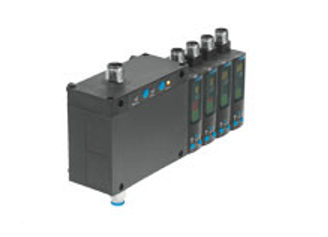
Gap sensors and feeler gages detect or measure the gap or clearance between two components or surfaces such as turbine blades tip clearance, nip or roller gap, lubricant gaps, weld seams, adhesive joints, extruder die gap, spark plug electrodes, generator or motor air gap, mold spacing, and workpiece-fixture gap. Gap sensing products use mechanical feel (feeler gages), air pressure, optical, capacitance, or other electronic technologies to sense gaps or clearance.
Gap sensors are subtly different than proximity, presence, or position sensors. Gap sensors, electronic feeler gages, and other gap instruments may utilize proximity or position sensing elements within the gap sensing product. While proximity sensors detect the presence of a solid object, gap detection sensors detect the occurrence of a void, clearance, or gap. Further, while position sensors detect the position of an object from the surface of the position sensor, gap sensors or feeler gauges provide a measure of the size or width of the gap.
Types of Gap Sensors and Feeler Gauges
Gap detector/gap detection sensor—Gap detectors and gap detection sensors indicate the presence of a gap, clearance, spacing, void, break, or tear within a part or between two surfaces or parts. They provide only the gap's occurrence, not a direct reading or measurement of the gap. Some gap sensors can be set to switch or trigger for gaps below a specific size.
Fixed feeler gauges—Fixed feeler gauge and fixed step gages are mechanical gaging components used to measure gap, clearance, or spacing size.
Gap sensor/gap switch—Gap sensors provide a dimensional measurement of gaps or clearances. Gap sensors do not typically have a visual display. Air, pneumatic, and electronic feeler gauges can be considered gap sensors or gap sensing instruments depending on their display capability. Gap switches, gap sensing switches, and gap sensor switches provide an output to trigger activate or deactivate factory machinery.
Gap monitor/instrument—Gap monitors detect, measure, and track gaps within products, part clearance, roller nip alignment or gaps, mold spacing, and breaks or gaps in webs. Gap instruments, gap sensing systems and gap monitors typically have a visual display indicating the gap size. Gap monitors and instrument may also provide an output for machine control. Some gap monitors have control function and set points to trigger or activate or stop equipment when a gap or void is detected or the size exceeds allowable limits.
Thin/narrow gap sensor—Thin or narrow gap sensors area used to measure very small widths within a product or between the faces of components. Thin or narrow gap examples include the joint spacing between two surfaces before welding, brazing, or adhesive bonding; turbine blade to outer casing gap measurement; rotor to stator gap measurement; slot die coater gaps; disc brake rotor to brake pad gap; workpiece to fixture gaps and spark plug gaps. Feeler gages, optical or imaging gap gages, capacitance gap sensors, eddy current gap sensors, and air or pneumatic gap sensors are technologies used to measure or detect fine gaps.
Web/wide gap sensor—Wide gap sensors detect or measure large breaks, voids or gaps in web, sheet, or panel applications. Transmitted or reflected light is often used to detect large gaps in webs or spacing between panels.
Non-contact gap sensor—Gap sensing and feeler gauges can utilize contact or non-contact technologies. If the product is conductive, then a capacitance gap sensor may be used. If the products are non-conductive, a collapsible contact feeler gauge consisting of two thin metal strips—which compresses when inserted into the gap—may be used. The capacitance change between the two strips is converted into gap thickness. Optical, eddy current, and microwave gap sensors can have noncontact gap sensing capabilities. Gaps occurring in webs moving at high speed are detected using noncontact sensing technologies such as light transmission.
Technologies
Several different technologies are utilized to provide gap sensors, gap sensing systems, and gap monitors.
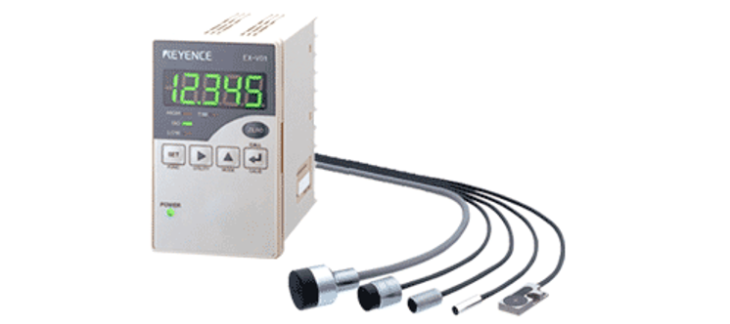
Air pressure / pneumatic—Air pressure or pneumatic gap sensor use the change in air pressure to sense gaps. When a gap sensor is push closely against a part, a nozzle is closed, which generates air pressure. The air pressure moves a diaphragm, which triggers a switch. Some air gap sensors have two legs and web material or product can pass through the legs. When a gap occurs in the web or product, air flows across it, triggering or detecting the presence of a gap.
Capacitance—Capacitance gap gages measure by utilizing the change in capacitance that occurs when the spacing between two conductors changes.
Eddy current—Eddy current sensors induced current loops and feedback from these induced eddy current loops are sensed with a pickup coil to determine gap size.
Fixed—Fixed feeler gages, step gages, and gap gages use the fit of precision shims or spacers to measure gap. The gage is inserted into the gap or between the surfaces. The feel gage should just fit snug into the gap without forcing (overtightness) or looseness.
Mechanical—Large gaps can be measured with an internal or ID mechanical gage. Mechanical gap gages are usually called internal gages or inner diameter gages. Roller gap gages and gap micrometers are examples of mechanical gap gages. Fixed gap or feeler gauge could be considered mechanical gage without moving parts.
Optical/imaging—Several different types of gap sensors or gap sensing systems are based on optical, imaging and laser technologies. Imaging gap sensors capture an image and measure the gap visually. Profile or scanner instruments project a laser and then use reflected light to detect and/or measure the gaps. Transmissive light sources such as laser or LED sources are used for fast moving web applications, when a gap occur, light passes through the gap and is detected.
Gap Sensors and Feeler Gauges FAQs
What are the key differences between gap sensors and feeler gauges in terms of measurement accuracy?
Here are the key differences between gap sensors and feeler gauges in terms of measurement accuracy:
Measurement Method
Feeler Gauges: These are contact measurement tools that rely on the physical insertion of a gauge into a gap to determine its size. The accuracy of feeler gauges can be affected by the operator's technique and the wear on the gauges themselves over time.
Gap Sensors: These can be either contact or non-contact devices. Non-contact gap sensors, such as capacitive sensors, offer higher accuracy and repeatability compared to traditional contact methods like feeler gauges.
Accuracy and Repeatability
Feeler Gauges: They have marginal accuracy when the required tolerance is better than 25 microns. The results can vary between operators, and the accuracy diminishes over time due to wear.
Gap Sensors: Non-contact gap sensors, such as capacitive sensors, provide better accuracy and repeatability. For example, a study showed that feeler gauges had a measurement dispersion of 45%, whereas capacitive gap sensors had a dispersion of 25%, indicating better precision.
Data Capture and Documentation
Feeler Gauges: These traditional methods do not automatically record or store data, which can be a limitation in modern manufacturing processes that require detailed documentation.
Gap Sensors: Modern gap sensors can integrate with data acquisition systems, allowing for automatic data capture and documentation, which is essential for meeting stringent quality requirements.
Technological Advancements
Feeler Gauges: Limited by their mechanical nature and the variability introduced by manual operation.
Gap Sensors: Recent advancements include the development of sensors that can measure very small gaps with high precision, even in challenging environments such as high temperatures.
How do non-contact gap sensors work?
Non-contact gap sensors work by utilizing various technologies to measure the distance between two surfaces without physically touching them. Here are some key aspects of how they function:
Measurement Principle
Non-contact gap sensors, such as capacitive sensors, operate by detecting changes in capacitance between the sensor and the target surface. The capacitance varies with the distance between the sensor and the target, allowing the sensor to determine the gap size accurately.
Technological Advancements
Recent advancements have enabled these sensors to measure very small gaps with high precision, even in challenging environments. For example, some sensors can measure gaps down to 100 microns at temperatures as high as 250°C, and others can survive temperatures up to 870° C.
Data Capture and Integration
Modern non-contact gap sensors can integrate with data acquisition systems, allowing for automatic data capture and documentation. This capability is essential for meeting stringent quality requirements in manufacturing and assembly processes.
Applications
These sensors are used in various industrial applications, including measuring gaps in slot die coaters, roller to roller gaps, and other precision engineering tasks where traditional contact methods may not provide the required accuracy or repeatability.
What are the advantages of using non-contact gap sensors over traditional methods?
Non-contact gap sensors offer several advantages over traditional methods like feeler gauges and shims. Here are some key benefits:
Accuracy and Repeatability
Non-contact gap sensors, such as capacitive sensors, provide higher accuracy and repeatability compared to traditional contact methods. For instance, a study showed that feeler gauges had a measurement dispersion of 45%, whereas capacitive gap sensors had a dispersion of 25%, indicating better precision.
Data Capture and Documentation
Modern non-contact gap sensors can integrate with data acquisition systems, allowing for automatic data capture and documentation. This capability is essential for meeting stringent quality requirements in manufacturing and assembly processes.
Reduced Wear and Tear
Traditional contact methods like feeler gauges can wear over time due to constant rubbing against hard surfaces, which can also damage the surfaces being measured. Non-contact sensors eliminate this issue, maintaining their accuracy over time.
Technological Advancements
Recent advancements have enabled non-contact sensors to measure very small gaps with high precision, even in challenging environments. For example, some sensors can measure gaps down to 100 microns at temperatures as high as 250°C, and others can survive temperatures up to 870° C.
Versatility
Non-contact gap sensors can be used in various industrial applications, including measuring gaps in slot die coaters, roller to roller gaps, and other precision engineering tasks where traditional contact methods may not provide the required accuracy or repeatability.
These advantages make non-contact gap sensors a preferred choice in many modern engineering and manufacturing applications.
How do capacitive sensors compare to other types of non-contact sensors?
Capacitive sensors are a type of non-contact sensor that offer several advantages and characteristics compared to other non-contact sensor technologies. Here's how they compare:
Measurement Principle
Capacitive Sensors: These sensors operate by detecting changes in capacitance between the sensor and the target surface. The capacitance varies with the distance, allowing for precise gap measurement.
Other Non-Contact Sensors: Other types, such as inductive or optical sensors, use different principles. Inductive sensors rely on electromagnetic fields, while optical sensors use light to measure distances.
Accuracy and Precision
Capacitive Sensors: Known for high accuracy and precision, capacitive sensors can measure very small gaps with high repeatability. For example, they can achieve a resolution down to 0.25 microns and maintain accuracy better than 25 microns.
Other Non-Contact Sensors: While some optical sensors can also offer high precision, the performance can vary based on environmental conditions like light interference or surface reflectivity.
Environmental Robustness
Capacitive Sensors: These sensors can operate in challenging environments, such as high temperatures up to 870°C, making them suitable for industrial applications.
Other Non-Contact Sensors: Inductive sensors are generally robust in harsh environments, but optical sensors might be more sensitive to dust, dirt, or other contaminants.
Data Integration
Capacitive Sensors: They can integrate with data acquisition systems, allowing for automatic data capture and documentation, which is crucial for quality control in manufacturing processes.
Other Non-Contact Sensors: Many modern sensors also offer data integration capabilities, but the ease and extent of integration can vary by technology and manufacturer.
Applications
Capacitive Sensors: Widely used in applications requiring precise gap measurements, such as in slot die coaters and roller to roller gaps.
Other Non-Contact Sensors: Inductive sensors are often used for metal detection and positioning, while optical sensors are used in applications requiring non-contact distance measurement over longer ranges.
These comparisons highlight the strengths of capacitive sensors, particularly in terms of precision and environmental robustness, making them a preferred choice in many precision engineering tasks.
What are the limitations of capacitive sensors compared to other non-contact sensors?
Capacitive sensors, while offering several advantages, also have certain limitations compared to other non-contact sensors. Here are some of the key limitations:
Sensitivity to Environmental Conditions
Capacitive sensors can be affected by environmental factors such as humidity, dust, and temperature variations. These conditions can alter the dielectric constant of the medium between the sensor and the target, potentially affecting measurement accuracy.
Material Limitations
These sensors are typically more effective with conductive or semi-conductive materials. Non-conductive materials may not be detected as accurately, which can limit their application in certain scenarios.
Range Limitations
Capacitive sensors generally have a shorter measurement range compared to some other non-contact sensors like optical sensors. This can limit their use in applications requiring long-distance measurements.
Surface Condition Sensitivity
The accuracy of capacitive sensors can be influenced by the surface condition of the target. Variations in surface texture or cleanliness can affect the sensor's ability to measure gaps accurately.
Complexity in Calibration
These sensors may require more complex calibration procedures to ensure accuracy, especially in environments where multiple factors can influence the measurement.
These limitations highlight the importance of selecting the appropriate sensor technology based on the specific requirements and conditions of the application.
How do environmental conditions affect different types of non-contact sensors?
Environmental conditions can significantly affect the performance of different types of non-contact sensors. Here's how various environmental factors can impact these sensors:
Humidity and Dust
Capacitive Sensors: These sensors can be sensitive to changes in humidity and dust, as these factors can alter the dielectric constant of the medium between the sensor and the target, potentially affecting measurement accuracy.
Optical Sensors: Dust and humidity can interfere with the light path, leading to inaccurate readings or signal loss.
Temperature Variations
Capacitive Sensors: While some capacitive sensors are designed to operate at high temperatures (up to 870° C temperature fluctuations can still affect their performance by altering the dielectric properties of the materials involved).
Inductive Sensors: Generally robust against temperature changes, but extreme temperatures can affect their electromagnetic properties.
Surface Conditions
Capacitive Sensors: The accuracy can be influenced by the surface condition of the target. Variations in surface texture or cleanliness can affect the sensor's ability to measure gaps accurately.
Optical Sensors: Reflectivity and surface texture can impact the accuracy of optical sensors, as they rely on light reflection for measurements.
Material Properties
Capacitive Sensors: More effective with conductive or semi-conductive materials. Non-conductive materials may not be detected as accurately, which can limit their application in certain scenarios.
These factors highlight the importance of selecting the appropriate sensor technology based on the specific environmental conditions and requirements of the application.
Gap Sensors and Feeler Gauges Media Gallery
References
AGL—Understanding nip dynamics
Sensorland—Gap sensor technology
Image credits: