Communication in Organisations CMIOLP

Our communication skills are something we tend to take for granted. Of course we're all skilled at communicating; it's something we've been doing since the day we were born. We communicate spontaneously, often unconsciously, and sometimes find that we have to live with the consequences.
People react to your behaviour, i.e. what you do and say. It's the only clue they have to interpret the complex nature of what goes on inside your head:
There are four ways, and only four ways, in which we have contact with the world. We are evaluated and classified by these contacts: what we do, how we look, what we say and how we say it.
Dale Carnegie
Having a greater insight into what's happening when you communicate increases your ability to adapt the way you interact with people and influence their response to you. Increasing your awareness of the process and context of communication will increase your effectiveness of working with others.
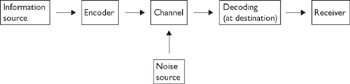
The first model of the communication process was developed by Claude Shannon and Warren Weaver in 1949. The aim of the model was to enable engineers from the Bell Telephone Company to transmit mechanical messages more effectively (Figure 1.1).
Although developed for mechanical messages, the model successfully captures what happens when people communicate and provides a starting point...