Communication in Organisations CMIOLP

Our attitudes and the assumptions have a significant impact on how we communicate.
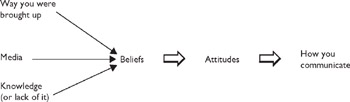
Everyone has their own personal belief and value system formed as a result of:
the way they live and were brought up (i.e. a person's culture)
the messages they receive from the media (e.g. television, newspapers)
knowledge, or lack of it, about a particular topic.
Our beliefs influence our attitudes towards people which in turn influence how we communicate.

Typical attitudes of non-disabled people towards people with disabilities include embarrassment, fear of not behaving appropriately, or pity.
Identify two factors in society which have contributed towards people developing these attitudes?
How might these attitudes show in a person's manner of communicating with someone, e.g. in a wheelchair?
FEEDBACK
Attitudes towards people with disabilities are a result of:
The ways schools used to be organized, segregating disabled and non-disabled children.
Lack of knowledge.
Messages in the news media that reinforce images of disabled people as needy, grateful, deserving, plucky or brave. These images underline ideas that disabled people are separate from non-disabled people.
Charities in raising money they give prominence to differences and show that people with disabilities need help.
FEEDBACK
The classic response is the Does he take sugar attitude? with people directing questions to anyone but the person in the wheelchair. Feeling patronized or excluded are other common feelings reported by disabled people resulting from society's attitudes.
Attitudes are a common basis for grouping people together based on a characteristic...