Nuclear Safety

The most common use is radioisotope-powered thermoelectric generators for the electric loads on board. Power is typically about 1 kWe, subdivided between three or more units. Radioisotope-powered heat generators (2.7 g of plutonium, 1 W) are currently used to guarantee the suitable thermal conditions for the equipment on board during a mission.
Both types of generators are usually powered by the heat produced by plutonium-238, which has an optimal thermal power to weight ratio (= 0.57 W g ?1). The reason for the use of radioisotopes is that space missions require absolutely reliable sources of electric energy and heat, without any need for maintenance, that are capable of operating for years in severe environmental conditions. For these reasons, radioisotopes are practically the only choice, where bulky solar cells systems are not suitable. In the past, a real reactor, the SNAP-10A, was built and used. Other systems were tested only on the ground (Angelo and Buden, 1985).
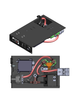
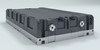
The use of these devices is based on more than thirty years of operation experience on space vehicles of various types. As an example, the US Department of Energy (DoE) has up to now supplied 44 radio- isotope-powered thermoelectric generator systems, used in 24 space missions. The most recent thermo- electric generator built by the DoE, the General Purpose Heat Source Radioisotope Thermoelectric Generator (GPHS-RTG), (Fig. 26-1), produces 290 W of electric energy with less than 11 kg of plutonium dioxide. Three units are installed on the Cassini vehicle...