Nuclear Safety

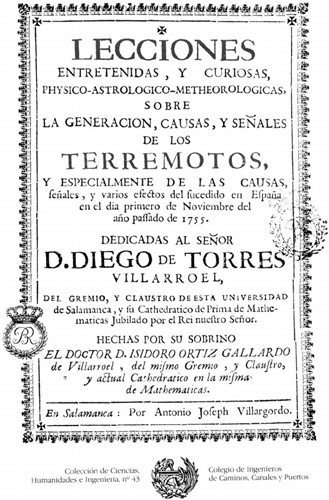
Seismology and seismic engineering have progressed enormously in recent years. In particular, seismic engineering has rapidly developed since the 1950s (USAEC, 1963; Petrangeli, 1987; Livolant et al., 1979; IAEA, 1992; Roesset, 1995; Gurpinar, 1997). AR587 As will be seen, the progress in these fields is still in full swing and much of what is written here should be read with this in mind. With the aim of encouraging research, the organisers of the World Conference of Seismic Engineering in Madrid (1992) distributed an interesting booklet on earthquakes (Gallardo, 1756) (Fig. 15-1), published by Don Isidoro Ortiz Gallardo of Villaroel, a Professor at the Salamanca University in 1756 (during the Enlightenment period) a year after the disastrous Lisbon earthquake, which was felt throughout the Iberian peninsula and in a large part of Europe.
Here are some excepts from Gallardo's book:
it can be said, generally, that the origin of earthquakes is the underground fire, which being pushed by the wind through some of the mentioned crossings, streets and fissures enters one or several of the underground caverns where Nature works on producing sulfurs, saltpetre, coal, ammonium, salt, and other similar materials which are very inflammable and combustible. In that way, the lighted fire is so intense that it converts almost instantaneously the saltpetre materials into wind...