Open Electromagnetic Waveguides

2.4: Method of Moments and Variational Formulae

2.4 Method of Moments and Variational Formulae

Electromagnetic field problems may be expressed in operator form as

(2.150)

where L is a linear operator, g is the known field and f the unknown field or source. As an example we may establish an equation of the type Z( J) = E with Z an impedance operator, J the unknown current and E the known electric field; or we may deal with an equation of the type Y( E) = H where Y is an admittance operator, E is the unknown electric field and H is the known magnetic field. Detailed expressions of the above ammittance operators are found, for instance, in Chapter 5 when dealing with step discontinuities in planar dielectric waveguides.

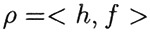
In general, we may be interested in the field f itself, or in finding a functional ? of the type

(2.151)

which may express immittances, scattering parameters or other quantities of interest. In (2.151) the function h is suitably selected and is a known continuous function, so that ? is a continuous linear functional. The inner product appearing in (2.151) is a reaction as defined by (2.129). In addition to (2.150) it is also appropriate to consider the adjoint operator L and the adjoint equation

(2.152)

By using (2.152), (2.150) and the definition of adjoint, the following equivalences are obtained

(2.153)

which may be viewed as a reciprocity theorem of...

UNLIMITED FREE
ACCESS
TO THE WORLD'S BEST IDEAS

SUBMIT
Already a GlobalSpec user? Log in.

This is embarrasing...

An error occurred while processing the form. Please try again in a few minutes.

Customize Your GlobalSpec Experience

Category: Ion Specific Electrode Meters
Finish!
Privacy Policy

This is embarrasing...

An error occurred while processing the form. Please try again in a few minutes.