TCP/IP Explained

An easy to understand, comprehensive, and high-level introduction to TCP/IP.
 TABLE OF CONTENTS
 Today, many networks have dial-in ports that allow remote users to log in, transfer files, and send and receive electronic mail. Whether these users are travelling sales people, home workers, or network administration personnel that need to access the network out of hours, the need for remote access is here today, and is likely to grow dramatically in future years.
Remote Access has, to date, normally been achieved through Terminal or Access Servers. These devices take a raw bit stream from say, an RS232-C device, and convert it into a network session such as Telnet. This story though, is far from over. Nowadays, simple access to host systems through a virtual terminal emulator is far from acceptable and users require the ability to download files, and indeed to fully participate in network activities just as if they were local. So, although the device at the end of the telephone line is still a serial device, it now has intelligence. Gone are the days of the simple asynchronous device, we must now run a Link Layer protocol that is capable of carrying our upper layers, and therefore offer users the full functionality of the Internet protocol suite.
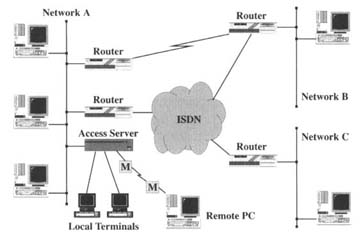
In this chapter we shall look at two such protocols namely Serial Line IP (or SLIP), and the Point-to-Point Protocol (PPP). One important point that must not be overlooked however, is that these protocols are far from restricted to remote users.
In the past, Bridge/Router...