TCP/IP Explained

An easy to understand, comprehensive, and high-level introduction to TCP/IP.
 TABLE OF CONTENTS
 Many network devices require that some form of image be loaded before they are able to perform their assigned function. Basically dumb devices such as repeaters, bridges, or even routers may need an image file downloaded to either participate in network management, or even to provide their basic function. The question is, that since the vendor will want to manufacture a large number of devices that will operate similarly (but not necessarily identically), how do they make them boot with potentially different images?
In Chapter 4, we saw that the RARP protocol, through co-operation with a server, allowed a device to determine its IP Address where it was in possession of only its physical or MAC Address. In this case, once in possession of it's IP Adrress, the device could then broadcast (using an IP file transfer protocol such as the Trivial File Transfer Protocol (TFTP)) to obtain an image file, again from a cooperating host. This, in part, is one of the major drawbacks of using RARP that unless we now program our device, it will always need to broadcast for its image file, and will potentially load the same image to all devices. RFC 1084, (BOOTP Vendor Information Extensions) tells us that although RARP " can be used in conjunction with other supplemental protocols a more integrated solution may be more desirable."
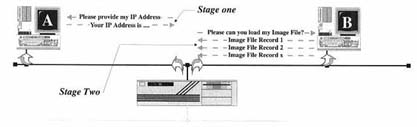
BootP, as defined by RFC 951, provides a means through which network hosts may...