Elements of Spacecraft Design

Cold-gas systems are the simplest and oldest type used for attitude control thrusters. In the 1960s-era cold gas was the most common system type; the system is still used in cases where the total impulse needed is less than about 1000 lb-s.
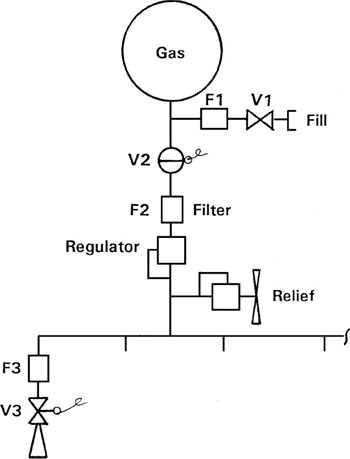
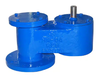
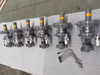
Figure 4.62 shows a typical cold-gas system. A typical system includes the gas storage container, a gas loading valve, filtration, pressure regulation, pressure relief, and a series of thrusters with valves.
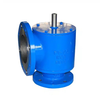
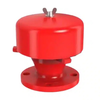
Gas is loaded through a ground fitting, V1, and filter, F1, (typically 20 ?) into a titanium tank (see Section 4.6 for tank design information). Relatively high pressures are used 34,500 kPa, for example. The gas might be isolated by an ordnance valve V2 until release from the launch vehicle. Gas then flows through filter F2, which protects the regulator and flows at a reduced pressure through the low-pressure filter F3 to the thruster valves V3. On command, the thruster valves are opened in pairs to produce attitude control torques. The small converging/diverging nozzles can be integral with the valve body. A relief valve protects the low-pressure system from regulator leakage or failure possibilities. The relief exhaust can be split to provide zero torque on the vehicle.
The gases that have been used or tested are shown in Table 4.24. Helium, nitrogen, and Freon 14 have flown. Helium has the best performance and lowest gas weight; however, a leakage failure is less likely with nitrogen or freon.