9.1 Biomass Fuels
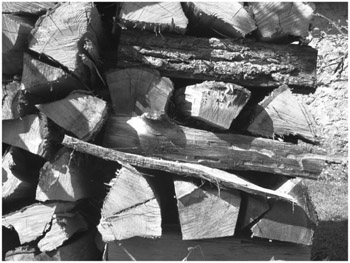
Wood fuel can come from conifer forests, broadleaved woodlands, urban and roadside trees, clean by-products and offcuts from wood processing. It may be purpose-grown as short-rotation coppice (SRC), where high-yielding species such as willow and poplar are planted at high density and harvested at three-to five-year intervals. A wide variety of forest products can be used: early thinnings, small-dimension roundwood, poor-quality crops, the side branches and tops of trees harvested for their stem wood.
From an environmental point of view, burning wood from sustainably managed forests that is, forests where harvested trees are replaced has little net impact on carbon dioxide emissions. In Britain, a fuel market for currently unsaleable small roundwood could bring many small and derelict woodlands back into active management with benefits for wildlife and rural employment.
Wood has provided heat for millennia, but only recently has modern technology increased efficiency and automation. In northern Europe and North America, wood-burning technology is widely used and markets are large and well developed. In northern Europe, medium-sized, automated central-heating systems underpinned by capital-grant schemes were used to develop the markets, after which large-district heating, combined heat and power (CHP) and power schemes were built.
Wood now accounts for up to 40 per cent of space heating in rural areas in some countries. Britain's Forestry Commission exports timber for this purpose. The Commission recently supplied 2 000 tonnes...


 TABLE OF CONTENTS