Local Energy: Distributed Generation of Heat and Power
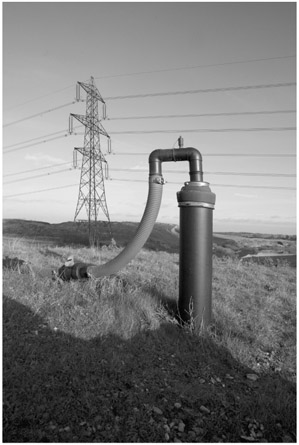
So-called ground-source heat allows heat from beneath the earth's surface to be abstracted.
So far we have discussed the UK's electricity supply industry, how it works and its major players, and how embedded generation fits into that system.
However, this refers entirely to the electricity we produce and use, and it should not be overlooked that this is only part of the UK's energy industry.
When the UK's Department for Business, Enterprise and Regulatory Reform (BERR) formerly the Department of Trade and Industry (DTI) publishes its regular 'Digest of UK Energy Statistics' ('DUKES'), it examines how much energy in the form of oil, gas, coal, etc. has been imported into the UK, and how much has been produced here, again as gas or oil (from the North Sea) or coal, but also from home-grown sources such as wind power, hydropower, nuclear power and smaller sources such as waste gases from landfill and energy crops.
DUKES figures also examine the fate of these primary energy sources. Some of the gas, oil and coal is used in generating stations to produce electricity, but even when added to the hydro, nuclear and wind power generated domestically this represents only around 40 per cent of the total energy used. A large part of the oil import is used as petroleum for transport, but oil, gas and coal are also used to provide heat, and this is as important a part of the UK's energy balance...