Return on Investment in Training and Performance Improvement Programs, Second Edition


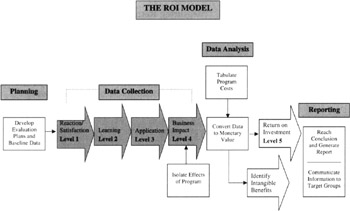
Collecting data during and after the training program has been conducted is the first operational phase of the ROI process, as depicted in the model above. This step is usually the most time consuming of all steps and is also the part of the ROI process that can be the most disruptive to the organization. Fortunately, a variety of methods are available to capture data at the appropriate time after training. This chapter defines the sources of data and outlines the common approaches for collecting postprogram data.
When considering the possible data sources that will provide input on the success of a training program, six categories are easily defined. These categories are briefly described in the following sections.
The most useful and credible data source for ROI analysis is from the records and reports of the organization. Whether individualized or group-based, the records reflect performance in a work unit, department, division, region, or organization overall. This source can include all types of measures, which are usually available in abundance throughout the organization. Collecting data from this source is preferred for Level 4 evaluation, since it usually reflects business impact data and it is relatively easy to obtain. However, sloppy record keeping by some organizations may make locating particular reports difficult.
The most widely used data source for an ROI analysis is the program participants. Participants are frequently asked about reaction and satisfaction, extent of learning, and how skills and knowledge have been applied...