Return on Investment in Training and Performance Improvement Programs, Second Edition

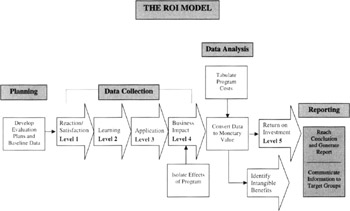
With data in hand, what's next? Should the data be used to modify the program, change the process, show the contribution, justify new programs, gain additional support, or build goodwill? How should the data be presented? Who should present the data? Where should the data be communicated? These and other questions are examined in this chapter. The worst course of action is to do nothing. Communicating results is as important as achieving them. Using many examples, this chapter provides useful information to help present evaluation data to the various audiences using both oral and written reporting methods.
Communicating results is a critical issue in the ROI methodology. While it is important to communicate achieved results to interested stakeholders after the project is complete, it is important to communicate throughout the training program as well. This ensures that information is flowing so adjustments can be made and all stakeholders are aware of the success and issues surrounding the program. There are at least five key reasons for being concerned about communicating results. Collectively, these reasons, described next in this section, make communication a critical issue, although it is often overlooked or underestimated in training and performance improvement projects. This chapter builds on this important issue and shows a variety of techniques for accomplishing all types of communication for various target audiences.
Measuring success and collecting evaluation data mean nothing unless the findings are communicated promptly to the appropriate audiences so...