Physical Principles of Electron Microscopy: An Introduction to TEM, SEM, and AEM
Chapter 5: The Scanning Electron Microscope

Overview

As we discussed in Chapter 1, the scanning electron microscope (SEM) was invented soon after the TEM but took longer to be developed into a practical tool for scientific research. As happened with the TEM, the spatial resolution of the instrument improved after magnetic lenses were substituted for electrostatic ones and after a stigmator was added to the lens column. Today, scanning electron microscopes outnumber transmission electron microscopes and are used in many fields, including medical and materials research, the semiconductor industry, and forensic-science laboratories.

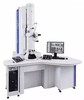
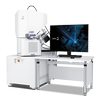
Figure 1-15 (page 19) shows one example of a commercial high-resolution SEM. Although smaller (and generally less expensive) than a TEM, the SEM incorporates an electron-optical column that operates according to the principles already discussed in Chapter 2 and Chapter 3. Accordingly, our description will be shorter than for the TEM, as we can make use of many of the concepts introduced in these earlier chapters.

5.1 Operating Principle of the SEM

The electron source used in the SEM can be a tungsten filament, or else a LaB 6 or Schottky emitter, or a tungsten field-emission tip. Because the maximum accelerating voltage (typically 30 kV) is lower than for a TEM, the electron gun is smaller, requiring less insulation. Axially-symmetric magnetic lenses are used but they are also smaller than those employed in the TEM; for electrons of lower kinetic energy, the polepieces need not generate such a strong magnetic field. There are also fewer lenses; image formation uses the scanning principle...

UNLIMITED FREE
ACCESS
TO THE WORLD'S BEST IDEAS

SUBMIT
Already a GlobalSpec user? Log in.

This is embarrasing...

An error occurred while processing the form. Please try again in a few minutes.

Customize Your GlobalSpec Experience

Category: Microscopes
Finish!
Privacy Policy

This is embarrasing...

An error occurred while processing the form. Please try again in a few minutes.