Power consumption is a key limitation in many electronic systems today, ranging from mobile telecom to portable and desktop computing systems, especially when moving to nanometer technologies. Power is also a showstopper for many emerging applications like ambient intelligence and sensor networks. Consequently, new design techniques and methodologies are needed to control and limit power consumption.
The 2004 edition of the DATE (Design Automation and Test in Europe) conference has devoted an entire Special Focus Day to the power problem and its implications on the design of future electronic systems. In particular, keynote presentations and invited talks by outstanding researchers in the field of low-power design, as well as several technical papers from the regular conference sessions have addressed the difficulties ahead and advanced strategies and principles for achieving ultra low-power design solutions. Purpose of this book is to integrate into a single volume a selection of these contributions, duly extended and transformed by the authors into chapters proposing a mix of tutorial material and advanced research results.
The manuscript consists of a total of 14 chapters, addressing different aspects of ultra low-power electronics and design. Chapter 1 opens the volume by providing an insight to innovative transistor devices that are capable of operating with a very low threshold voltage, thus contributing to a significant reduction of the dynamic component of power consumption. Solutions for limiting leakage power during stand-by mode are also discussed. The chapter closes with a quick overview of low-power design techniques applicable at the logic level,...
Copyright Kluwer Academic Publishers 2004 under license agreement with Books24x7

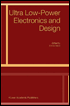
 TABLE OF CONTENTS