OVERVIEW
Formulations used for radiation curable systems depend on the specific performance requirements of the coatings and have to be adjusted to the application techniques (e.g., viscosity needs). Typically, formulations for UV curable coatings contain 25 90% oligomeric resins, 15 60% reactive diluents, 0.5 8% photoinitiators, 1 5% additives, like levelling agents, defoamers, and optionally pigments, fillers and matting agents.
The application fields are very wide and therefore the requirements on the coating properties differ very much. A coarse overview of main applications is given in Figure 5.1. From this broad span of applications it is obvious that formulations also differ very much in their chemistry and composition. Classical applications in wood and paper coating often require highly crosslinked coatings for abrasion, scratch and chemical resistant surfaces. Whereas for future applications, such as exterior wood coating, like window frames, or coil coating much more flexible coating properties are needed. A general discussion about all types of coatings for metal and non-metal substrates including major performance requirements is given in reference1 (Chapters XXXIII and XXXIV).
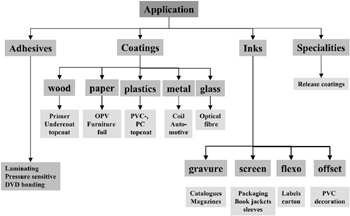 FIG. 5.1: Application overview of uses of UV curable formulations.
 Formulations available to the paint users are developed and tailored by the paint manufacturers (e.g., BASF Coatings, DuPont Performance Coatings, Kansai Paint, PPG for automotive; AKZO, Beckers, DuPont, Valspar, Sherwin Williams for industrial and wood coatings; Dainippon Inks, Sun Chemicals and Flint for graphic arts), who usually do not publish the exact recipes. However, for starting new developments guiding formulations are often made available...

 TABLE OF CONTENTS