Configuring Cisco AVVID
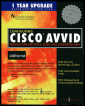
Introduces Cisco s converged media services technology, and the hardware and software required to make it work.
 TABLE OF CONTENTS
 Internet-based AVVID communications requires optimization in order to ensure proper delivery of Voice over IP-enabled traffic. While many bottlenecks such as weak and oversubscribed points on an ISP s backbone will be out of our control, our link to the Internet can be optimized. The primary concern with regard to the Internet connection is the availability of bandwidth. As such, the main focus is to eliminate unauthorized traffic, perhaps at a router or firewall, and to minimize duplicate requests for common data. The primary method for reducing duplicate Internet requests is to cache the data that is returned from each site through a device known as a proxy server. Cisco s implementation of a proxy server is what it calls its Web Cache Engine.
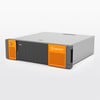
Cisco offers four versions of its Web Cache Engine product. Accordingly, each version of the Web Cache Engine scales according to the link size to the Internet and the amount of data to be cached. These solutions are outlined in Table 2.9.
| Model | Usage | Line Type | Capacity | Storage |
|---|---|---|---|---|
| Content Engine 507 | Entry-level unit | T1/E1 | Up to 2.0 Mbps | 18 to 36GB |
| Content Engine 560 | Midsized company | IMA/T2 | Up to 20 Mbps | 36 to 144GB |
| Content Engine 590 | ISPs/enterprises | T3/ATM | 45+ Mbps | 36 to 252GB |
| Content Engine 7320 | Large ISP | ATM/OC3 | 155+ Mbps | 36 to 144GB |
Cisco s Web Cache Engine actually does not do anything to cache a communications stream or relay data in an...