Sensor Technology Handbook

Chapter 9: Electromagnetism in Sensing

Dr. Thomas Kenny, Department of Mechanical Engineering, Stanford University

9.1 Introduction

This chapter discusses the basic principles behind the use of electromagnetism in sensing. Since many established sensor types rely on electromagnetism, it covers a broad set of designs and reviews several product types.

9.2 Electromagnetism and Inductance

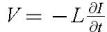
Before we get too far into electromagnetism, we begin with a review of the properties of an inductor as used in electronic circuits. An inductor is a passive circuit element that resists changes in current. The equation governing its behavior is:


where L is the inductance in units of henrys. As we can see from this equation, there is a voltage across the inductor whenever the current changes. The minus sign indicates that the voltage (V) opposes the change in current (I) which is to say that whenever an external circuit tries to cause more current to flow, it must provide a voltage in order to overcome the voltage that arises in the inductor.

If we assume (as for all of the differential equations in this chapter) that the current and voltage are both oscillating quantities:


then we have


If we recognize Ohm s Law here (V=IR), then the effective resistance of the inductor is R = ?( i ? L). As was the case for a capacitor ( R =1/( i ? C), the i implies that there is a shift in phase between voltage and current, and the ? (Greek omega) implies...

UNLIMITED FREE
ACCESS
TO THE WORLD'S BEST IDEAS

SUBMIT
Already a GlobalSpec user? Log in.

This is embarrasing...

An error occurred while processing the form. Please try again in a few minutes.

Customize Your GlobalSpec Experience

Category: RF Inductors
Finish!
Privacy Policy

This is embarrasing...

An error occurred while processing the form. Please try again in a few minutes.