Thermoplastics and Thermoplastic Composites: Technical Information for Plastics Users

The thermoplastics are marketed in:
pellets, powder or pasty forms, which leads to specific processing methods
composite forms
semi-manufactured products such as sheets, tubes, rods
Thermoplasticity opens the door to many diversified processes:
easy moulding, extrusion and calendering
thermoforming
welding
assembly and boiler-making.
Some thermoplastics, polyethylenes principally, can be crosslinked.
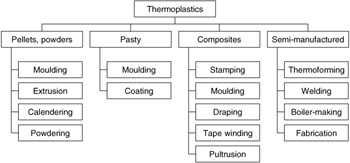
Figure 5.1 proposes an arbitrary classification of some of these processes.
To give an idea of the importance of the various processing methods:
the shares of the major processes employed for the most-used thermoplastic (polyethylene) are roughly:
extrusion: 35
blow moulding: 35%
injection moulding: 25%
rotational moulding or rotomoulding: >1%
others: 4%
the share of thermoplastic composites (mainly PP) can be roughly estimated at a few percent of the total thermoplastic consumption
the share of thermoplastic foams (mainly EPS but also PE, PP, PVC ) can be roughly estimated at a few percent of the total thermoplastic consumption
for PVCs, the share of pastes (plastisols), excluding coatings, is roughly estimated at 2%. The other pastes are not listed in the economic statistics. The share of thermoplastic pastes can be roughly estimated at less than 1% of the total thermoplastic consumption.
Injection and blow moulding are by far the most used of the moulding processes but compression is sometimes used for specific cases.
Rotomoulding is specifically used for polyethylene, plastisols and a few other powdered or pasty resins.
Slush moulding is broadly used for automotive dashboards.
Dipping and spraying onto...