Wood Pole Overhead Lines
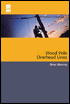
Concentrating on the mechanical aspects of distribution wood pole lines, this informative text includes coverage of live line working, environmental influences, climate change and international standards.
 TABLE OF CONTENTS
 Chapter 2 looked at the legal framework including acts, regulations and technical standards within which the electricity companies and hence the overhead line design engineer has to work. Chapter 3 covered the surveying and profiling of a line or route to help decide where it should go. This chapter looks at the technical standards to which the line needs to be designed. Here the problems of wayleaves and consents have been assumed to be finalised, and it is the technical details of the various components in the overhead line that need to be investigated.
The Electricity Council [before its demise in 1991 to become the Electricity Association(EA) and eventually (2004) the Energy Networks Association (ENA)] had to interpret the requirements of the acts and regulations in specific technical details and to standardise practice as far as possible throughout the United Kingdom. The usual procedure was for the Electricity Council to form a working party comprising area board members with specialist knowledge of a given subject (now known as distribution network operators or DNOs) to produce what was known as an electricity supply industry standard and now re-titled Energy Networks Association technical specifications or ENATS. Much of the work that was done to build up the comprehensive list of overhead line standards that we now have was begun before 1991.
This chapter, therefore, covers the basic design standards for overhead lines in the UK and will also touch briefly on the effect on the UK of European standards bodies...