Wood Pole Overhead Lines
Concentrating on the mechanical aspects of distribution wood pole lines, this informative text includes coverage of live line working, environmental influences, climate change and international standards.
 TABLE OF CONTENTS
 Although there are many different types of conductor geometry, including segmented and oval sections, only the conductors made from standard circular cross-section strands will be covered in this section. Novel developments will be looked at later.
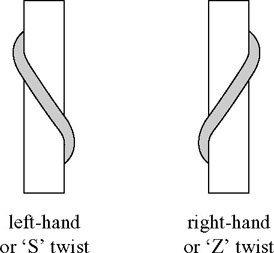
Conductors are generally made up of individual strands in order to improve flexibility and conductivity. In AC current the higher the frequency, the less the current actually penetrates into the surface of the strand. At MHz frequencies (as with a lightning surge) the penetration (or skin depth as it is known) will only be a few tens of microns. Due to this skin effect most of the current at 50 Hz is carried in a surface layer around 1 mm thick. So for strands of, say, 3 mm diameter, almost all the conductor section will be available for current carrying capacity. Extra large conductor strands will thus add weight but give little increase in current carrying capacity. A solid conductor would carry even less current and would also suffer from vibration fatigue. A further gain in flexibility is obtained by reversing the twist in alternate layers. By convention, the outer layer often has a right-hand twist (Figure 8.1).
The standard geometry for strands of the same size means that there will be a central strand followed by a layer of 6 strands, then 12, then 18, 24 etc. So conductors will normally have 7, 19, 37 or 61 strands etc. Some conductors, especially those of dissimilar materials,...