Advanced Mathematics For Engineering and Science
As the product of a close collaboration between two mathematicians and an engineer, this pragmatic text provides the know-how and know-why to understanding mathematics and its many applications.
 TABLE OF CONTENTS
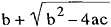
 | Q: | 1a. One root x 1 of a quadratic equation  is Calculate x 1 if a=1.11, b= 111 and c=0.111. Is the answer reliable? Note that x 1 is given by the difference of two almost equal numbers and this could result in loss of significant figures. By expanding  By multiplying the numerator and denominator by  For the given values of a, b, c, calculate x 1a and x 1b. Evaluate ax 2+bx+c for x=x 1, x=x 1a, and x=x 1b. Comment on the results. | |
| Q: | 2a. The equation e x ?4x 2=0 has a root in the interval [0, 1]. Obtain the root (i) by the method of bisection and (ii) by Newton s method. |
|
| Q: | 3a. The cubic x 3 2x ?1 has a root in the interval [1, 2]. Use (i) the secant method and (ii) Newton s method to find the root. |
|
| Q: | 4a Deduce that an iterative formula for finding the cube root of a real number A is  Use the formula to calculate the cube root of 30. Answer: 3.107 | |
| Q: | 5a. Obtain the three roots of x 3 ?4x+1 by the fixed point iteration method. Test the convergence in each case. |
|
| Q: | 6b. The Redlich-Kwong equation [Equation (1.6 2)] can be written as 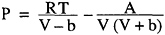 Calculate b if P=87, T=486, V=12, A=0.08, and... |