Overview
Petrochemical resources (crude oil, natural gases and so on), used intensively in the worldwide chemical industry, are in fact limited resources and in a certain period of time will be depleted. The chemical industry is making big efforts to find alternatives to the petrochemical raw materials.
One alternative represents the renewable resources which already play an important role in the development of the chemical industry. These renewable resources are relatively inexpensive, accessible, produced in large quantities (regeneratable every year and practically unlimited) [1-5].
In the polyurethane (PU) industry the development of polyols based on renewable resources always played an important role. One can say that all the history of PU was strongly linked to the renewable resources [1-5].
Thus, glycerol, the most important starter for the synthesis of polyether polyols for flexible PU foams and for polyether for rigid foams is produced by the hydrolysis of natural triglycerides (esters of glycerol with fatty acids with C 6 to C 22 carbon atoms), from vegetable or animal resources (reaction 17.1) [1]. Large quantities of glycerol appear in bio-diesel production, by transesterification of natural oils with methanol.
| (17.1) | 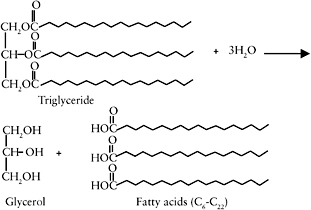 |
Sucrose, the most important starter for rigid polyether polyols is produced exclusively by extraction from naturally resources (Figure 17.1) [1].
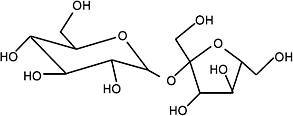 Figure 17.1: Structure of sucrose
 Tetrahydrofuran (THF), the cyclic monomer used for the synthesis of polytetramethyleneglycols (see Chapters 7.1-7.3) by cationic ring opening polymerisation, was produced in the earlier stages of this technology from furfurol. Furfurol results from the acid hydrolysis...


 TABLE OF CONTENTS