Design Of Nonlinear Control Systems With The Highest Derivative In Feedback, Volume 16
Chapter 9: Stabilization of Internal Dynamics

Overview

In the preceding chapter, the problem of output regulation was discussed for nonlinear time-varying systems with identical dimensions of the input and output vectors u, y. It was also assumed that the realizability of the desired behavior takes place, in particular, that the system is invertible and internal stability is fulfilled. This assumption is the essential point for controller design, and provides the range of applicability of the method.

This chapter is devoted to consideration of control system design where the dimension of the control vector u is as large as that of the output vector y. Redundant control variables enable internal dynamics stabilization, and this is the main subject matter. Note that the problem of internal dynamics stabilization for linear time-invariant (LTI) systems corresponds to the displacement of all zeroes of the transfer function in the left half of the complex plane.

9.1 Zero Placement by Redundant Control

First, let us consider an LTI system given by

(9.1)
(9.2)

where y ? ? p, u ? ? m, m > p, and

(9.3)

That is, the right inverse of the system (9.1) (9.2) exists.

The transformation (7.50) of the system (9.1) (9.2) yields the normal form (7.52) (7.53):

(9.4)
(9.5)

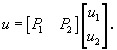
Let us introduce a new control vector consisting of two parts, u 1 ? ? p and u 2 ? ? m-p, such that

(9.6)

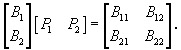
Denote

(9.7)

Then (9.4), (9.5), and (9.6) can be rewritten in the form

(9.8)
(9.9)

From...

UNLIMITED FREE
ACCESS
TO THE WORLD'S BEST IDEAS

SUBMIT
Already a GlobalSpec user? Log in.

This is embarrasing...

An error occurred while processing the form. Please try again in a few minutes.

Customize Your GlobalSpec Experience

Category: Motion Reference Units (MRU)
Finish!
Privacy Policy

This is embarrasing...

An error occurred while processing the form. Please try again in a few minutes.