Design Of Nonlinear Control Systems With The Highest Derivative In Feedback, Volume 16
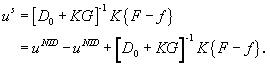
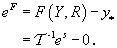
From (8.28) we get
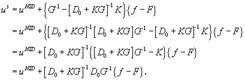
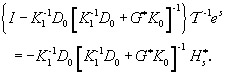
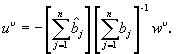
By taking into account (8.18), we obtain
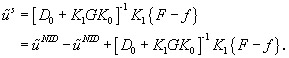
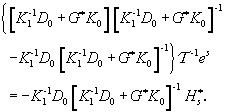
By taking ? ? 0 in (8.41), we obtain
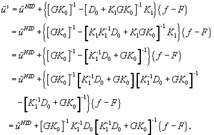
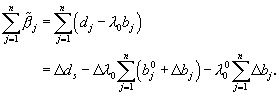
In accordance with (8.43), we get
By taking into account (8.62), (8.63), and (8.64), we obtain
From (8.57) we get
The above expression may be rewritten in the following form:
Hence,
Consequently,
Therefore,
From (11.34) and (11.38), we get
| (A.1) | |
Denote
| (A.2) | |
From (11.27), (11.28) and (11.29), we get
| (A.3) | |
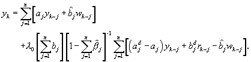
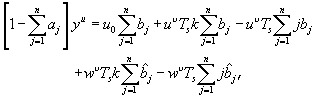
By substituting (11.22) and (11.36) into (11.32), we obtain
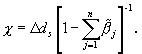
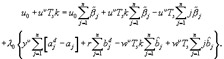
The above expression can be rewritten in the form:
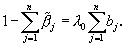
By (A.1) and (A.2) we have that the above expression is identical to (11.37).
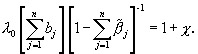
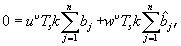
From (11.37) and (11.39), we obtain
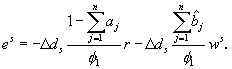
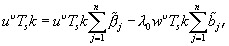
By taking into account (11.42) and (A.2), the above expression can be rewritten in the form:
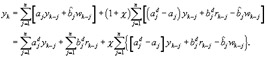
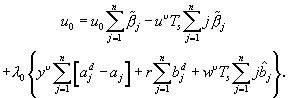
Hence,
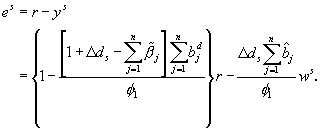
By taking into account (11.8) and (11.42), we get
From (11.43) we obtain
| (A.4) | |
Let us consider a stationary behavior of control variable
| (A.5) | |
given that the conditions (11.43), (11.44), and (11.45) are satisfied. Hence, we have
| (A.6) | |
| (A.7) | |
From closed-loop system equations (11.32) (11.33), by taking into account (11.48)-(11.49) and (A.6) (A.7), we obtain
| (A.8) | |
| (A.9) | |
Since (A.8) and (A.9) are satisfied for all k, the equations (A.8) and (A.9) can be decomposed into
| (A.10) | |
| (A.11) | |
and
| (A.12) | |
| (A.13) | |
From (A. 10) we get
| (A.14) | |
From (11.43) and (A.14) it follows that (A.11) holds...