Biomechanics: Concepts and Computation

Using a quantitative biomechanics approach, this book integrates both general and specific topics, theoretical background and biomedical engineering applications, as well as analytical and numerical approaches.
Before we can start with biomechanics it is necessary to introduce some basic mathematical concepts and to introduce the mathematical notation that will be used throughout the book. The present chapter is aimed at understanding some of the basics of vector calculus, which is necessary to elucidate the concepts of force and momentum that will be treated in the next chapter.
A vector is a physical entity having both a magnitude (length or size) and a direction. For a vector  it holds, see Fig. 1.1:

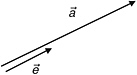 = a
= a  with a > 0.
The length of the vector is denoted by and is equal to the length of the arrow. The length is equal to a, when a is positive, and equal to ? a when a is negative. The direction of is given by the unit vector combined with the sign of a. The unit vector has length 1. The vector  has length zero.
Multiplication of a vector = a by a positive scalar ? yields a vector  having the same direction as but a different magnitude ? :

This makes sense: pulling twice as hard on a wire creates a force in the wire having the same orientation (the direction of the wire does not change), but with a magnitude that...

 TABLE OF CONTENTS