Die Design Fundamentals, 3rd Edition

Chapter 9: How to Design Piercing Punches

9.1 INTRODUCTION

Piercing punches are usually the weakest link in any die design. Therefore, the following factors must always be taken into consideration:

  1. Make the punches strong enough so that repeated shock in operation will not cause fracture.

  2. Slender punches must be sufficiently guided and supported to insure alignment between punch and die members and also to prevent buckling.

  3. Make provision for easy removal and replacement of punches in the event of breakage.

The illustrations that follow show numerous methods of designing and applying piercing punches; these figures should help the designer select the best type for the particular job.

9.2 METHODS OF DESIGNING PUNCHES

a Shoulder Punches

Probably the most commonly used type of punch, shoulder punches are made from a good grade of tool steel, hardened and ground all over (Figure 9.1). They are readily available from a number of suppliers.


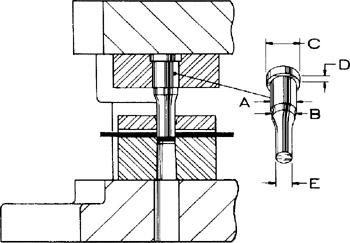
Figure 9.1: Commonly used shoulder punch.

Diameter A is a press fit in the punch plate. Diameter B, which extends at least 1/8 inch (3.2 mm), is a slip fit for good alignment while pressing.

Shoulder C is usually made 1/8 inch (3.2 mm) larger in diameter than A. Shoulder height D is 1/8 to 3/16 inch (3.2 to 6.35 mm), depending on size. Piercing diameter E is always on the high side of tolerance. For example: If the hole is dimensioned 0.501/0.500 inch (12.725/12.700 mm) diameter on the part print, the punch diameter would be made 0.501 inch (12.725 mm).

UNLIMITED FREE
ACCESS
TO THE WORLD'S BEST IDEAS

SUBMIT
Already a GlobalSpec user? Log in.

This is embarrasing...

An error occurred while processing the form. Please try again in a few minutes.

Customize Your GlobalSpec Experience

Category: Cold Heading Machines
Finish!
Privacy Policy

This is embarrasing...

An error occurred while processing the form. Please try again in a few minutes.