Die Design Fundamentals, 3rd Edition

Chapter 20: Presses and Quick Die-Change Systems

20.1 INTRODUCTION

After studying die design, it will be helpful to have an understanding of the construction and operation of the presses, or machines, in which the dies are operated. In this section you will learn about not only the newer and more modern machines and presses, but also about some of the older types that are still operating in many factories today. Several of these older models have been in use for 30 years or more and are still producing parts.

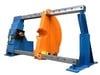
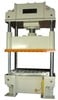
Fundamentally, stamping presses are machines with the space to contain and the means to perform dedicated metal-forming tooling with the force, speed, and precision necessary to produce the desired part shape. Mechanical and hydraulic stamping presses are available in several basic designs and a wide range of sizes, tonnage capacities, stroke lengths, and operating speeds.

Both mechanical and hydraulic presses are classified by the type of frame upon which the mowing elements of the press are mounted. The two most common frame types are the gap-frame (or C-frame) and the straight side press. Each has its own advantages and disadvantages.

Press Power

Today's presses get their power from four basic sources. These sources are:

  1. Manual. These presses are hand-operated or foot-operated.

  2. Mechanical. These presses are motor-driven and may have a flywheel, single reduction gear, or multiple reduction gearing.

  3. Hydraulic. These presses may be oil-operated or water-operated.

  4. Pneumatic. These presses are operated by compressed air.

In this section we will discuss...

UNLIMITED FREE
ACCESS
TO THE WORLD'S BEST IDEAS

SUBMIT
Already a GlobalSpec user? Log in.

This is embarrasing...

An error occurred while processing the form. Please try again in a few minutes.

Customize Your GlobalSpec Experience

Category: Presses (metalworking)
Finish!
Privacy Policy

This is embarrasing...

An error occurred while processing the form. Please try again in a few minutes.