Discrete Stochastic Processes and Optimal Filtering
Concerned with the founding principles of optimal filters, this text presents several reminders about both random vectors and Gaussian vectors, and allows readers to tackle digital filtering.
 TABLE OF CONTENTS
 If we remember that  the set of real n-tuples can be fitted to two laws:
  making it a vector space of dimension n.
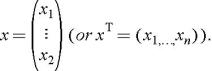
The basis implicitly considered on  will be the canonical base ? 1 = (1,0, ,0), , ? n = (0, ,0,1) and
  expressed in this base will be denoted:
Beginning with a basic definition, without concerning ourselves at the moment with its rigor: we can say simply that a real vector 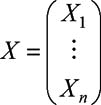 linked to a physical or biological phenomenon is random if the value taken by this vector is unknown and the phenomenon is not completed.
For typographical reasons, the vector will instead be written X T = ( X 1, , X n) or even X = ( X 1, , X n) when there is no risk of confusion.
In other words, given a random vector X and  we do not know if the assertion (also called the event) ( X ? B) is true or false:
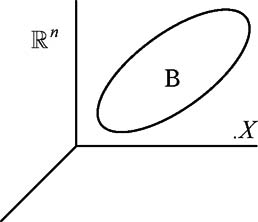
However, we do usually know the "chance" that X ? B; this is denoted P( X ? B) and is called the probability of the event ( X ? B).
After completion of the phenomenon, the result (also called the realization) will be denoted

when there is no risk of confusion.
An...