Discrete Stochastic Processes and Optimal Filtering
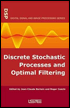
Concerned with the founding principles of optimal filters, this text presents several reminders about both random vectors and Gaussian vectors, and allows readers to tackle digital filtering.
 TABLE OF CONTENTS
 A discrete time process is a family of r.v.

where T called the time base is a countable set of instants. X t j is the r.v. of the family considered at the instant t j.
Ordinarily, the t j are uniformly spread and distant from a unit of time and in the sequence T will be equal to 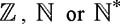 and the processes will be still denoted X T or, if we wish to be precise,
  .
.
In order to be able to study correctly some sets of r.v. X j of X T and not only the r.v. X j individually, it is in our interests to consider the latter as being definite mappings on the same set and this leads us to an exact definition.
DEFINITION. Any X T family with measurable mappings is called a real discrete time stochastic process:

We also say that the process is defined on the fundamental space ( ?, a).
In general a process X T is associated with a real phenomenon, that is to say that the X j represent (random) physical, biological, etc. values. For example the intensity of electromagnetic noise coming from a certain star.
For a given ?, that is to say after the phenomenon has been performed, we obtain the values x j = X j ( ?).
DEFINITION. x T = { x j