EIT Chemical Review, Second Edition

Chapter 1: Dimensions and Units

Overview

Dimensions are names used to describe the characteristics of a physical quantity. Examples of dimensions are length, mass, time, temperature, and electric charge. Units are the basic standards of measuring the magnitudes of physical quantities. For example, meter is a unit for the measurement of length, and second is a unit for measuring time. Units are two types : fundamental and derived. Fundamental units are independently defined whereas the derived units are expressed in terms of the fundamental units. Various unit systems differ from one another in the choice of fundamental dimensions and units (Table 1-1).

Table 1-1: Dimension and Units

Metric or

SI system:

British

USCS

Dimension:

Symbol

Unit

Unit

Unit

Length

L

Meter

foot

foot

Mass

M

kg

slug [*]

lb m

Time

t

Second

Second

Second

Temperature

T

degree K

F

F

Force

F [*]

Newton (N) [*]

poundal

lb f

[*]denotes a derived unit in the system

Units of Force:

In the SI system, 1 Newton = ( 1 kg ) x (1 m / s 2 )

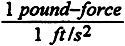
In British Engineering system, 1 slug =

In fps system, 1 poundal = (1 lb-mass) x (1 ft/s 2)

Comparison of British and fps systems shows:

1 slug = 32.174 lb m

1 lb-force (lb f) = 32.174 poundals

The US customary system,

where Newton's law proportionality factor g c = 32.174 lb m.ft/s 2.lb f

Molar Units:

A mole of a substance =...

UNLIMITED FREE
ACCESS
TO THE WORLD'S BEST IDEAS

SUBMIT
Already a GlobalSpec user? Log in.

This is embarrasing...

An error occurred while processing the form. Please try again in a few minutes.

Customize Your GlobalSpec Experience

Category: Cyclone Separators
Finish!
Privacy Policy

This is embarrasing...

An error occurred while processing the form. Please try again in a few minutes.