Electrical Engineering License Review, Eigth Edition
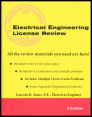
This text provides a comprehensive revew detailing all exam topics for the State Electrical Engineers exam for the Practicing Engineers license. It also contains 100+ problems and a sample exam.
 TABLE OF CONTENTS
 Nominal interest is the annual interest rate without considering the effect of any compounding. Effective interest is the annual interest rate taking into account the effect of any compounding during the year.
Frequently an interest rate is described as an annual rate, even though the interest period may be something other than one year. A bank may pay 1% interest on the amount in a savings account every three months. The nominal interest rate in this situation is 4 1% = 4%. But if you deposited $1000 in such an account, would you have 104%(1000) = $1040 in the account at the end of one year? The answer is no, you would have more. The amount in the account would increase as follows:
Amount in Account
At beginning of year = $1000.00
| End of 3 months: | 1000.00 + 1%(1000.00) = 1010.00 |
| End of 6 months: | 1010.00 + 1%(1010.00) = 1020.10 |
| End of 9 months: | 1020.10 + 1%(1020.10) = 1030.30 |
| End of one year: | 1030.30 + 1%(1030.30) = 1040.60 |
At the end of one year, the interest of $40.60, divided by the original $1000, gives a rate of 4.06%. This is the effective interest rate.
Effective interest rate per year, i eff = (1 + r/m) m ? 1
| where r | = Nominal annual interest rate |
| m | = Number of compound periods per year |
| r/m | = Effective interest rate per period |
A bank charges 1...