Introduction to Airborne Radar, Second Edition

In the last chapter, we learned that within the line of sight, in the absence of interference and competing ground return, detection range is ultimately determined by the ratio of the energy received from a target the signal to the energy of the background noise. We identified the principal factors which determine the signal and noise energies and became acquainted with the detection process.
Building on that knowledge, in this chapter we will write a general equation for maximum detection range and analyze it to see how the individual factors we have identified influence the range. We will then narrow down to the special case of volume search. Finally, we will consider the statistical variation in detection range and see how it is accounted for.
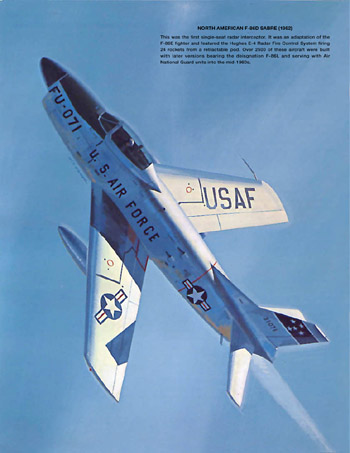
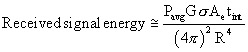
As we saw in the preceding chapter, when the radar antenna is trained on a target (Fig. 1), the energy received from the target during any one integration time is roughly
where
| P avg = | average transmitted power |
| G = | antenna gain |
| ? = | radar cross section of target |
| A e = | effective antenna area |
| t int = | integration time |
| R = | range |
For the target to be detected, this energy plus the accompanying noise energy must exceed a certain threshold value. It is set just high enough above the mean noise level to reduce the probability of noise peaks crossing the threshold false alarms to an acceptably low value.
On average, the...