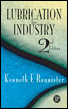
Lubrication for Industry, Second Edition
When working on new equipment design specifications, or managing major equipment overhauls requiring a new lubrication approach, the first question often asked is Should I use oil, or grease? The decision will be based on the following considerations:
What type of environment will the equipment reside in? Is the lubricant required to lubricate as well as keep abrasive dirt out from the bearings?
What temperatures will the bearings be subjected to?
What distance is the lubricant to be pumped? (Pressure drops in grease system lines are much higher than oil.)
Will the application utilize manual or automatic delivery, total loss or recirculative methods? (Grease cannot be recirculated. Recirculated oil is the preferred method, but more expensive to implement).
Is product contamination a consideration? (Oil is harder to contain than grease.)
How much is budgeted for lubrication? (Unfortunately this is all too often the common denominator and determining decision factor when looking at the design or redesign of a lubrication system.)
The essence of Good Lubrication Practice (GLP) is to lubricate often in small amounts. Long bearing life depends on delivering the 4R s of lubrication: the RIGHT lubricant, in the RIGHT place, in the RIGHT amount, at the RIGHT time. Through careful calculation and condition assessment, GLP is highly achievable.
Automated lubrication systems come with significant benefits over manual lubrication techniques. Labor costs are virtually eliminated, and the lethal effect of allowing...