The Maintenance Scorecard: Creating Strategic Advantage

Through a unique adaptation of the balanced scorecard approach to asset management, this text provides a structured approach for both the development of strategy and its implementation.
 TABLE OF CONTENTS
 However beautiful the strategy, you should occasionally look at the results.
Winston Churchill
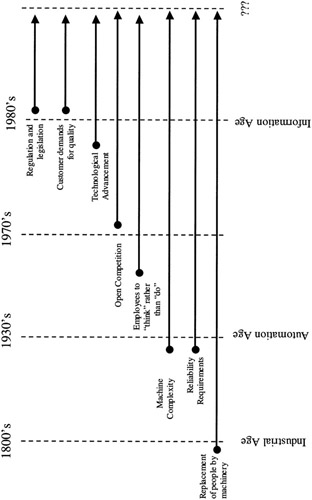
As can be seen in Figure 10.1, the challenges facing the world of asset management continue to grow. Relentless marches in the use of assets, technology, work practices, governmental regulation and demands for consistency in terms of quality and continuity of service or supply, have placed the managerial discipline under intense pressure during the last 15 years.
Although this has an impact on any corporation where assets are maintained, it is particularly important for capital-intensive industries. These types of industries have two distinguishing characteristics.
A large portion of the operational budget is dedicated to the management of the physical asset base, and the vast majority of the capital budget is dedicated to renewing and replacing assets as well as purchasing new assets.
The inventory that needs to be managed by these types of companies is based around the requirements of the asset base, rather than the requirements of a production plan. This is a definite difference from recognized theory on inventory management. Instead of inventory being managed in a just-in-time manner, there is a need for management on a just-in-case basis. This, by itself, can have a dramatic impact, particularly where parts have long lead times or where companies are located in remote situations.
These characteristics, when combined with the challenges facing asset managers, have made this area one where substantial benefits can...