Maxwell’s Equations and the Principles of Electromagnetism
This chapter outlines those aspects of vector algebra, vector calculus, and vector field theory which are required to derive and understand Maxwell's equations.
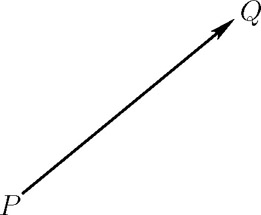
Physical quantities are (predominately) represented in Mathematics by two distinct classes of objects. Some quantities, denoted scalars, are represented by real numbers. Others, denoted vectors, are represented by directed line elements in space: e.g.,
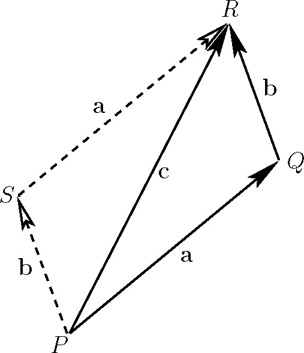
see Figure 2.1. Note that line elements (and, therefore, vectors) are movable, and do not carry intrin-sic position information (i.e., in Figure 2.2,
and
are considered to be the same vector). In fact, vectors just possess a magnitude and a direction, whereas scalars possess a magnitude but no direction. By convention, vector quantities are denoted by boldfaced characters (e.g., a) in typeset documents. Vector addition can be represented using a parallelogram:
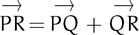
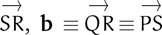
see Figure 2.2. Suppose that a
, and
. It is clear, from Figure 2.2, that vector addition is commutative: i.e., a + b = b + a. It can also be shown that the associative law holds: i.e., a +( b + c) = (a + b)+ c.
There are two approaches to vector analysis. The geometric approach is based on line elements in space. The coordinate approach assumes that space is defined in terms of Cartesian coordinates, and uses these to characterize vectors. In Physics,...