Metal Forming Practise: Processes - Machines - Tools

Chapter 2: Terms and Parameters of Metal Forming

2.1 Plastic (Permanent) Deformation

Unlike elastic deformation, during which, for example, a rod under a tensile load returns to its initial length as long as a defined value (elastic limit of the material, R p0, 2 limit) is not exceeded, a workpiece which is plastically deformed retains its shape permanently.

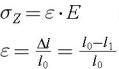
For the elastic range, the following applies:


  • ? z in N/mm 2 tensile stress

  • ? in elongation

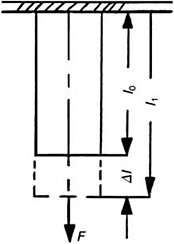
  • l 0 in mm initial length

  • l 1 in mm length under the influence of force

  • ? l in mm lengthening

  • R m in N/mm 2 tensile strength (was ? B)

  • R e in N/mm 2 resistance at the yield point (was ? S)

  • E in N/mm 2 modulus of elasticity.


Figure 2.1: Tension test bar change in length under stress

In the plastic range,

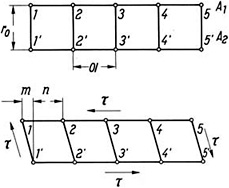
a permanent deformation is caused by sufficiently high shear stresses. This makes the atoms in row A 1 (Fig. 2.2) change their state of equilibrium in relation to row A 2. The extent of the displacement is proportional to the extent of the shear stress ?.


Figure 2.2: Ideal process of position change of the atoms

If the effective shear stress is less than ? f ( ? f yield shear stress) then m < a/2 and after the stress is removed the atoms return to their original position - elastic deformation.

If, however,...

UNLIMITED FREE
ACCESS
TO THE WORLD'S BEST IDEAS

SUBMIT
Already a GlobalSpec user? Log in.

This is embarrasing...

An error occurred while processing the form. Please try again in a few minutes.

Customize Your GlobalSpec Experience

Category: Metal Strip
Finish!
Privacy Policy

This is embarrasing...

An error occurred while processing the form. Please try again in a few minutes.