Metal Forming Practise: Processes - Machines - Tools

Chapter 4: Upset Forging

4.1 Definition

Upset forging is a bulk forming process where the effect of the pressure is on the longitudinal axis of the workpiece.

4.2 Application

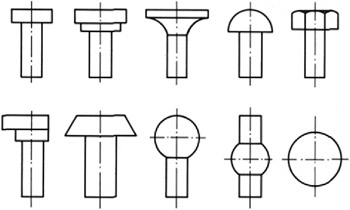
Commonly used for the production of mass-produced parts such as screws, rivets, head bolts, valve lifters etc. (Figures 4.1, 4.2 and 4.3).


Figure 4.1: Typical upset parts

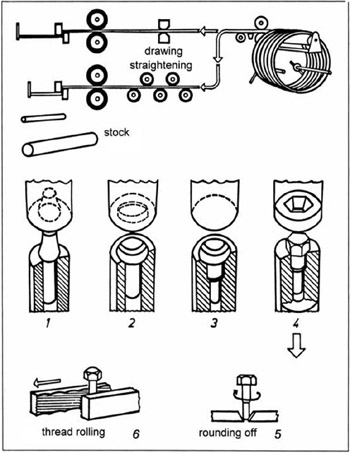
Figure 4.2: Steps in the production of a bolt on a transfer press with a thread rolling device. 0 shear off stock, 1 pre-form head, 2 finish head, 3 reduce shank to diameter for thread rolling, 4 stamp out hexagon, 5 chamfer shank (round off), 6 thread rolling

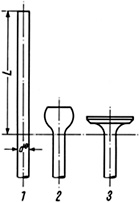
Figure 4.3: Production of a valve lifter.
1 initial blank
2 pre-form
3 final heading

4.3 Starting Stock

The starting stock is a length of rod cut from round or shaped stock. In many cases, above all in screw and bolt production, production is carried out from wire coils (Figure 4.2). As rolled stock is cheaper than drawn stock, it is used most commonly.

4.4 Permissible Deformations

Here, a difference must be made between two criteria:

4.4.1 Measurement for the Extent of Deformation

This sets the limits for the material to be formed (deformability).

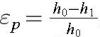
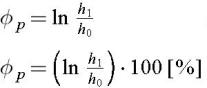
Upsetting ? p


Degree of upsetting ? p

  • ? p Degree of upsetting

  • ? p in % = ? h 100


Initial length or length after upset forging, if the permissible deformation is provided


  • h 0 in mm length before upset forging

  • h 1 in mm length after upset...

UNLIMITED FREE
ACCESS
TO THE WORLD'S BEST IDEAS

SUBMIT
Already a GlobalSpec user? Log in.

This is embarrasing...

An error occurred while processing the form. Please try again in a few minutes.

Customize Your GlobalSpec Experience

Category: Thread Rolling Dies
Finish!
Privacy Policy

This is embarrasing...

An error occurred while processing the form. Please try again in a few minutes.